



Introduction to European Security Needs
The leadership of the European Union has formally emphasized the urgent necessity of establishing a centralized response mechanism to address escalating security threats across the continent. In an era marked by shifting geopolitical landscapes and increasing vulnerabilities, the call for a cohesive defense and security strategy has taken center stage among policymakers.
The Changing Threat Landscape
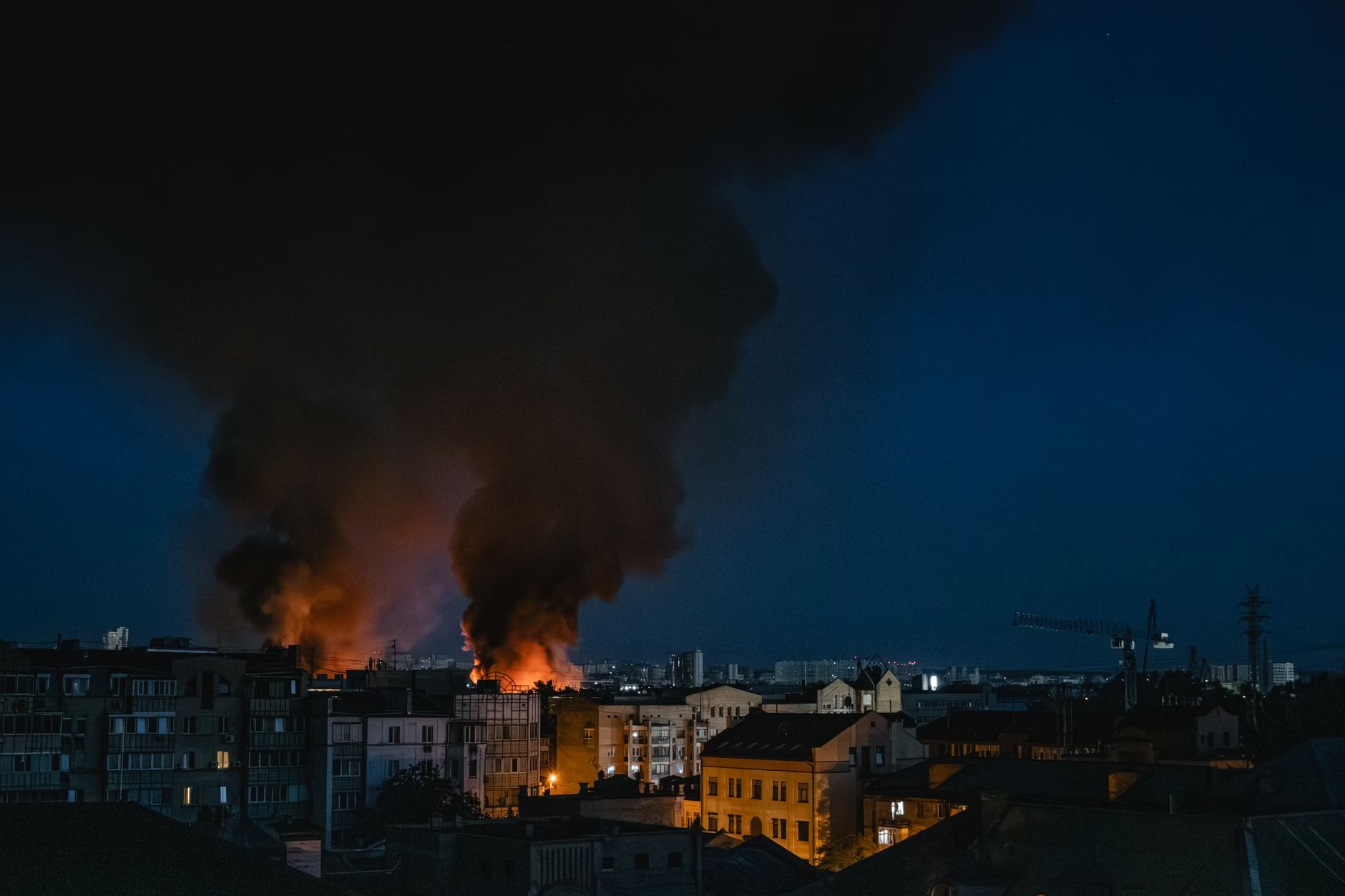
Modern security challenges extend far beyond traditional military conflicts. Today, European nations face a complex web of hybrid warfare, cyber attacks, critical infrastructure sabotage, and foreign interference. These multifaceted dangers do not respect national borders, meaning that a localized incident in one member state can quickly ripple across the entire union.
Historically, individual countries have managed their own security protocols and emergency responses. However, experts argue that this fragmented approach creates dangerous gaps in the collective defense architecture. Adversaries can exploit these disparities, targeting the weakest links within the European network.
The Case for a Unified Mechanism
Advocates for the proposed European security response mechanism argue that centralized coordination is essential for rapid and effective mitigation. By pooling intelligence, resources, and operational capabilities, member states can enhance their overall resilience.
Such a system would facilitate immediate information sharing, allowing authorities to detect and neutralize threats before they escalate into full-scale crises. Furthermore, standardized protocols would ensure that all participating nations can work together seamlessly during high-stress situations.
Overcoming Political and Operational Hurdles
Despite the clear advantages of a unified security framework, implementing this vision presents significant challenges. European Union member states hold diverse national interests, varying threat perceptions, and distinct military capabilities. Reaching a consensus on how a centralized authority would operate requires delicate diplomatic negotiations.
Questions regarding national sovereignty often arise during discussions about collective defense. Governments are naturally protective of their domestic security forces and decision-making autonomy. Proponents of the mechanism must therefore demonstrate that collective action enhances, rather than diminishes, national security.
Path Forward and Next Steps
Moving from proposal to implementation will require sustained political will and strategic planning. Policymakers are currently debating the structural design of the proposed mechanism, including its funding, legal mandate, and operational boundaries.
As discussions progress, the focus remains on building a robust system capable of safeguarding European citizens against the uncertainties of tomorrow. The overarching message from leadership is clear: unity is the most effective defense in an increasingly unpredictable world.


















Leave a Reply