


Background on the Ceasefire Claim
Recent statements made by United States leadership suggested that both Moscow and Kyiv had reached a mutual understanding to halt hostilities directed at critical power and fuel grids. This development raised hopes for a temporary de-escalation in the prolonged conflict, offering a potential reprieve for civilians facing severe shortages during harsh weather conditions. International observers closely monitored the situation, hoping diplomatic interventions would finally yield tangible reductions in hostilities.
Ongoing Military Operations
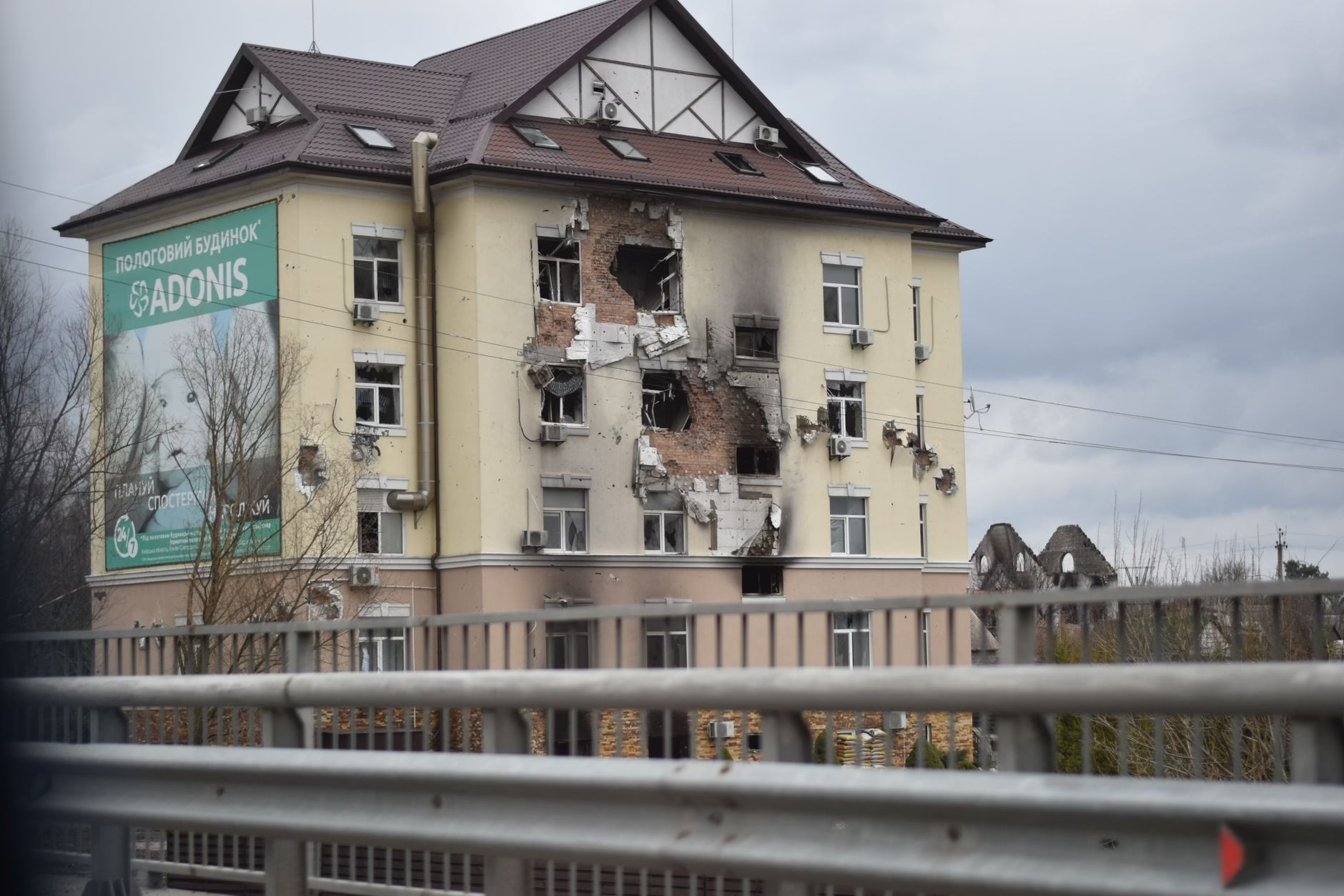
Despite the optimistic announcements regarding a cessation of targeted assaults, reports from the region indicate that military actions against power facilities have persisted. Both nations continue to engage in strategic aerial and ground campaigns designed to disrupt opponent supply lines and generation capabilities. The persistence of these operations highlights the profound challenges involved in enforcing localized truces amid a broader, high-intensity conflict.
Implications for Infrastructure and Civilians
The continuation of hostilities targeting power grids brings severe consequences for the civilian population residing in contested zones. Frequent disruptions to electricity, heating, and water supplies compound the humanitarian crisis on the ground. Repair crews work tirelessly under dangerous conditions to restore essential services, yet repeated strikes often undo days of progress. As diplomatic efforts navigate these complex developments, the immediate outlook for stable energy access remains uncertain for millions caught in the affected regions.




















Leave a Reply