


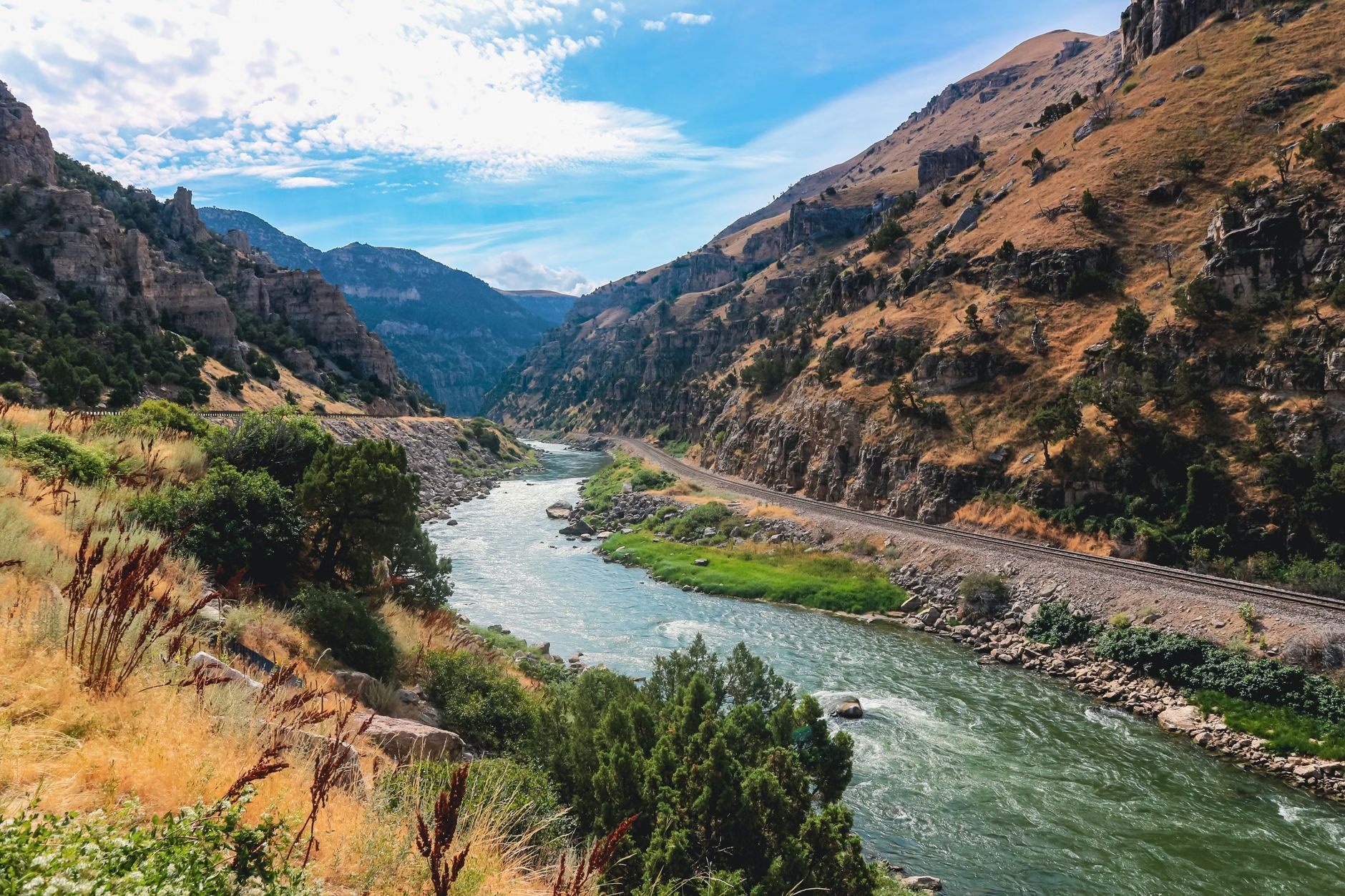
Tensions Over Religious Freedom on the Wind River Reservation
In the weeks since a Christian pastor on the Wind River Reservation likened traditional Arapaho ceremonial ways to idol worship, the Sunday morning rhythm has undergone a profound transformation. What was once a routine gathering of worshipers has now become the epicenter of a growing cultural and territorial dispute involving Indigenous traditions and a local religious institution.
The controversy began when the pastor made remarks disparaging the sacred practices of the Arapaho people, branding their centuries-old customs as idol worship. For members of the tribe, these words were not merely an insult, but a direct attack on their heritage, spiritual identity, and the hard-fought preservation of their ancestral culture. The Wind River Reservation, home to both the Eastern Shoshone and the Northern Arapaho tribes, has long navigated the delicate balance between Christian denominations and Indigenous spiritual practices.
The Call for Removal
In response to the derogatory statements, tribal members and leaders took swift action. The collective stance of the community crystallized around a clear demand: the church building must be removed from tribal land. Leaders argued that utilizing tribal territory while actively undermining and disrespecting foundational Indigenous customs is entirely unacceptable.
The demand brings to light deep historical wounds regarding religious colonization and the systematic suppression of Native American spiritual practices. For generations, external religious institutions often sought to erase Indigenous ceremonies, viewing them through a lens of cultural superiority. The recent incident has served as a painful reminder of those historical pressures, uniting the community in defense of their spiritual autonomy.
Community Response and Healing
As the situation continues to unfold, the local community remains steadfast in its defense of Arapaho traditions. Tribal elders and younger generations alike have emphasized the importance of educating the public about the true meaning and significance of their ceremonies, which are deeply intertwined with nature, community, and history.
While the fate of the church building on the reservation remains uncertain, the dialogue sparked by the controversy extends far beyond a single property dispute. It highlights the ongoing necessity for mutual respect, cultural understanding, and the protection of Indigenous rights on their own lands. The community’s response underscores a resilient commitment to honoring the past while safeguarding the future of Arapaho spirituality for generations to come.


















Leave a Reply