


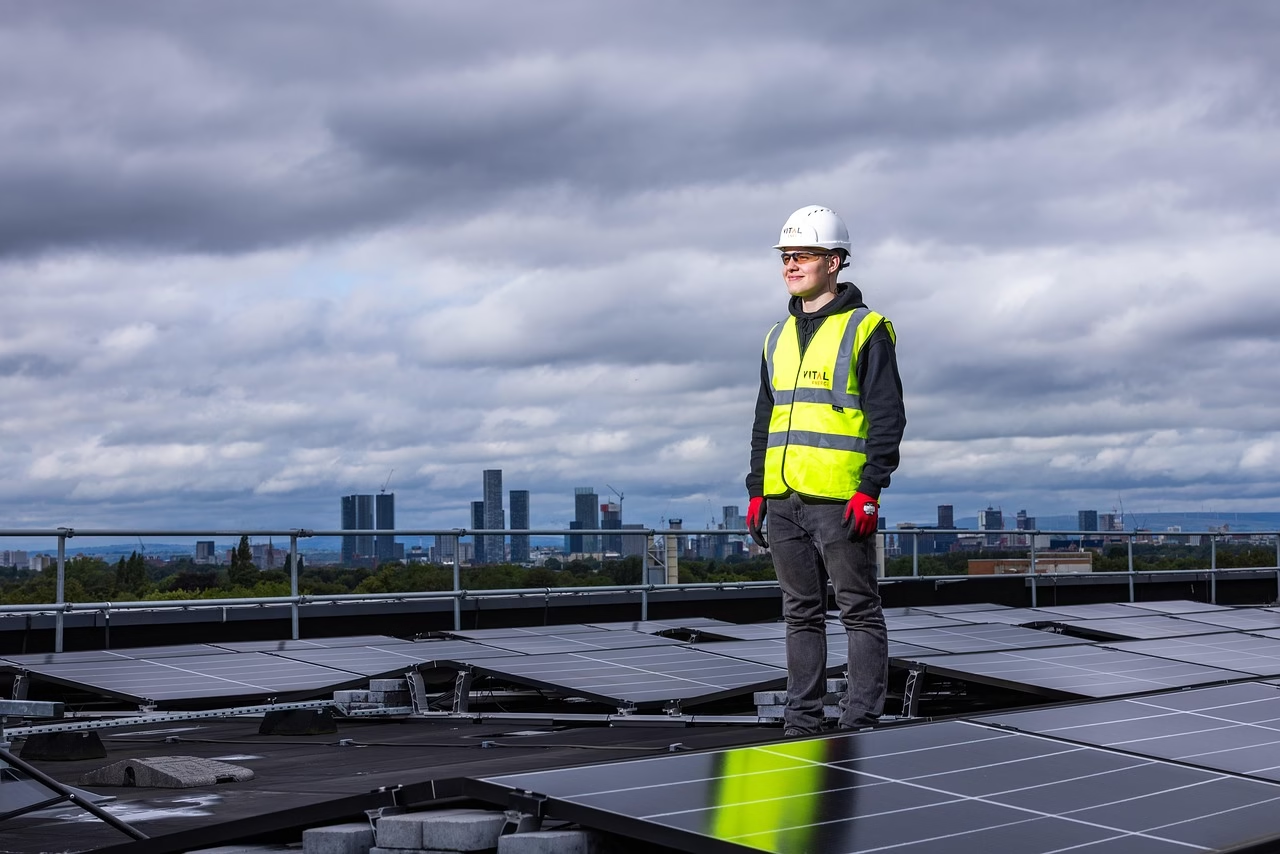
A homeowner in Victoria, British Columbia, Canada’s notoriously foggy and cloudy capital, has shared insights into the actual performance of solar panels, debunking common misconceptions about their effectiveness in less-than-ideal weather conditions. The homeowner, who installed a solar system approximately two years ago, detailed their experience with energy generation and savings, demonstrating that solar technology can indeed be a viable option even in regions with limited direct sunlight.
Context: Solar Adoption and Climate Concerns
The push for renewable energy sources like solar power has intensified globally, driven by climate change concerns and the desire for energy independence. Canada, with its vast landmass and diverse climate, presents unique challenges and opportunities for solar adoption. While sunny southern regions are obvious candidates, the performance of solar panels in cloudier, wetter climates has often been a point of skepticism.
Victoria, often cited as one of Canada’s cloudiest and foggiest cities, receives significantly less direct sunlight annually compared to many other parts of the country. This has led many to question the economic feasibility and practical benefits of installing solar energy systems there. The homeowner’s decision to proceed with installation aimed to test these assumptions firsthand.
Performance Beyond Sunshine
Contrary to the belief that solar panels require direct, bright sunshine to generate significant power, the Victoria homeowner’s experience highlights their ability to produce energy from diffused sunlight. Even on overcast days, sunlight contains usable photons that photovoltaic cells can convert into electricity. The system’s output, while lower on cloudy days compared to clear, sunny ones, consistently contributed to the home’s energy needs.
“We were pleasantly surprised,” stated the homeowner, who wished to remain anonymous. “We didn’t expect to eliminate our electricity bill entirely, but the reduction in our reliance on the grid has been substantial. The panels continue to generate power even when it’s grey and drizzly, which is more often than not here.”
Data collected over the past two years shows a consistent energy generation pattern, with peak production occurring during the summer months and a noticeable, though not absent, output during the rest of the year. The system’s performance is monitored remotely, allowing the homeowner to track daily, monthly, and annual energy production against consumption.
Expert Insights and Technological Advancements
Industry experts note that modern solar panel technology has advanced significantly, improving efficiency in low-light conditions. “Newer panels are designed with materials and coatings that are better at capturing a wider spectrum of light, including diffused and reflected light,” explained Dr. Evelyn Reed, a renewable energy analyst at the National Research Council of Canada. “While peak performance is always on a clear day, the efficiency gains mean that cloudy regions are becoming increasingly viable for solar installations.”
Dr. Reed also pointed to the importance of system design and installation. “Proper angle and orientation, combined with high-quality inverters that can handle fluctuating power input, are crucial for maximizing generation in variable climates,” she added. The Victoria homeowner confirmed their system was installed by a reputable local company specializing in such installations.
Financial Implications and Savings
The financial aspect is a key consideration for any homeowner contemplating solar. While the initial investment can be significant, government incentives, tax credits, and the long-term reduction in electricity bills contribute to the return on investment. The Victoria homeowner reported that their electricity bills have decreased by an average of 40-50% since the installation, a figure that exceeded their initial expectations for a cloud-prone area.
“When you factor in the provincial and federal rebates we received, and the ongoing savings, the payback period is looking much more attractive than we initially thought,” they commented. This suggests that the economic case for solar power is strengthening even in Canada’s less sun-drenched locales.
Broader Industry Impact
The success of solar installations in cities like Victoria has broader implications for the renewable energy sector. It suggests that geographical limitations, once a major barrier, are becoming less significant due to technological advancements and improved system design. This could open up vast new markets for solar energy across Canada and similar climates worldwide.
As more homeowners in diverse weather conditions adopt solar, it contributes to a more decentralized and resilient energy grid. It also supports Canada’s climate targets by increasing the proportion of clean energy in the national power mix.
What to Watch Next
The ongoing performance of this Victoria system, and others like it across Canada, will be critical in further validating solar’s viability in traditionally challenging climates. Attention will be on long-term degradation rates, maintenance requirements in a wet environment, and the evolving landscape of government incentives. As battery storage technology also improves, its integration with solar systems could further enhance energy independence and grid stability for homeowners, regardless of their local weather patterns.






















Leave a Reply