


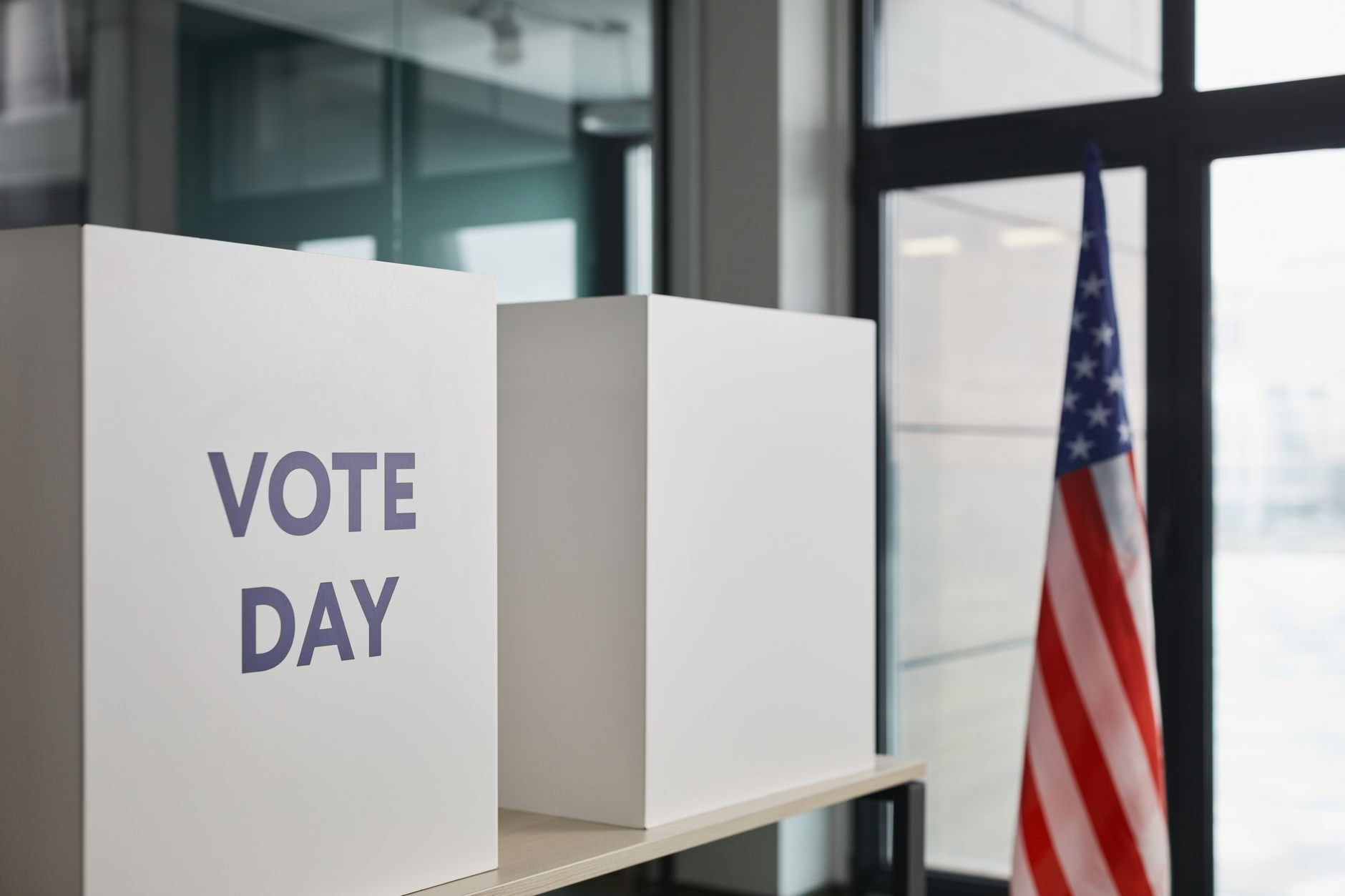
Constitutional Foundations of American Elections
The architects of the United States Constitution designed a framework that deliberately avoided concentrating authority in a single central government. Fearing the potential for tyranny, the founders deliberately placed primary responsibility for managing national elections in the hands of individual states and the legislative branch. This foundational structure ensures that local authorities maintain significant control over how ballots are cast and counted.
Throughout American history, this decentralized approach has served as the bedrock of the democratic process. While national uniformity is maintained through specific congressional mandates, the day-to-day administration of voting remains fundamentally local. This balance allows diverse communities to adapt their voting procedures to local needs while participating in a unified national exercise.
The Limited Role of the Executive Branch
Within this constitutional scheme, the executive branch and the president occupy a specific and limited domain regarding elections. The primary duty of the president is to faithfully execute federal laws enacted by Congress, which includes statutes governing the electoral process and voting rights. Historically, executive involvement in election administration has been minimal to prevent any appearance of partisan interference.
However, the boundaries of presidential enforcement authority are not always rigid. The executive branch possesses investigative and enforcement capabilities designed to protect the integrity of the voting system. When administrations seek to utilize these powers, questions frequently arise regarding the precise limits of executive reach into areas traditionally managed by state governments.
Testing the Boundaries of Federal Enforcement
In contemporary politics, the administration led by Donald Trump has actively tested the outer limits of federal enforcement powers in the context of national elections. Operating under the stated objective of rooting out voter fraud and ensuring ballot security, the administration has pursued strategies that challenge traditional understandings of the division of power.
This push by the executive branch into election oversight has sparked intense legal and political debates. Critics and state officials argue that aggressive federal intervention infringes upon constitutional authorities specifically reserved for local jurisdictions. Conversely, proponents of these enforcement measures contend that robust federal oversight is necessary to safeguard the legitimacy of democratic outcomes against potential irregularities.
The Ongoing Debate Over Voting Authority
The ongoing friction between federal ambition and state autonomy highlights the enduring complexity of the American electoral system. As legal challenges unfold in courts across the nation, the fundamental question of who ultimately controls the administration of democracy remains at the forefront of national discourse.
Ultimately, the tension is a natural byproduct of a constitutional design that prioritizes checks and balances over administrative efficiency. As the boundaries of federal enforcement continue to be tested, the resilience of the American electoral framework relies heavily on the ongoing dialogue between state administrators, lawmakers, and executive authorities.























Leave a Reply