


Introduction to the Milky Eagle Owl
Across the vast landscapes of sub-Saharan Africa, a magnificent creature rules the nighttime skies. The milky eagle owl stands out as the largest owl species found on the African continent. Known scientifically as Bubo lacteus and frequently referred to as the Verreaux’s eagle owl, this impressive raptor commands attention through its sheer physical presence and distinctive appearance.
Distinctive Physical Characteristics
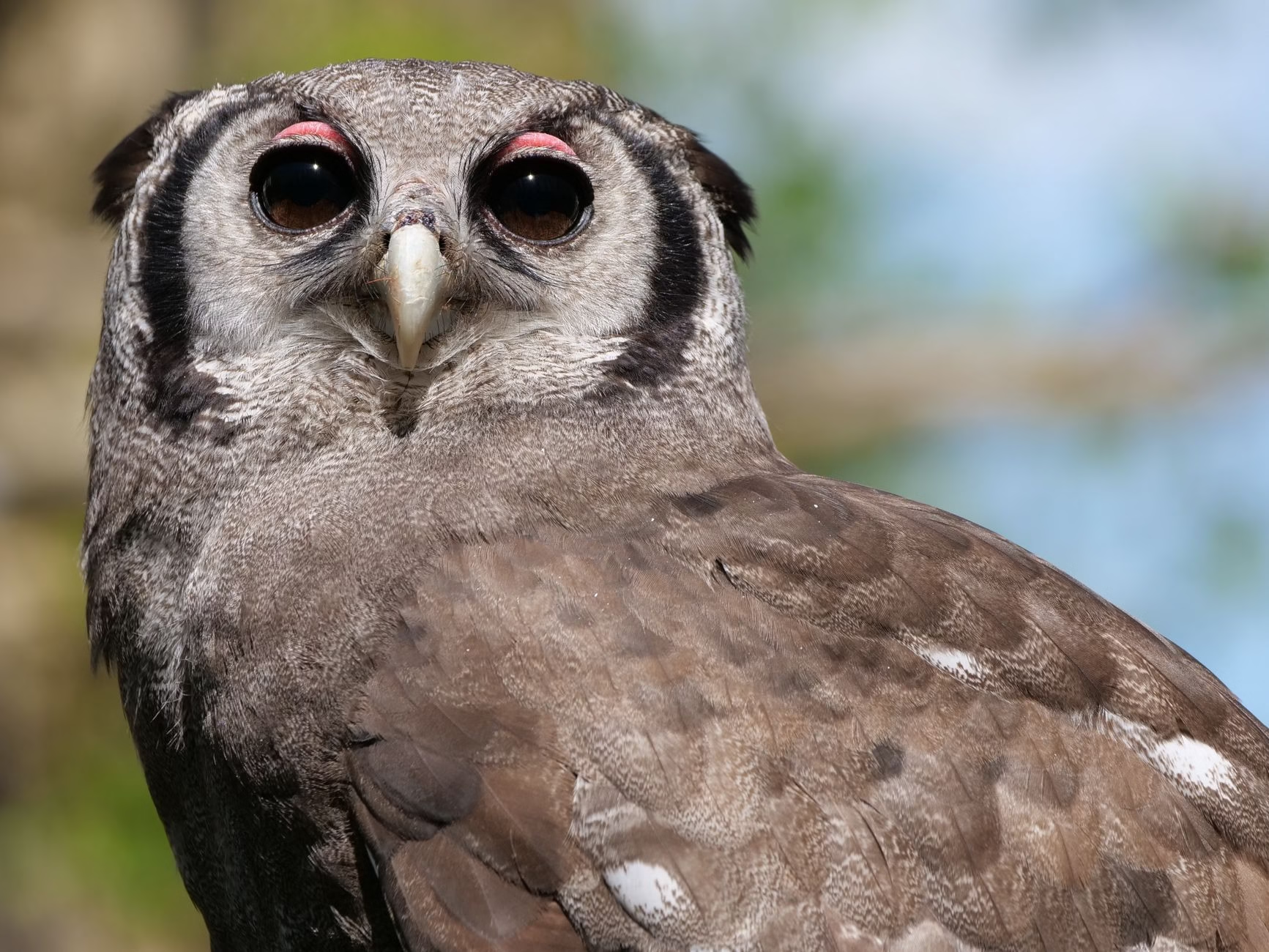
Observing this majestic bird reveals several unique traits that set it apart from other nocturnal hunters. Adult individuals can reach lengths of up to sixty-six centimeters and weigh as much as two kilograms. Their plumage features a soft, grayish-brown coloration with fine vermiculations, giving the feathers a milky appearance that inspired their common name.
Perhaps their most striking facial feature is a pair of bare, pale pink eyelids. These unusual eyelids are visible when the birds blink or close their eyes to rest during daylight hours. Prominent ear tufts frame the top of the head, adding to the bird’s stern and authoritative expression while helping to channel sound toward their highly sensitive ears.
Habitat and Geographic Range
These formidable birds demonstrate remarkable adaptability regarding their living environments. They are widely distributed throughout sub-Saharan Africa, avoiding only the most arid deserts and dense equatorial rainforests. Instead, they prefer lightly wooded savannas, riverine woodlands, and thorn scrub habitats.
Tree selection plays a crucial role in their daily survival. During daylight hours, these owls typically roost high up in the dense canopy of large acacia trees or eucalyptus groves. Their mottled plumage provides exceptional camouflage, allowing them to remain completely hidden from both potential prey and larger mobbing birds.
Apex Predator Behavior
As opportunistic carnivores at the top of the food chain, milky eagle owls possess a diverse and substantial diet. Their immense strength enables them to hunt prey that smaller raptors would never dare approach. Their primary food sources include hedgehogs, hares, hyraxes, and various rodents.
Unlike many other owl species that focus exclusively on small mammals, these powerful hunters are also known to take medium-sized birds, reptiles, and even large insects. They rely primarily on the sit-and-wait hunting technique, scanning the ground below from an elevated perch before launching a silent, deadly strike using their razor-sharp talons.
Breeding and Family Life
Reproduction cycles for these magnificent birds typically align with the dry season, ensuring better visibility and availability of prey for their growing chicks. Rather than building complex nests from scratch, pairs frequently commandeer abandoned stick nests previously constructed by large birds such as hammerheads, secretary birds, or eagles.
Females usually lay a clutch of one or two white eggs, which are incubated primarily by the mother while the male provides a steady supply of food. Once hatched, the owlets depend entirely on their parents for months. Even after leaving the nest, juvenile birds remain dependent on parental guidance and territory protection for an extended period, sometimes up to a full year.
Conservation Status and Ecological Importance
Currently, the milky eagle owl maintains a stable population status across most of its extensive geographic range. The International Union for Conservation of Nature classifies the species as being of least concern. However, localized threats still exist in certain regions.
Habitat fragmentation, deforestation, and the secondary poisoning from rodenticides intended for agricultural pests pose ongoing risks to individual birds and local populations. Protecting these apex predators remains essential for maintaining the delicate ecological balance within African savanna ecosystems, where they help naturally regulate small mammal populations.






















Leave a Reply