


Background of the Demonstrations
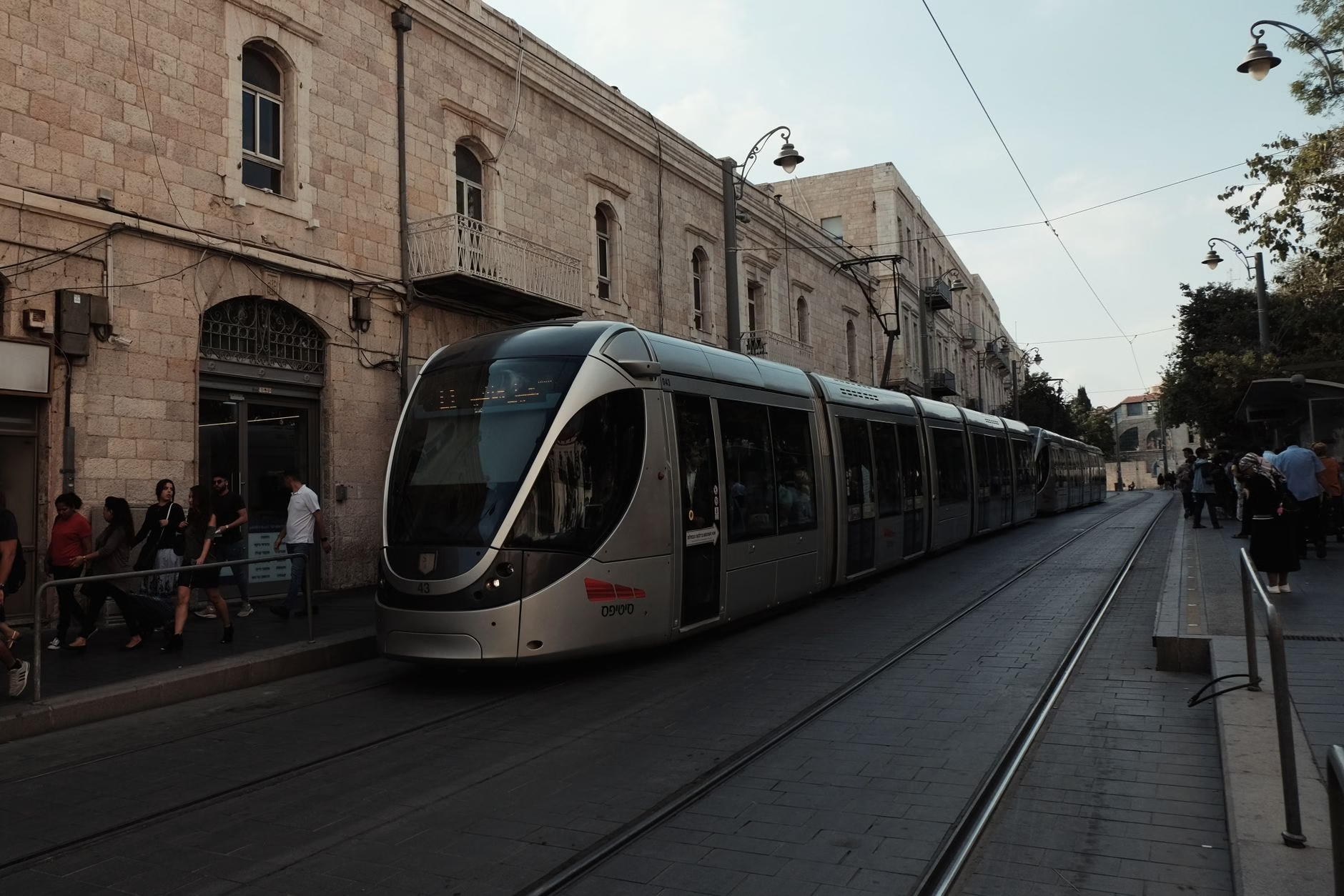
Recent events in Jerusalem have brought urban development and community preservation into sharp focus. A demonstration involving ultra-Orthodox residents unfolded along Bar-Ilan Street, centering on opposition to ongoing light rail infrastructure projects.
Public infrastructure development frequently encounters resistance when it intersects with established residential areas. In this particular instance, members of the Haredi community gathered to express their strong disapproval of the transit expansion, citing concerns over community disruption and local changes.
Understanding the Route and Development
The light rail network in Jerusalem has been expanding progressively to improve connectivity across the city. However, specific corridors like Bar-Ilan Street carry significant religious and cultural importance for the local populace.
Urban planners designed these transit routes to alleviate traffic congestion and modernize public transportation. Despite these civic goals, the execution of construction works often sparks friction between municipal authorities and community members who feel their way of life is being impacted.
Community Concerns and Public Order
During the demonstrations, participants voiced various grievances regarding the municipal initiatives. Tensions at the site prompted a response from local law enforcement agencies seeking to maintain public order and ensure the safety of both demonstrators and transit workers.
Authorities continue to navigate the delicate balance between advancing metropolitan infrastructure and addressing the cultural sensitivities of distinct urban groups. Dialogue between community leaders and city planners remains a crucial element in resolving ongoing disputes.
Looking Forward
As Jerusalem continues to grow, urban transit projects will inevitably face complex logistical and social challenges. The events on Bar-Ilan Street highlight the intricate relationship between modern municipal expansion and traditional community values.
Stakeholders on all sides are tasked with finding constructive ways to address infrastructural needs while respecting the heritage of the city’s diverse neighborhoods. Future developments will depend heavily on effective communication and cooperative planning.



















Leave a Reply