


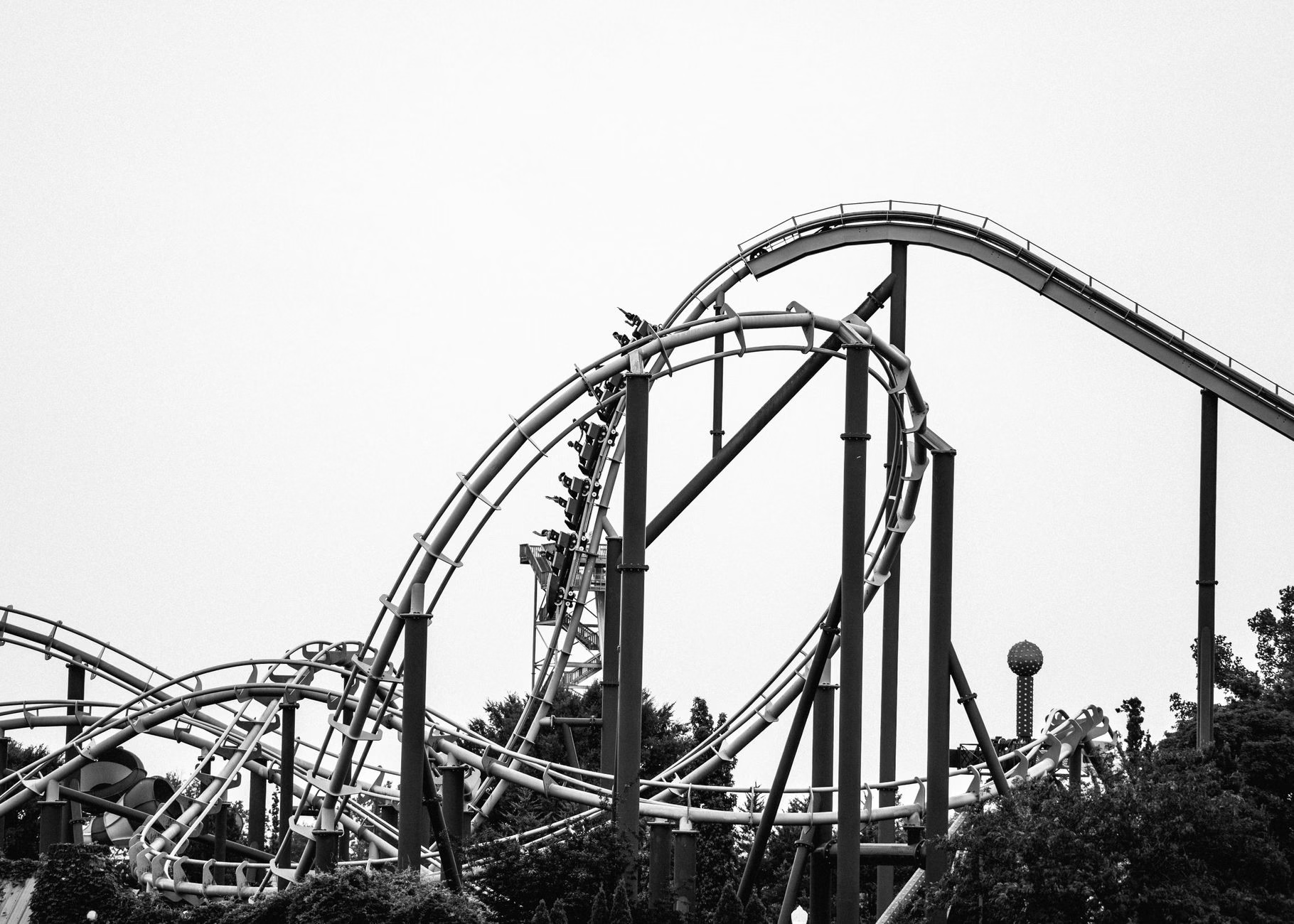
Amusement parks are designed to offer thrills, excitement, and a sense of escape from everyday life. Millions of visitors flock to these destinations every year to experience the adrenaline rush of gravity-defying attractions. However, the history of the amusement industry is also marked by somber milestones that changed how operators approach guest protection. Decades ago, a catastrophic incident involving a looping roller coaster shocked the public and permanently altered the landscape of theme park safety.
Understanding the Amusement Safety Landscape
To comprehend the significance of past incidents, one must look at how the industry operated during previous decades. In the earlier eras of modern amusement parks, engineering standards and regulatory oversight differed significantly from contemporary practices. While engineers always prioritized structural integrity, the rapid expansion of steel coaster technology introduced complex dynamics that were still being understood.
The attraction in question was a marvel of its time, featuring a vertical loop that promised an unforgettable ride experience. Thrill-seekers lined up by the hundreds to test their courage on the towering steel structure. Unfortunately, a combination of mechanical anomalies and operational oversights led to an unexpected failure that would be remembered for generations.
The Day of the Incident
On the fateful day of the accident, normal operations were underway at the bustling facility. Visitors enjoyed the sunny weather while moving from one attraction to another. The looping roller coaster was operating at its usual capacity, carrying passengers through its twists and high-speed turns.
Without warning, a critical malfunction occurred along the ride circuit. The sudden failure resulted in a tragic outcome, instantly changing the atmosphere of the park from one of joy to one of shock and grief. Emergency responders rushed to the scene, but the severity of the situation made it one of the most devastating events in amusement park history.
Immediate Aftermath and Investigation
In the wake of the disaster, park management immediately halted all operations on the affected ride. Local authorities and safety inspectors launched comprehensive investigations to determine the root cause of the mechanical failure. Engineers examined every component of the track, the trains, and the restraint systems to piece together the sequence of events.
The findings revealed critical insights into how high-stress mechanical forces interact with aging or improperly maintained steel structures. The investigation underscored the vital need for rigorous daily inspections, standardized maintenance protocols, and independent safety audits for all major amusement rides.
Lasting Changes in Theme Park Safety
Every major tragedy in the history of transportation and entertainment often leads to significant reform. The fallout from this devastating roller coaster accident was no exception. Industry leaders collaborated with government regulators to establish stricter safety codes and mandatory reporting procedures for mechanical anomalies.
Modern theme parks now benefit from advanced computerized monitoring systems, redundant braking mechanisms, and sophisticated diagnostic tools that can detect potential issues long before they pose a risk to passengers. The tragic events of the past serve as a solemn reminder of the immense responsibility carried by those who design, build, and operate high-speed thrill attractions.
Honoring the Memory
As decades have passed, the memory of those affected by the incident remains a vital part of amusement park history. Industry professionals continue to study the lessons learned from the investigation to ensure that modern engineering prevents similar failures. Memorials and private remembrances often honor the individuals who lost their lives, ensuring they are never forgotten.
The evolution of theme park safety is a continuous journey driven by vigilance, technological innovation, and a steadfast commitment to protecting every guest who steps through the turnstiles. The legacy of the 1980s tragedy lives on as a cornerstone of modern ride safety standards.





















Leave a Reply