


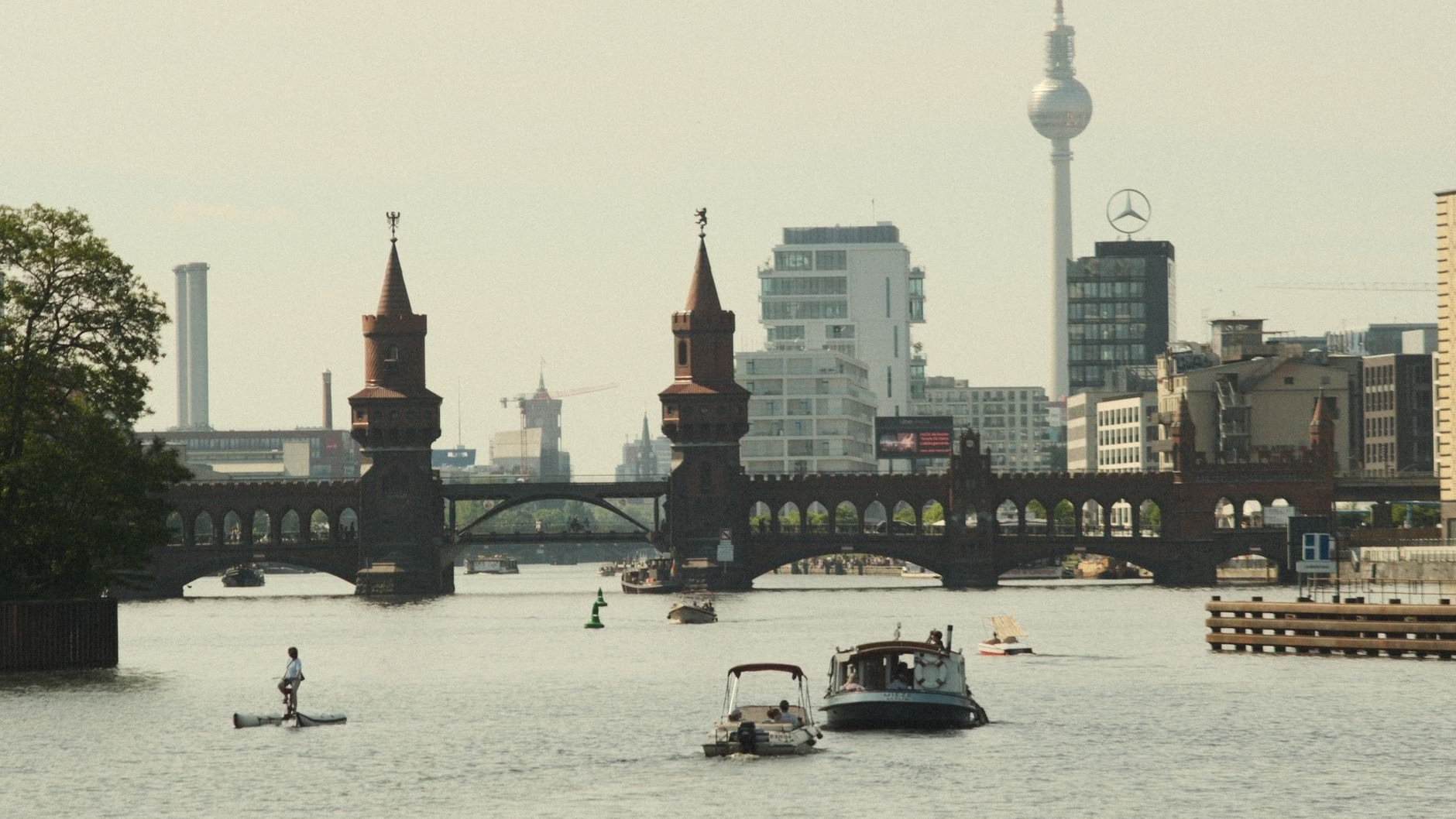
The Political Landscape is Shifting
Germany is currently navigating a profound political transformation that is reshaping the nation’s traditional governance model. For decades, the political center remained a stable anchor for the country, relying on moderate consensus and predictable coalitions. However, contemporary challenges have eroded public trust in these established governing forces. As economic pressures mount and social dynamics evolve, a growing segment of the population feels disconnected from mainstream political discourse.
This disillusionment has created a fertile ground for alternative political movements. Among them, the Alternative for Germany party, commonly known as the AfD, has experienced a remarkable surge in support across various regions. The momentum behind this movement highlights a deeper discontent with traditional parties and raises critical questions about the future stability of the nation’s democratic institutions.
Understanding the Appeal of the Alternative for Germany
The ascent of the AfD is not an isolated phenomenon but rather the result of accumulated grievances among voters. Key concerns regarding economic security, inflation, and immigration have dominated public debate. Many citizens perceive the political establishment as disconnected from everyday struggles, fostering a sense of alienation.
The party has capitalized on these anxieties by presenting itself as the primary opposition to the prevailing political consensus. Its messaging often resonates with individuals who feel left behind by rapid modernization and global integration. By addressing contentious topics directly, the movement has successfully mobilized voters who previously remained politically disengaged or disillusioned.
The Failure of the Moderate Center
In response to this growing challenge, Germany’s political center has struggled to formulate an effective counterstrategy. Mainstream parties often find themselves trapped in reactive postures, attempting to address symptoms rather than the root causes of public dissatisfaction. Compromises forged within traditional coalitions have frequently resulted in policy gridlock, further reinforcing the perception of inefficiency.
Furthermore, attempts by established leaders to adopt elements of the challenger’s rhetoric have often backfired, either alienating their traditional base or legitimizing alternative viewpoints. The failure to communicate a compelling, forward-looking vision has left a vacuum in national leadership. Without decisive action to rebuild trust and address economic anxieties, the center risks losing further ground to populist alternatives.
Implications for the Future of Democratic Governance
The ongoing political realignment carries significant implications for the broader European landscape. As Germany remains a central pillar of continental stability and economic strength, any internal political shift has far-reaching consequences. The fragmentation of the electorate complicates coalition-building, potentially leading to more fragile governments in the future.
Addressing this systemic challenge requires more than temporary political maneuvers. Mainstream leaders must engage in profound self-reflection and reconnect with the grassroots concerns of the populace. Restoring faith in democratic institutions demands transparent communication, effective policy delivery, and a renewed commitment to addressing the socio-economic disparities fueling the current political volatility.






















Leave a Reply