


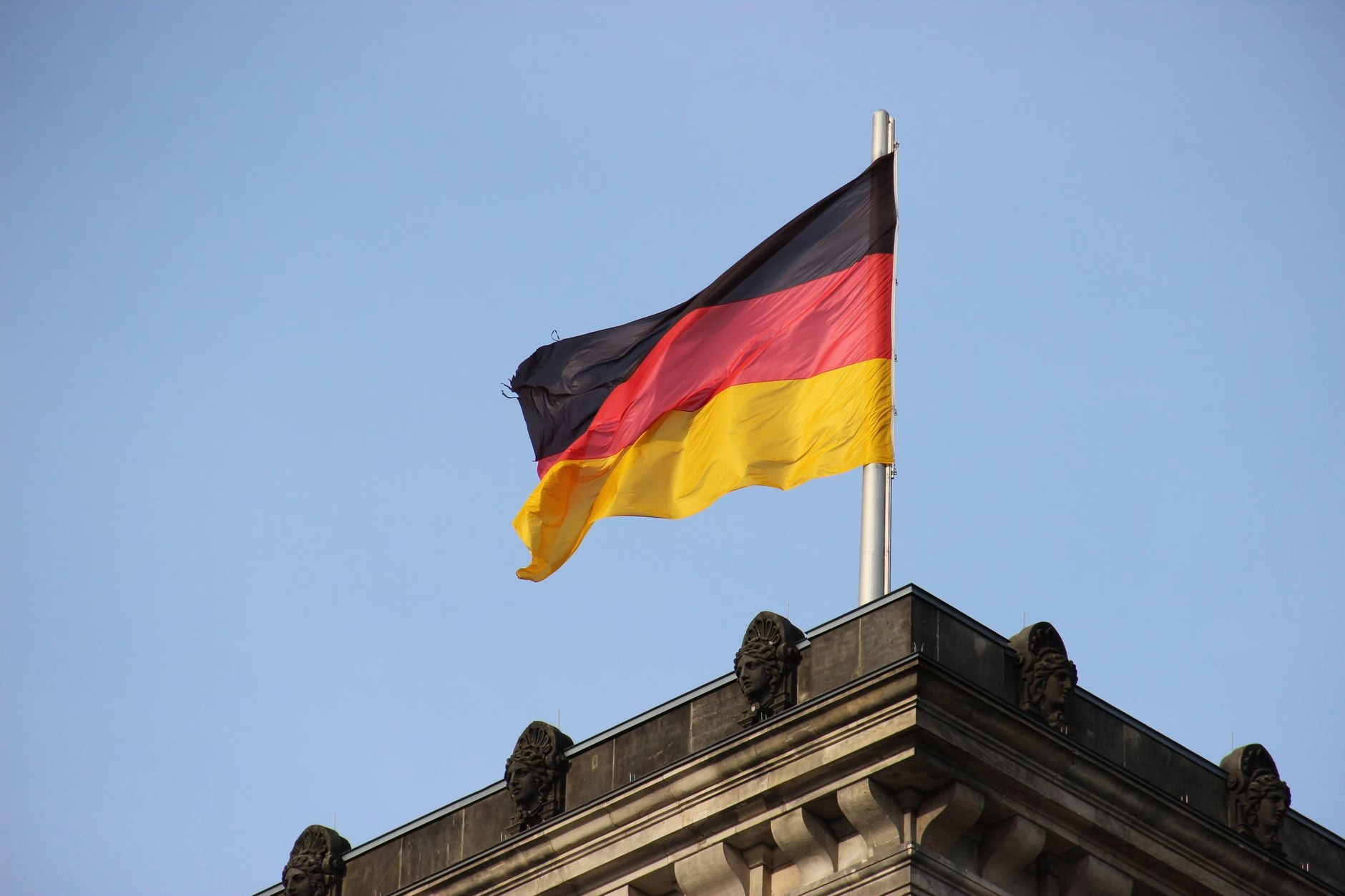
Political Dynamics in Modern Germany
The landscape of German politics continues to experience significant shifts as traditional party alliances face mounting pressure from emerging political forces. Regional elections across the country frequently produce fractured legislative bodies where forming a traditional majority coalition proves exceptionally challenging. Party leaders must constantly adapt their strategies to navigate these complex parliamentary environments.
Positioning on Minority Administration
Recent statements from prominent figures within the Alternative for Germany party indicate a willingness to explore alternative governing models. Specifically, leadership has expressed openness to establishing a minority administration at the state level if legislative arithmetic prevents the formation of a conventional majority coalition. This approach represents a notable strategic pivot for a political organization that has historically struggled to secure formal coalition partners due to a widespread political boycott by mainstream parties.
Challenges of Minority Rule
Operating a minority government presents distinct administrative and legislative hurdles. Without a guaranteed majority in the state parliament, the governing party must negotiate bill by bill to secure the necessary votes for policy implementation and budget approval. This dynamic often leads to increased political instability and frequent legislative standoffs. Observers note that while such an arrangement offers a pathway to executive power, it requires high levels of parliamentary maneuvering and compromise.
Broader Political Repercussions
Any move toward a minority government involving the Alternative for Germany would likely trigger intense debate among federal and state politicians. Mainstream parties have long maintained a strict barrier against cooperating with the far-right movement, refusing to participate in coalition talks or support their legislative initiatives. A successful minority administration could fundamentally alter the political norms of the nation, potentially breaking long-standing taboos regarding political cooperation and party isolation in regional legislatures.
Future Outlook for Regional Governance
As upcoming regional elections approach, political analysts will closely monitor how parties position themselves for potential coalition talks. The willingness to consider minority governments highlights the fluid nature of current electoral outcomes. Voters and political strategists alike must prepare for an era of more fragmented parliaments, where traditional governing formulas no longer apply and unconventional political arrangements become increasingly common across the German federal states.



















Leave a Reply