


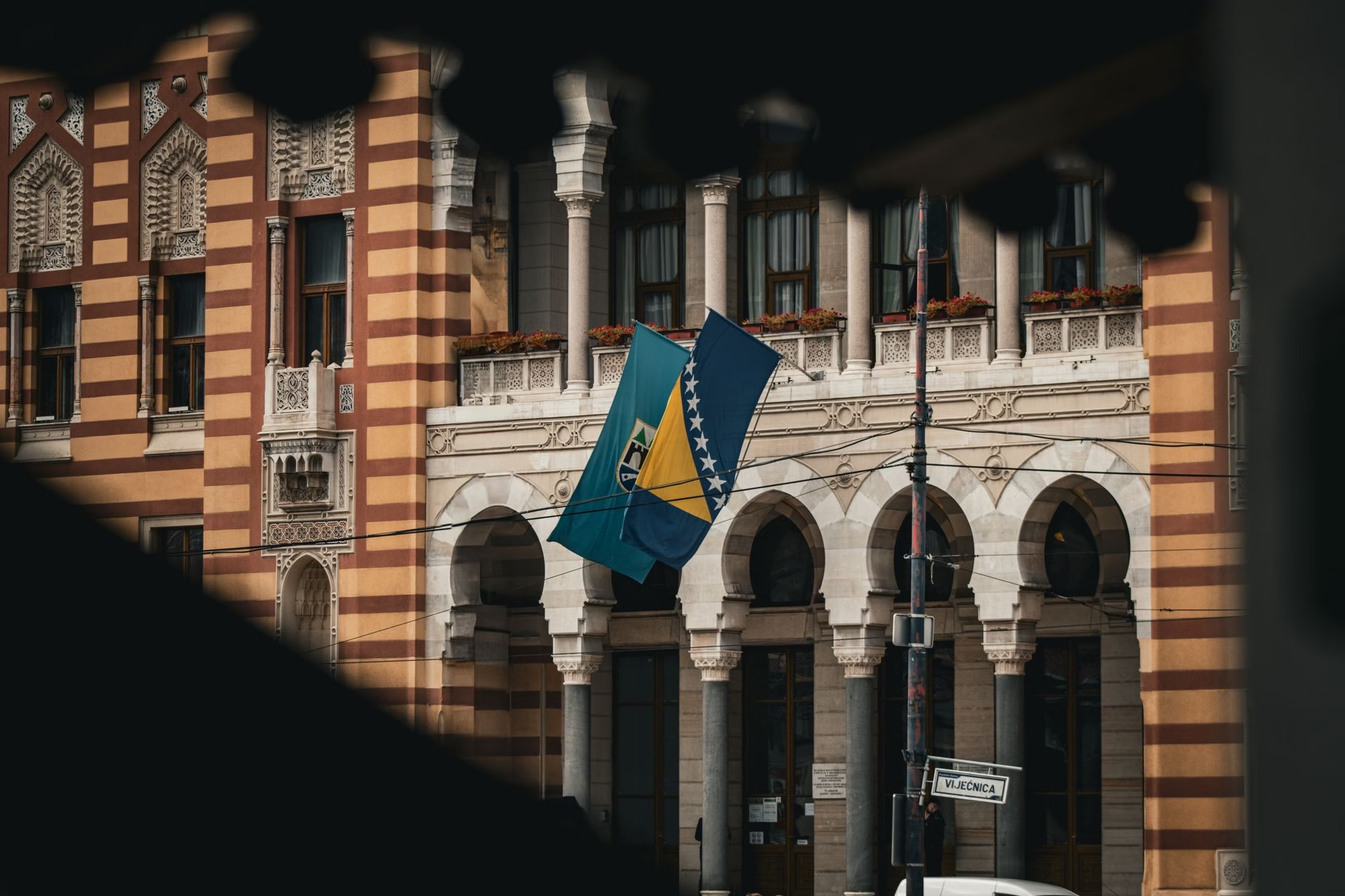
Diplomatic alignments in the Balkans are shifting as regional leaders seek out international partnerships to bolster their political standing. Recently, political representatives of the Serb entity within Bosnia and Herzegovina have focused heavily on cultivating stronger diplomatic, economic, and cultural connections with the State of Israel. This growing relationship unfolds against a backdrop of ongoing constitutional friction and complex political divides within the multi-ethnic Balkan nation.
Background of the Diplomatic Shift
Bosnia and Herzegovina operates under a delicate power-sharing arrangement established by the 1995 Dayton Peace Agreement. The country is split into two primary entities: the Federation dominated mainly by Bosniaks and Croats, and the Republika Srpska, populated predominantly by Serbs. In recent years, leadership within the Serb entity has increasingly pursued independent foreign policy initiatives, often bypassing central state institutions in Sarajevo.
Seeking international recognition and sympathetic voices on the global stage, regional officials have traveled extensively to foster foreign partnerships. Israel has emerged as a key point of interest for these diplomatic outreach efforts. By engaging with political figures and institutions in the Middle Eastern nation, regional leaders hope to establish stronger bilateral cooperation and gain broader international understanding of their political positions.
Economic and Cultural Dimensions
Beyond high-level diplomatic meetings, the collaboration between the Republika Srpska and Israeli counterparts encompasses potential economic investments and cultural exchanges. Proponents of these closer ties point to opportunities in technology, agriculture, and tourism as sectors that could benefit both economies. Business delegations have explored avenues for joint ventures, aiming to translate political goodwill into tangible commercial projects.
Cultural diplomacy also plays a significant role in cementing these relationships. Initiatives aimed at fostering mutual historical understanding and educational exchanges are frequently highlighted by officials as foundational pillars for the enduring partnership. Through joint commemorations and cultural events, both sides seek to build deep-rooted connections that transcend standard diplomatic protocols.
Reactions from Central Authorities and International Observers
This independent diplomatic maneuvering has not gone unnoticed by central authorities in Sarajevo, who argue that foreign policy is the exclusive jurisdiction of the state-level government rather than individual entities. Critics within the central administration contend that unilateral outreach efforts undermine the constitutional order of Bosnia and Herzegovina and create unnecessary confusion among international partners.
Furthermore, international monitors and Western diplomats closely follow these developments with a measure of caution. The broader international community remains committed to preserving the sovereignty, territorial integrity, and constitutional framework of Bosnia and Herzegovina. Any diplomatic engagement that appears to challenge state-level authority or exacerbate ethnic divisions is often met with diplomatic concern from Western capitals.
Looking Ahead
As geopolitical landscapes continue to evolve globally, the partnership between Bosnian Serb leadership and Israel highlights the complex interplay of local ambitions and international diplomacy. While proponents view these stronger ties as a positive step toward economic growth and international visibility, critics worry about the potential implications for domestic stability.
Ultimately, the trajectory of this relationship will depend on how regional leaders navigate the delicate balance between pursuing independent international partnerships and respecting the constitutional boundaries of their home country. Navigating these complexities remains essential for maintaining peace and fostering long-term stability throughout the Western Balkans.



















Leave a Reply