


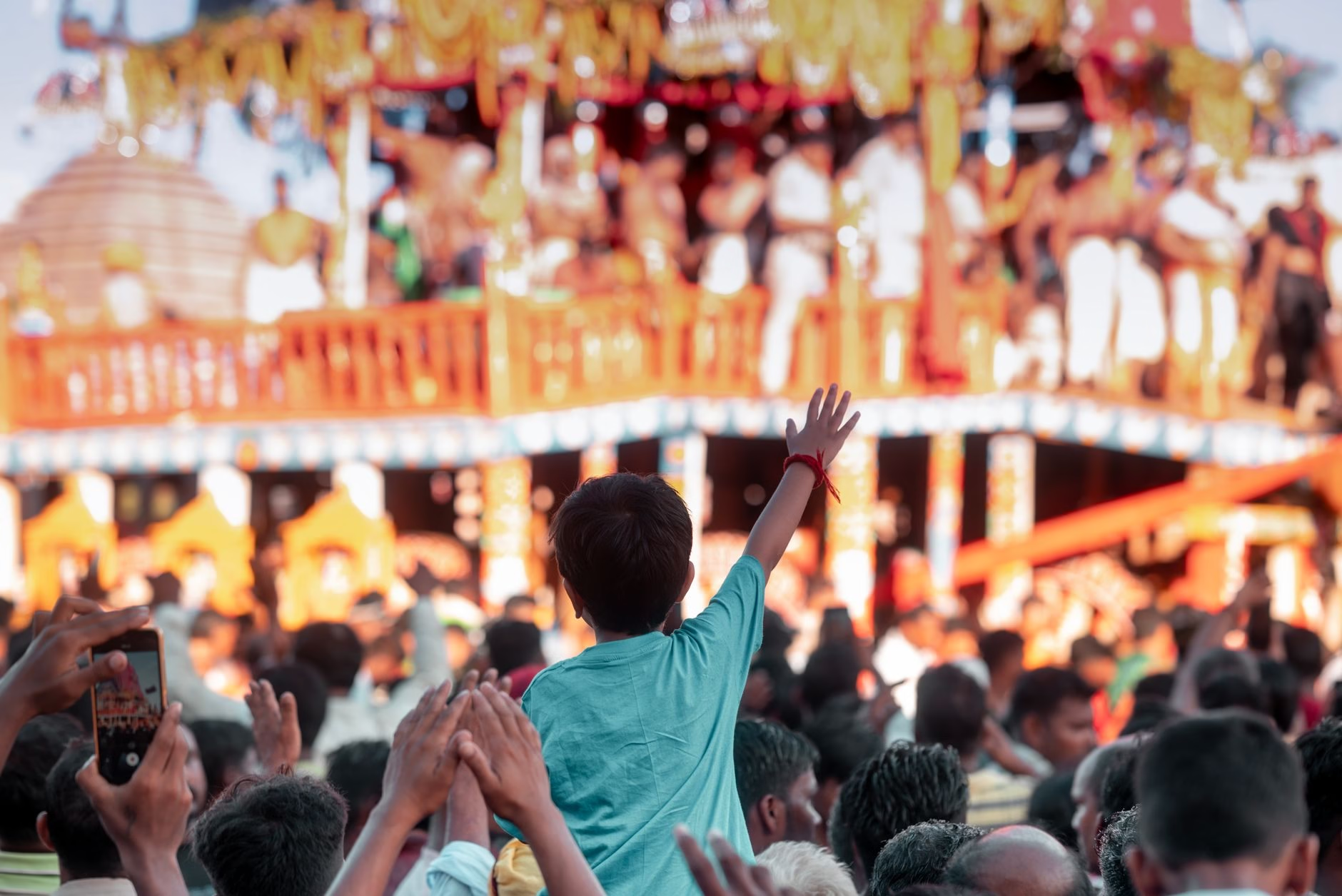
In the contemporary digital landscape, the rapid dissemination of information, or often, misinformation, poses a significant challenge. A recent incident exemplifies this issue, where a video depicting a religious festival in India was erroneously circulated across social media platforms, falsely labeled as a public hanging. This particular case underscores the critical need for media literacy and a nuanced understanding of diverse cultural practices to prevent the spread of misleading narratives.
Understanding the Context of Cultural Practices
Religious festivals in India are renowned for their vibrant displays, deep spiritual significance, and diverse rituals. These celebrations often involve elaborate ceremonies, processions, and symbolic acts that are integral to the faith and traditions of various communities. While some of these practices may appear unconventional or intense to observers unfamiliar with their cultural context, they are deeply meaningful expressions of devotion and heritage within their specific frameworks. The misinterpretation of such rituals can lead to severe misunderstandings and perpetuate harmful stereotypes.
The specific video in question, which showed participants engaged in a religious observance, was stripped of its original meaning and presented as a brutal act of public execution. This decontextualization transformed a cultural event into a sensationalized and false narrative, demonstrating how easily visual content can be manipulated to create an entirely different, and often alarming, impression.
The Mechanics of Online Misinformation
The speed at which content travels across social media platforms contributes significantly to the challenge of misinformation. Posts can go viral within hours, reaching millions of users globally before their authenticity can be properly verified. Sensational headlines and emotionally charged visuals often bypass critical scrutiny, leading individuals to share content without confirming its factual basis. This phenomenon is particularly prevalent when content originates from unfamiliar cultural settings, as a lack of background knowledge can make it harder for viewers to discern truth from fabrication.
In the instance of the Indian festival video, the false claim of a public hanging likely resonated with existing biases or a desire for dramatic content, causing it to spread rapidly. The absence of immediate, authoritative counter-narratives allowed the misleading interpretation to gain traction, influencing public perception and potentially fostering negative sentiments towards the depicted culture.
Consequences of False Narratives
The propagation of false narratives, especially those involving cultural or religious practices, carries several detrimental consequences. Firstly, it distorts public understanding of different societies and traditions, hindering genuine cross-cultural dialogue and empathy. When a religious festival is misconstrued as an act of violence, it can fuel prejudice and reinforce negative stereotypes, damaging the reputation of entire communities.
Secondly, such misinformation can erode trust in digital media and information sources. If users are constantly exposed to unverified or false content, their ability to distinguish reliable news from fabricated stories diminishes, leading to a general skepticism that can be exploited by malicious actors. Furthermore, in some cases, false claims can incite real-world harm, provoking strong emotional reactions or even social unrest based on erroneous information.
Combating Digital Deception: A Call for Media Literacy
Addressing the pervasive issue of misinformation requires a concerted effort from individuals, technology platforms, and educational institutions. For individual users, developing strong media literacy skills is paramount. This involves cultivating a critical approach to online content, questioning sensational claims, and verifying information before sharing it.
Practical steps for verification include checking the source of the video or image, looking for corroborating reports from reputable news organizations, and utilizing reverse image search tools to trace the origin of visual content. Understanding that cultural practices vary widely across the globe and that interpretations should always be approached with an open mind and a desire for accurate context is also crucial. When encountering content that seems shocking or unusual, pausing to consider the possibility of cultural misinterpretation can prevent the spread of false narratives.
Conclusion
The incident involving the misrepresentation of an Indian religious festival video as a public hanging serves as a potent reminder of the fragility of truth in the digital age. It highlights the ease with which cultural practices can be decontextualized and weaponized through misinformation. By fostering a greater commitment to media literacy, promoting critical thinking, and encouraging a deeper appreciation for cultural diversity, societies can collectively work towards building a more informed and responsible online environment, safeguarding against the deceptive power of false narratives.


















Leave a Reply