


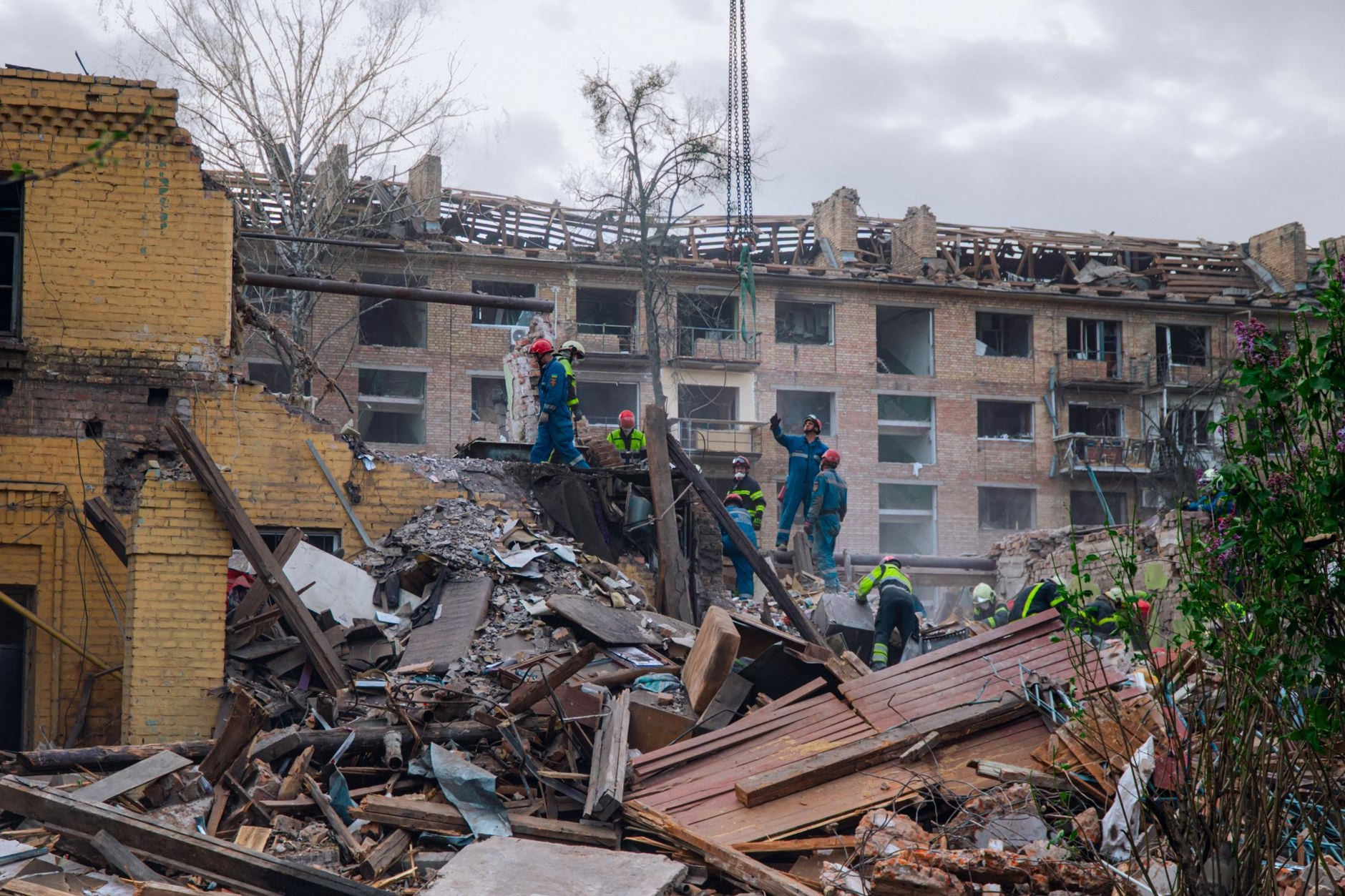
The Ukrainian President, Volodymyr Zelensky, has articulated a firm stance against the prospect of holding elections during the ongoing conflict. His primary concern, as communicated, centers on the potential for such an electoral process to create divisions within the nation, thereby undermining the critical unity required to navigate the current challenging circumstances. This position highlights the profound complexities faced by a country engaged in active warfare, where traditional democratic exercises must be weighed against immediate existential threats and the imperative of national cohesion.
The Rationale for Postponement
Conducting a nationwide election amidst widespread hostilities presents an array of formidable logistical and security challenges. A significant portion of the population is either displaced internally, residing in occupied territories, or serving on the front lines. Ensuring equitable access to polling stations, protecting voters and electoral officials from military threats, and verifying the integrity of the vote in war-affected regions would be an immense undertaking. The practical difficulties alone could compromise the fairness and legitimacy of the electoral outcome, irrespective of political intentions.
Furthermore, the very act of campaigning and political debate, which is fundamental to a democratic election, could inadvertently exacerbate existing societal tensions. During a period of national emergency, the focus of the government and the populace is predominantly directed towards defense and survival. Diverting resources, attention, and public discourse towards electoral contests could detract from these critical efforts, potentially weakening the national resolve.
Maintaining National Cohesion
President Zelensky’s assertion that wartime elections could “split” Ukraine underscores a deep understanding of the delicate balance of national unity during conflict. In times of war, a unified front is often considered paramount for effective resistance and resilience. Introducing the competitive nature of political campaigns could inevitably lead to the re-emergence of partisan divides, ideological disagreements, and regional differences that might otherwise be suppressed in the interest of collective survival.
Such divisions, if amplified by an election cycle, could be exploited by external adversaries seeking to destabilize the nation from within. The psychological impact of internal political strife during a war could erode public trust in institutions and leadership, making it harder to mobilize collective action and maintain morale. The argument is that national unity is not merely a desirable outcome but a strategic necessity for Ukraine’s continued sovereignty and territorial integrity.
Democratic Principles in Crisis
The decision to postpone elections, while seemingly a departure from standard democratic practice, is often considered within the framework of extraordinary circumstances. Many democratic nations have historically faced similar dilemmas during periods of major conflict or national emergency. The core principle of democracy, which is the will of the people, can be expressed in various forms, and in times of crisis, the immediate preservation of the state and its people may take precedence over routine electoral cycles.
This does not imply an abandonment of democratic values but rather a temporary recalibration of priorities to safeguard the very foundations upon which democracy rests. The challenge lies in balancing the need for continuity and stability with the long-term commitment to democratic governance. Leaders in such situations are often tasked with making difficult choices that prioritize national security and societal cohesion, with the understanding that full democratic processes will resume once stability is restored.
International Precedents and Perspectives
Throughout history, numerous countries have grappled with the question of holding elections during wartime. While specific circumstances vary, there is a general understanding that active conflict poses significant obstacles to free and fair electoral processes. The international community often recognizes the unique challenges faced by nations under attack and may view the postponement of elections as a pragmatic measure to ensure stability, provided such decisions are made transparently and with a clear commitment to restoring democratic norms post-conflict.
The focus of international observers often shifts from the immediate conduct of elections to the broader preservation of the state and its democratic institutions. The expectation is that any deferral of electoral processes would be temporary and justified by the extraordinary circumstances, with a clear roadmap for their resumption once conditions permit. This perspective acknowledges that the integrity of an election is not solely about the act of voting but also about the environment in which it takes place, which must be conducive to genuine democratic expression.
The Path Forward
President Zelensky’s declaration sets a clear direction for Ukraine’s political immediate future. It signals a continued emphasis on national unity and military efforts as the paramount objectives. This approach suggests that the nation’s leadership believes that any political competition at this juncture would be a distraction and a potential vulnerability. The focus will likely remain on consolidating international support, strengthening defense capabilities, and addressing the humanitarian crisis.
The decision also implies a commitment to holding elections once the conditions are deemed safe and conducive to a truly representative and fair process. The challenge will be to manage public expectations and ensure that the rationale for postponement is consistently communicated and understood, both domestically and internationally. The ultimate goal is to emerge from the conflict as a unified, sovereign, and democratic nation, capable of resuming its full electoral calendar without the threat of internal fragmentation.
Conclusion
The decision by President Zelensky to reject wartime elections reflects a strategic choice to prioritize national unity and stability during an unprecedented period of conflict. His concern that such elections could “split” Ukraine highlights the profound risks associated with traditional political competition when a nation is fighting for its very existence. This stance underscores the complex interplay between democratic ideals and the harsh realities of war, where the preservation of the state and its people often necessitates difficult temporary adjustments to conventional governance. The emphasis remains on a unified national effort, with the understanding that democratic processes will be fully restored once peace and security are re-established.














Leave a Reply