


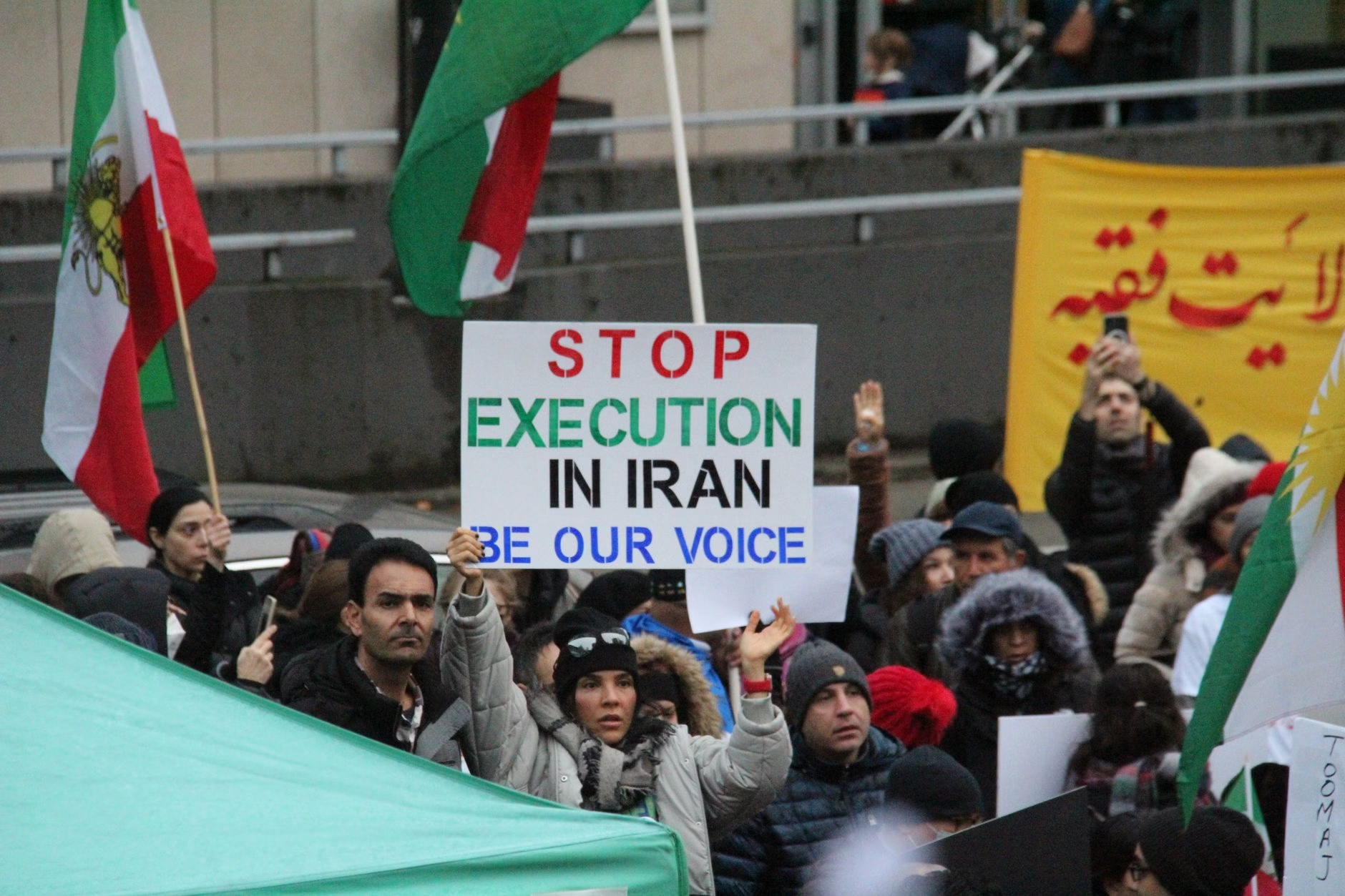
The judicial landscape in Iran has frequently drawn significant international attention, particularly during periods marked by extensive public demonstrations. Recent developments continue to highlight the severe measures taken by authorities in response to widespread unrest, often leading to profound concerns regarding human rights. These actions underscore a persistent pattern of judicial processes that have elicited strong reactions from global observers and advocacy groups, prompting calls for greater adherence to international legal norms and transparency. The interplay between state authority, public dissent, and the justice system in Iran remains a critical area of focus for human rights organizations worldwide.
Context of Public Dissent
Throughout its contemporary history, Iran has experienced various waves of public protests, driven by a complex interplay of socio-economic grievances, political aspirations, and cultural issues. These movements, ranging from localized demonstrations to significant national events, represent expressions of popular discontent that challenge established governmental policies and societal norms. The motivations behind such protests are diverse, often encompassing concerns over economic hardship, perceived corruption, restrictions on personal freedoms, or broader demands for political reform. The government’s approach to managing and responding to these expressions of dissent is a critical aspect of its domestic policy, with far-reaching implications for its international standing and internal stability. The intensity and scale of these demonstrations often dictate the severity of the state’s reaction.
Judicial Responses to Unrest
In the aftermath of major protest cycles, the Iranian judiciary has consistently played a central and often decisive role in addressing those deemed to be involved in or instigating unrest. The legal framework employed in these situations frequently leads to swift investigations, arrests, and the imposition of severe penalties. Accusations typically include a range of charges related to national security, such as “enmity against God” (moharebeh), “corruption on Earth” (efsad-fil-arz), public disorder, or offenses against the state’s authority. The application of these laws, particularly in cases directly linked to participation in or leadership of protests, has been a consistent focal point of criticism from international legal experts and human rights organizations, who question the proportionality and fairness of such proceedings.
Concerns Over Due Process
A significant and recurring area of international concern revolves around the adherence to fundamental international standards of due process within the Iranian judicial system, especially in cases arising from protests. Reports from various independent monitoring bodies and human rights organizations frequently cite issues such as severely limited or no access to independent legal counsel, trials conducted behind closed doors without public scrutiny, and credible allegations of coerced confessions obtained under duress. These procedural shortcomings contribute significantly to a widespread perception that judicial proceedings may not consistently guarantee fair trials, particularly for individuals apprehended during periods of heightened political tension and public unrest. The pervasive lack of transparency in certain high-profile cases further exacerbates these worries, making it challenging to ascertain the full facts and ensuring accountability.
The Use of Capital Punishment
Among the most severe and internationally condemned penalties imposed in connection with protest-related charges is capital punishment. The application of the death penalty in such circumstances has drawn widespread condemnation from a broad spectrum of international actors, including governments, intergovernmental organizations, and non-governmental human rights groups. Critics argue vehemently that these executions serve not only as a form of ultimate punishment but also, and perhaps primarily, as a powerful deterrent to future dissent. This strategy, they contend, aims to suppress further public demonstrations and stifle any nascent movements for change. The international community often views these actions as disproportionate responses to civil unrest, constituting a grave violation of fundamental human rights principles, particularly the right to life and freedom from cruel, inhuman, or degrading punishment.
International Reactions and Calls for Accountability
Governments and international organizations worldwide have frequently voiced strong and unequivocal objections to the judicial handling of protest-related cases in Iran. Statements from influential bodies such as the United Nations, the European Union, and various prominent human rights groups consistently call for an immediate halt to executions and urge Iran to uphold its international human rights obligations. These calls emphasize the critical importance of respecting universal freedoms of expression and assembly, and ensuring that all citizens receive fair and transparent judicial processes, in line with international legal standards. The sustained diplomatic pressure exerted by these entities reflects a profound global concern for the rule of law, human dignity, and the protection of fundamental freedoms in Iran. Such pressure often includes specific demands for independent investigations into alleged abuses and greater access for international observers.
Impact on Civil Society
The stringent judicial measures and severe penalties, including capital punishment, taken against individuals involved in protests have a profound and chilling effect on civil society within Iran. Activists, journalists, lawyers, and ordinary citizens may become increasingly hesitant to express dissent, engage in public discourse, or participate in peaceful gatherings due to a pervasive fear of severe repercussions. This environment of apprehension can effectively stifle open debate, limit the legitimate space for peaceful opposition, and ultimately impact the overall health of democratic participation and civic engagement. The long-term consequences of such policies include a potential erosion of trust between the populace and state institutions, leading to deeper societal divisions and a diminished capacity for constructive dialogue on critical national issues.
Legal Framework and Interpretations
The Iranian legal system, deeply rooted in Islamic law and jurisprudence, provides the foundational framework for these judicial actions. However, the interpretations and applications of specific laws, particularly those concerning national security, public order, and moral offenses, are often subject to intense debate and scrutiny. Human rights advocates frequently argue that certain provisions within this legal framework are broadly defined and can be selectively applied to suppress legitimate political expression, peaceful assembly, and freedom of speech. Understanding the intricate nuances of this legal system, including the roles of various courts and judicial bodies, is crucial for comprehending the broader context in which these controversial judicial decisions are made and implemented.
The Role of International Law
International human rights law establishes clear and universally recognized standards regarding fundamental rights such as the right to life, freedom from torture and arbitrary detention, and the right to a fair and public trial. Organizations tasked with monitoring Iran’s human rights record consistently assess its compliance with these international norms and treaties, to which Iran is often a signatory. The persistent gap between these internationally accepted standards and the practices observed in some Iranian judicial proceedings, particularly those involving political dissent, remains a significant point of contention and a source of ongoing international pressure. Adherence to international covenants and conventions is a key demand from global bodies advocating for human rights.
Future Outlook and Dialogue
The ongoing situation necessitates continued international monitoring, robust diplomatic engagement, and sustained dialogue. While the internal judicial processes of any nation are generally considered sovereign matters, their implications for universal human rights are undeniably of global concern. Encouraging greater adherence to universal human rights standards, promoting enhanced transparency in legal proceedings, and fostering an environment where due process is consistently upheld could contribute significantly to a more stable, just, and equitable society within Iran. The path forward involves complex diplomatic efforts, sustained advocacy by human rights organizations, and a commitment to upholding fundamental freedoms for all citizens.
Conclusion
The judicial responses to public protests in Iran represent a complex and deeply concerning aspect of the nation’s human rights landscape. The imposition of severe penalties, including capital punishment, following periods of widespread unrest continues to draw significant international criticism and raise serious questions about justice and fairness. As global calls for adherence to fair trial standards, transparency, and fundamental human rights obligations persist, the ongoing dialogue surrounding these critical issues remains paramount. Fostering accountability and promoting fundamental freedoms are essential steps towards addressing these profound challenges and ensuring respect for human dignity.

















Leave a Reply