


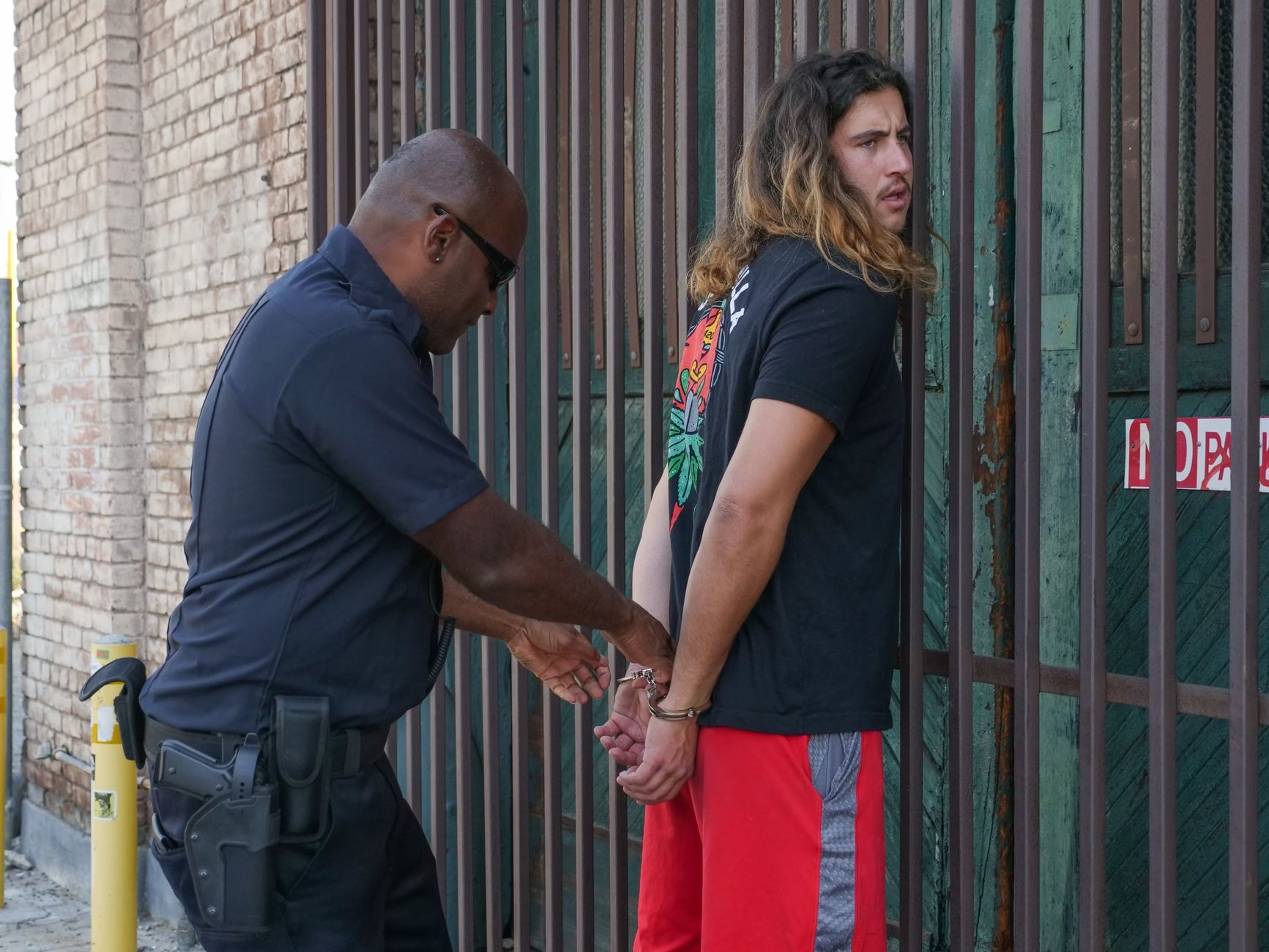
A notable shift in the approach to immigration enforcement at the U.S. southern border has emerged, characterized by an expansion of the military’s operational scope. This change, initiated by the previous presidential administration, has been further solidified by a recent legal opinion that grants the Pentagon increased authority, specifically concerning arrest powers, within the border region.
This development represents a significant evolution in the deployment and function of military personnel in domestic security contexts, moving beyond traditional support roles to encompass more direct law enforcement responsibilities.
Historical Context of Military Presence at the Border
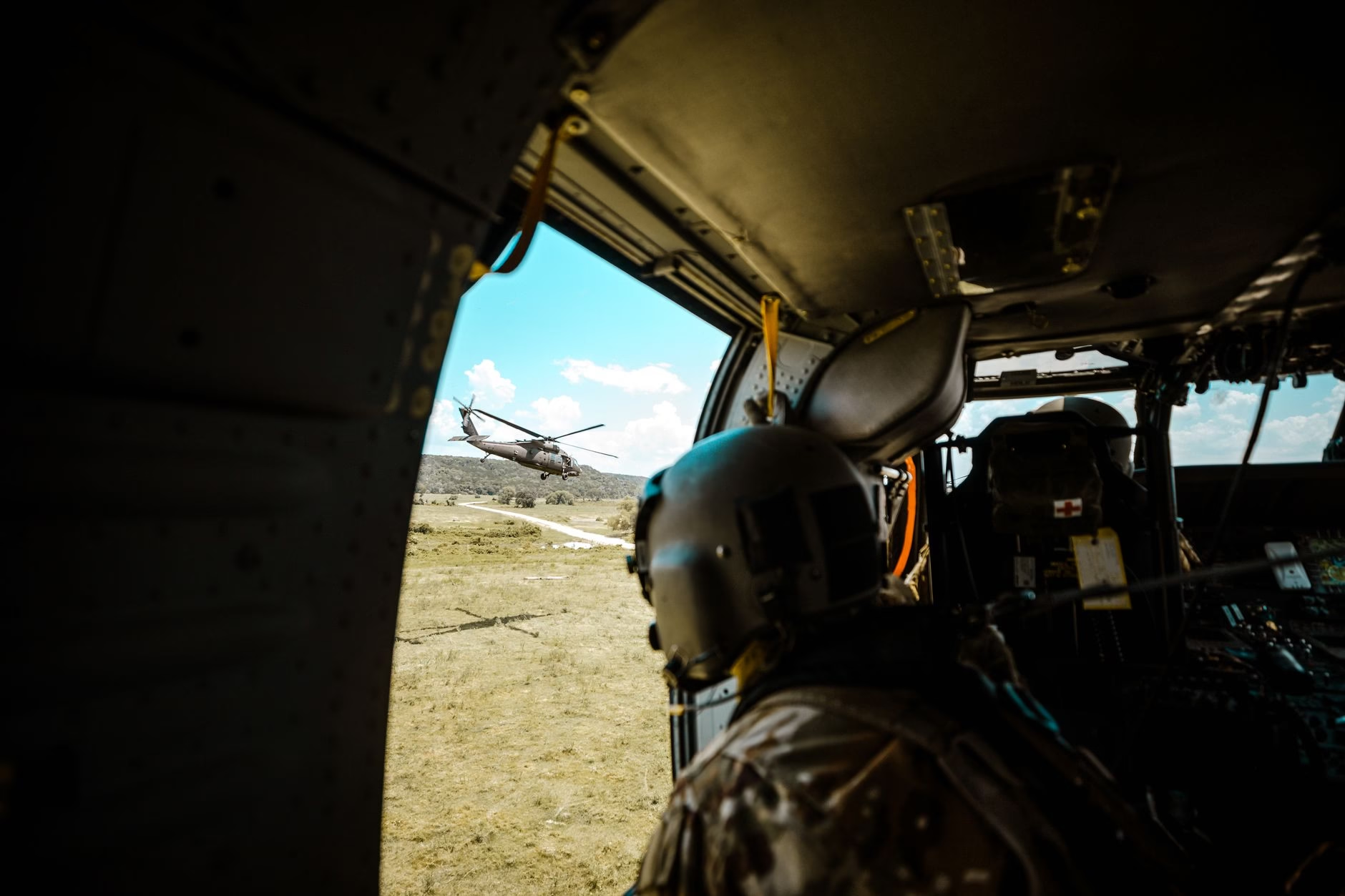
The involvement of the U.S. military along the nation’s borders is not unprecedented. For decades, military units have been deployed to assist civilian agencies, primarily Customs and Border Protection (CBP), with various tasks. These roles have historically been defined by support functions, such as providing logistical assistance, conducting surveillance, maintaining infrastructure, and offering medical aid.
Past operations, including those under different administrations, have seen military engineers construct barriers, intelligence units monitor activity, and logistical teams transport supplies. The core principle guiding these deployments has typically been to augment civilian capabilities without directly engaging in law enforcement activities like apprehending individuals or conducting searches.
Understanding the Legal Framework: Posse Comitatus
The Posse Comitatus Act of 1878 serves as a foundational legal principle governing the use of the U.S. military in domestic law enforcement. This act generally prohibits the use of the Army and Air Force (and by extension, the Navy and Marine Corps through Department of Defense policy) for domestic law enforcement purposes unless expressly authorized by the Constitution or Congress.
The intent behind Posse Comitatus is to maintain a clear separation between the military and civilian law enforcement, safeguarding civil liberties and preventing the militarization of domestic policing. Exceptions to this act exist, often invoked during emergencies, natural disasters, or when specific legislation permits military involvement, such as in certain counter-drug operations.
The recent legal opinion, however, appears to navigate or reinterpret these boundaries, allowing for a more direct engagement by military personnel in roles that traditionally fall under civilian jurisdiction, particularly concerning the authority to make arrests.
The Shift to Direct Enforcement: What Expanded Arrest Powers Mean
The granting of greater arrest powers to military personnel at the southern border marks a substantial departure from their conventional support functions. Previously, military members might identify individuals attempting to cross the border unlawfully and then refer them to CBP agents for apprehension and processing.
With expanded arrest powers, military personnel could potentially directly apprehend individuals suspected of violating immigration laws. This shift implies a more active and front-line role in the enforcement chain, placing military members in direct contact with migrants and asylum seekers in a law enforcement capacity.
This change necessitates careful consideration of training, protocols, and the legal ramifications for both the military personnel involved and the individuals they encounter. The distinction between assisting and directly enforcing becomes blurred, raising questions about the scope and limits of this new authority.
Rationale Behind the Policy Change
The decision to expand the military’s arrest powers likely stems from a combination of factors. One primary driver could be the perceived challenges and complexities at the southern border, including fluctuating migration flows and the strain on existing civilian resources.
Proponents of such a policy might argue that increased military involvement, particularly with enhanced powers, could provide a more robust and immediate response to border security concerns. It could also be viewed as a strategic move to bolster the capacity of border agencies, allowing for a more comprehensive approach to managing the border environment.
Furthermore, the policy change reflects a broader administrative philosophy regarding border security, emphasizing a more assertive stance on immigration enforcement and a willingness to deploy all available resources to achieve specific objectives.
Potential Implications for Border Operations
The integration of military personnel with expanded arrest powers into border operations could have several significant implications. It might lead to a more visible and militarized presence along certain sections of the border, potentially altering the dynamics of interactions between authorities and individuals attempting to cross.
Coordination between military units and civilian agencies like CBP will become even more critical. Clear lines of authority, communication protocols, and operational guidelines will be essential to ensure seamless and effective enforcement while avoiding jurisdictional conflicts or operational inefficiencies.
This expanded role could also influence the allocation of resources within the Department of Defense, potentially diverting personnel and equipment from other missions to focus on border security. The long-term sustainability and effectiveness of such a deployment model will likely be subject to ongoing evaluation.
Concerns Regarding Civil Liberties and Oversight
The expansion of military arrest powers in a domestic context often raises concerns among civil liberties advocates and legal experts. These concerns typically revolve around the appropriate role of the military in civilian affairs, the training of military personnel for law enforcement duties, and the potential impact on the rights of individuals.
Military training is fundamentally different from civilian law enforcement training, focusing on combat and national defense rather than domestic policing, constitutional rights, and community engagement. Questions may arise regarding accountability mechanisms for military personnel operating in this new capacity, as well as the legal protections afforded to those apprehended by military forces.
Ensuring robust oversight and clear guidelines will be paramount to address these concerns and maintain public trust. The distinction between national defense and domestic law enforcement remains a sensitive area, and any blurring of these lines warrants careful scrutiny.
The Broader Context of Immigration Enforcement
This policy shift occurs within the broader landscape of U.S. immigration enforcement, which has been a subject of continuous debate and policy adjustments. The southern border remains a focal point for discussions on national security, humanitarian concerns, and economic impacts.
The decision to grant the military greater arrest powers reflects a particular strategy aimed at strengthening border controls. It underscores the complex challenges faced by policymakers in balancing security imperatives with legal and ethical considerations related to human migration.
Conclusion
The expansion of the U.S. military’s arrest powers at the southern border, driven by a new legal opinion and previous administrative directives, marks a significant evolution in the nation’s approach to immigration enforcement. This development moves military involvement beyond traditional support roles into more direct law enforcement functions.
While intended to bolster border security, this policy shift introduces new complexities regarding legal frameworks, operational coordination, and civil liberties. Its long-term impact on border management, inter-agency relations, and the fundamental principles governing military deployment in domestic affairs will undoubtedly continue to be a subject of close observation and analysis.

















Leave a Reply