


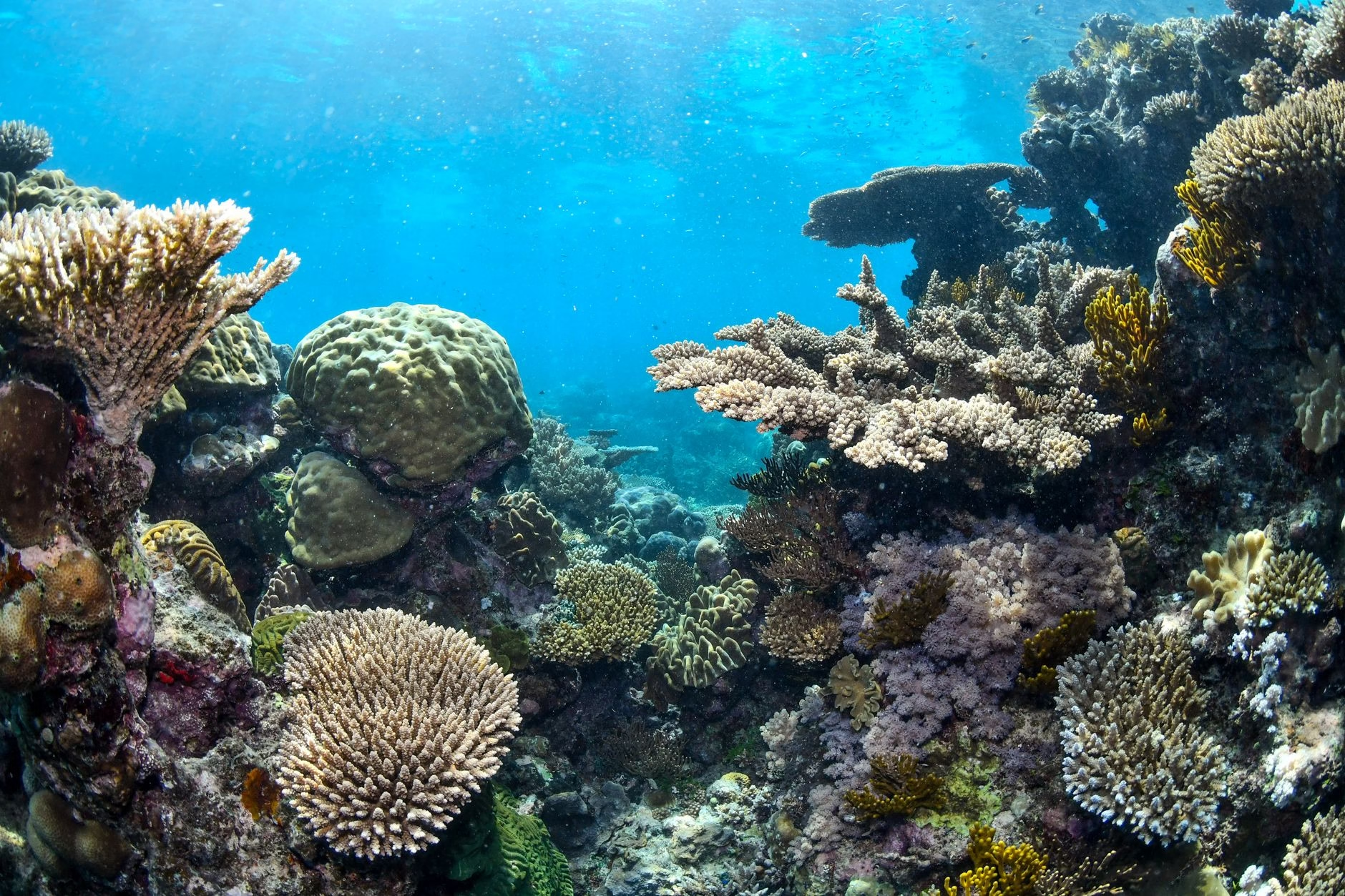
The Great Barrier Reef, an iconic natural wonder, frequently captures global attention, often sparking discussions about its condition and future. Recent discourse, however, has sometimes presented an overly optimistic view of its resilience, suggesting a robust capacity for recovery that may not fully align with scientific understanding. This perspective, while perhaps intended to inspire hope, risks downplaying the persistent and severe threats confronting this invaluable ecosystem. A comprehensive examination of Great Barrier Reef health reveals a more complex reality, one that necessitates a nuanced understanding beyond simplified narratives of rapid rebound.
The Significance of the Great Barrier Reef
Spanning over 2,300 kilometers off the coast of Queensland, Australia, the Great Barrier Reef is the world’s largest coral reef system. It is a mosaic of over 3,000 individual reefs and 900 islands, supporting an extraordinary array of marine life. This includes thousands of species of fish, corals, mollusks, and endangered species like dugongs and green sea turtles. Beyond its immense biodiversity, the reef holds profound cultural significance for Indigenous Australians and contributes billions annually to the Australian economy through tourism and fisheries. Its ecological role as a natural breakwater and a carbon sink further underscores its global importance.
Persistent Threats to Reef Ecosystems
Despite its grandeur, the Great Barrier Reef faces unprecedented challenges, primarily driven by climate change. Rising ocean temperatures are the leading cause of mass coral bleaching events, where corals expel the symbiotic algae living in their tissues, leading to starvation and often death. The reef has experienced several severe bleaching events in recent decades, causing widespread coral mortality across vast areas. These events are becoming more frequent and intense, leaving less time for recovery between disturbances.
Ocean acidification, another consequence of increased atmospheric carbon dioxide, also poses a significant threat. As oceans absorb more CO2, their pH decreases, making it harder for corals and other calcifying organisms to build and maintain their skeletons and shells. This process weakens the structural integrity of the reef, making it more vulnerable to erosion and physical damage. Localized pressures, such as poor water quality from agricultural runoff and overfishing, further compound these global stressors, hindering the reef’s ability to recover.
Examining Claims of Reef Resilience
In recent times, certain interpretations of data have suggested a stronger-than-expected resilience within the Great Barrier Reef system. These narratives often highlight localized coral growth or recovery in specific areas, presenting them as evidence of the reef’s overall robust health. While it is true that some parts of the reef exhibit signs of recovery, particularly after less severe disturbances or in areas with fewer localized pressures, it is crucial to understand the broader context.
The concept of resilience in an ecosystem refers to its ability to absorb disturbance and reorganize while undergoing change, so as to retain essentially the same function, structure, identity, and feedbacks. For the Great Barrier Reef, true resilience would mean a sustained capacity to withstand and recover from major climate-induced events. However, the increasing frequency and intensity of bleaching events, coupled with ocean acidification, challenge this very capacity. Focusing solely on isolated instances of recovery without acknowledging the systemic decline across the entire ecosystem can create a misleading impression of overall health.
The Reality of Coral Recovery
Coral recovery is a slow and intricate process. It involves the settlement of new coral larvae, their growth into mature colonies, and the re-establishment of complex reef structures. This process can take decades, even under optimal conditions. When severe bleaching events occur repeatedly within short timeframes, the window for full recovery shrinks dramatically. Younger, faster-growing corals may colonize damaged areas, but these often lack the diversity and structural complexity of the older, slower-growing species that form the backbone of a healthy reef.
Furthermore, the type of coral that recovers can also be a critical factor. Some species are more tolerant to warmer waters but may not provide the same ecological benefits or habitat structure as the species they replace. This shift in species composition, known as a ‘phase shift,’ can fundamentally alter the reef ecosystem, potentially reducing its biodiversity and overall health, even if coral cover appears to increase. Therefore, simply observing an increase in coral cover does not necessarily equate to a return to the reef’s original, healthy state.
Scientific Perspectives and Ongoing Research
Leading marine scientists and conservation organizations consistently emphasize the urgent need for significant global action on climate change to secure the long-term future of the Great Barrier Reef. While local management efforts, such as improving water quality and controlling outbreaks of crown-of-thorns starfish, are vital, they cannot fully mitigate the impacts of rising ocean temperatures and acidification. The scientific consensus points to a future where the reef will continue to face severe stress unless greenhouse gas emissions are drastically reduced.
Ongoing research plays a crucial role in monitoring Great Barrier Reef health, understanding its complex dynamics, and developing innovative conservation strategies. Sophisticated monitoring programs track changes in coral cover, species diversity, and water quality across the vast reef system. These scientific assessments provide the most accurate picture of the reef’s condition, often contrasting with more optimistic public narratives. The data collected from these programs consistently highlight the vulnerability of the reef to climate change and the imperative for sustained, large-scale intervention.
The Path Forward for Great Barrier Reef Health
Addressing the challenges facing the Great Barrier Reef requires a multi-faceted approach. Globally, this means accelerating the transition to a low-carbon economy and meeting ambitious emissions reduction targets. Locally, it involves continued investment in water quality improvement programs, sustainable fisheries management, and targeted interventions to protect vulnerable areas. Public awareness and education are also critical to foster a realistic understanding of the reef’s predicament and galvanize support for conservation efforts.
It is imperative that discussions surrounding Great Barrier Reef health are grounded in scientific evidence rather than overly optimistic interpretations. While celebrating any signs of recovery is natural, it is equally important to acknowledge the profound and ongoing threats. A clear-eyed assessment ensures that appropriate actions are taken, resources are allocated effectively, and the global community remains committed to safeguarding this irreplaceable natural wonder for future generations. The reef’s future hinges on a collective commitment to both understanding its true state and implementing decisive, impactful solutions.
Conclusion
The Great Barrier Reef remains a marvel of natural beauty and ecological complexity, yet its future is far from assured. While some narratives might suggest a robust and rapidly recovering ecosystem, a deeper look into Great Barrier Reef health reveals an environment under immense pressure. The persistent threats of climate change, particularly mass coral bleaching and ocean acidification, demand urgent and sustained global action. Overstating the reef’s resilience risks fostering complacency, potentially undermining the critical efforts required to protect it. A realistic, science-informed perspective is essential to guide effective conservation strategies and ensure that this extraordinary natural heritage endures.






















Leave a Reply