


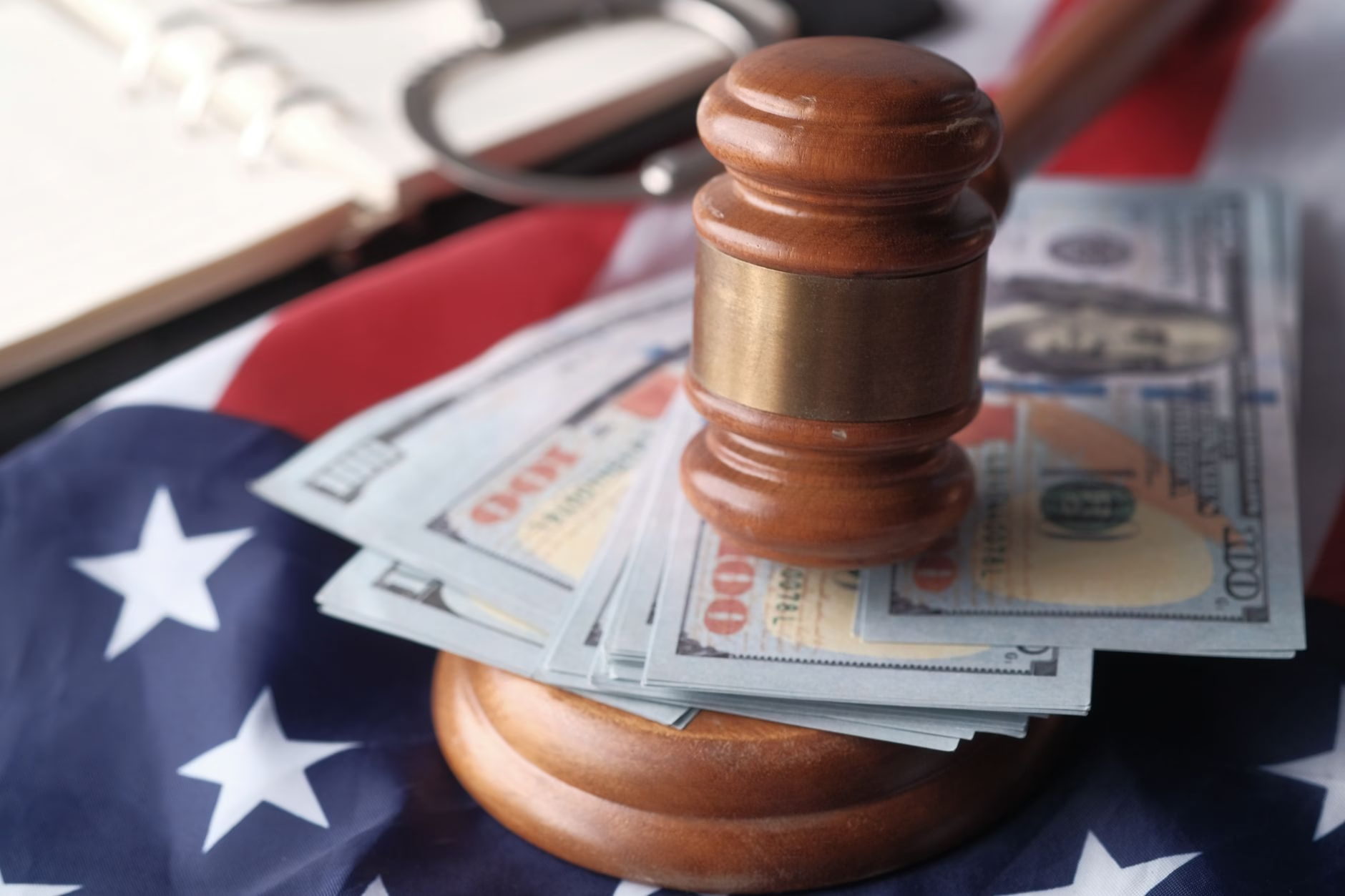
The integrity of public service is a cornerstone of democratic governance. Recent discourse in Washington has brought the issue of ethical conduct, particularly concerning high-ranking officials and their personal financial interests, into sharp focus. Questions surrounding potential self-dealing and the appropriate boundaries between public duty and private gain have become increasingly prominent, sparking debate among the populace and political observers alike.
The Debate Over Executive Branch Ethics
A notable perspective articulated by the former President suggests that public interest in the financial activities of a president and their family during their tenure is minimal. This viewpoint posits that such matters do not significantly concern the electorate. However, this assertion does not universally resonate. A segment of the voting public, including individuals within the President’s own political affiliation, has expressed reservations, perceiving a decline in established ethical benchmarks. This divergence in opinion underscores a broader societal concern regarding accountability and transparency within the highest echelons of government.
The Role of Congressional Oversight
Congressional oversight serves as a vital mechanism within the American system of checks and balances. It empowers the legislative branch to scrutinize the operations of the executive branch, ensuring adherence to laws, efficient use of taxpayer funds, and ethical conduct. This function is typically exercised through various means, including committee hearings, investigations, and the power to issue subpoenas for documents and testimony. The primary objective is to hold government officials accountable and to inform legislative action, thereby safeguarding public trust and maintaining the integrity of governmental processes.
Potential for Heightened Scrutiny
The political landscape often dictates the intensity and scope of congressional oversight. Midterm elections, in particular, can be pivotal in reshaping the balance of power within Congress. Should the Democratic Party secure a majority in the House of Representatives, there is a strong expectation that the level of scrutiny directed towards executive branch ethics would significantly increase. A change in congressional leadership often brings a renewed focus on areas previously deemed less prioritized by the outgoing majority. This potential shift could translate into a more aggressive pursuit of information, a greater number of investigative hearings, and a heightened demand for transparency regarding financial dealings and potential conflicts of interest.
Mechanisms of Enhanced Oversight
With a new majority, House committees would likely activate their full investigative powers. This could involve requesting extensive financial records, communications, and other pertinent documents from current and former administration officials, as well as their associated entities. Public hearings might become more frequent, providing a platform for detailed examination of specific allegations or systemic issues related to ethical conduct. The objective would be to ascertain whether existing ethical guidelines have been adequately followed and whether new legislative measures are required to strengthen accountability frameworks. Such investigations are not merely punitive; they are also designed to identify vulnerabilities in the current system and propose reforms that prevent future ethical lapses.
Implications for Governance and Public Trust
Increased oversight, while sometimes perceived as politically motivated, fundamentally aims to reinforce the principles of good governance. When the public perceives that government officials are held to high ethical standards and that potential conflicts of interest are thoroughly investigated, it can contribute to a restoration or strengthening of public trust in institutions. Conversely, a lack of perceived accountability can erode confidence, leading to cynicism and disengagement. The prospect of more rigorous ethical scrutiny, therefore, carries significant implications not only for the individuals and administrations under review but also for the broader health of democratic processes. It signals a commitment to the idea that no individual, regardless of their position, is above the law or beyond ethical examination.
Historical Precedent and Future Outlook
Throughout American history, periods of intense congressional oversight have often followed shifts in political power, particularly when the legislative branch is controlled by a party different from that of the presidency. These periods have frequently led to significant reforms and a re-evaluation of ethical norms. The anticipated increase in oversight, should the political conditions materialize, would align with this historical pattern. It would represent a deliberate effort to reassert congressional authority in monitoring executive conduct and to ensure that the actions of public servants align with the public interest, free from undue personal financial influence. The outcome of such scrutiny could shape future ethical guidelines and set precedents for how administrations manage potential conflicts of interest.
Conclusion
The debate surrounding ethical standards in Washington and the financial activities of those in power remains a critical aspect of contemporary political discourse. While some may downplay its significance, a considerable portion of the electorate views ethical conduct as paramount. The potential for a change in congressional control following midterm elections could usher in an era of intensified oversight, particularly concerning presidential ethics. This shift would underscore the enduring importance of checks and balances, aiming to uphold transparency, accountability, and ultimately, public confidence in the institutions of government. The focus on ethical governance is not merely a partisan issue but a fundamental requirement for a healthy and functioning democracy.






















Leave a Reply