


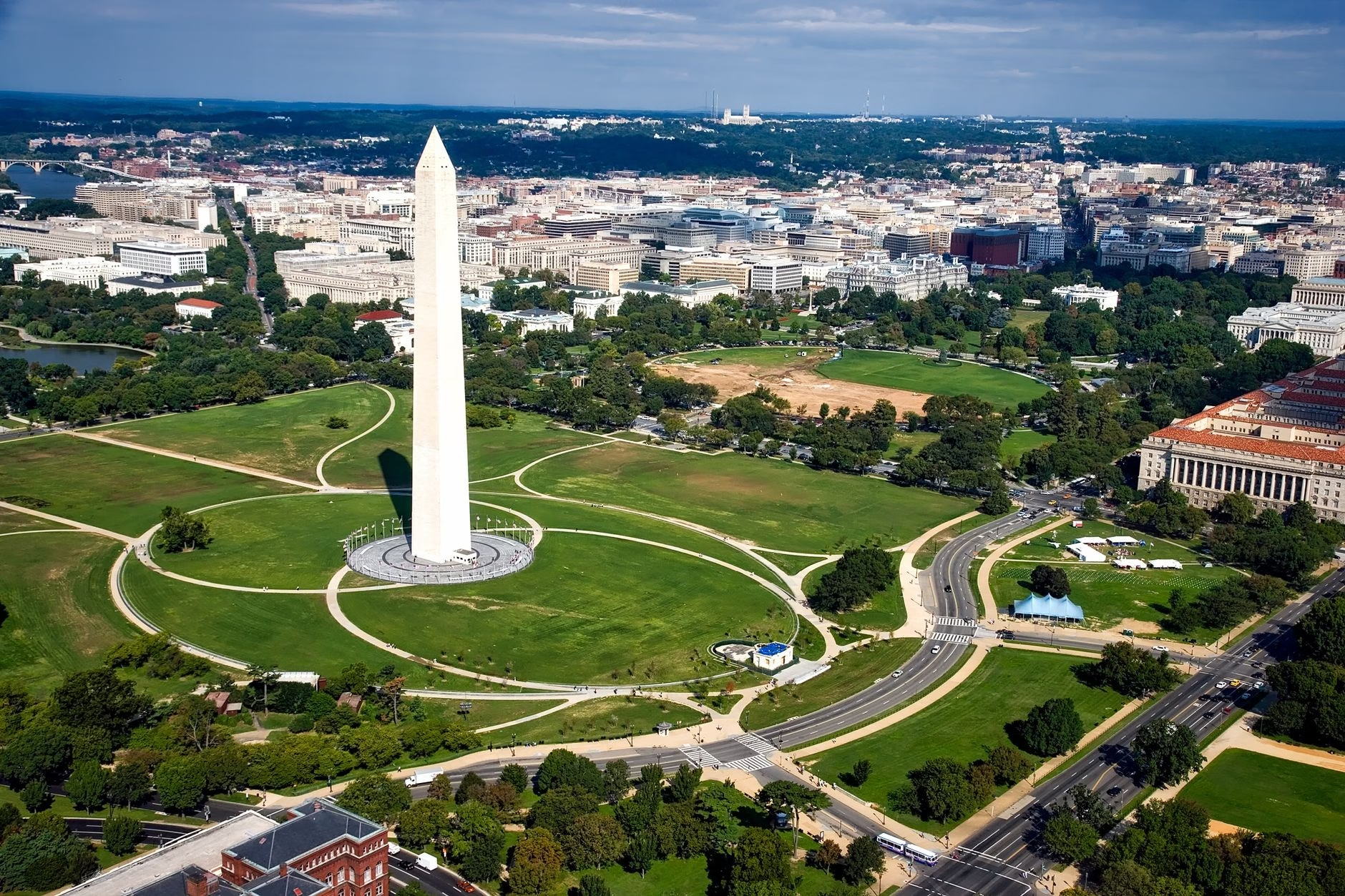
President Donald Trump recently attributed significant areas of deteriorated grass on the National Mall, specifically near the World War II Memorial, to acts of vandalism. This statement draws attention to the ongoing challenges of maintaining one of America’s most iconic public landscapes, particularly after it has hosted major national events. The area in question was previously the site of a prominent Fourth of July celebration, an event that naturally draws considerable public attention to the condition of the Mall.
The National Mall: A Symbol of American Heritage
The National Mall stands as a profound symbol of American democracy and history, stretching from the United States Capitol to the Lincoln Memorial. It encompasses numerous monuments, memorials, and museums, serving as a vital public space for national celebrations, protests, and everyday recreation. Millions of visitors annually traverse its expansive lawns, reflecting on the nation’s past and participating in its present. Its pristine condition is often seen as a reflection of national pride and a testament to the care taken in preserving significant historical sites. The World War II Memorial, a poignant tribute to those who served, is a particularly sensitive area, underscoring the importance of maintaining the surrounding landscape with utmost respect and diligence. Any visible damage to this revered space naturally prompts public concern and discussion regarding its upkeep.
The Challenges of Maintaining Iconic Public Spaces
Maintaining a vast urban park like the National Mall presents a complex array of challenges for park management and maintenance crews. The sheer volume of foot traffic from tourists, commuters, and participants in various events places immense stress on the delicate ecosystem of the lawns. Environmental factors, including fluctuating weather patterns, periods of drought, and intense heat, also contribute to the wear and tear on the grass. Furthermore, the logistical demands of setting up and dismantling large-scale events, which often involve heavy equipment, temporary structures, and dense crowds, can inevitably impact the ground cover. Balancing the public’s right to access and utilize this significant space with the imperative to preserve its ecological integrity requires continuous effort and substantial resources. The appearance of “large swaths of dead grass” highlights the persistent struggle to keep such a high-profile area in impeccable condition year-round.
The Impact of Large-Scale Gatherings
Large public gatherings, such as the major Fourth of July celebration mentioned in connection with the affected area, are integral to the National Mall’s function as a national forum. These events, while vital for civic engagement and national commemoration, inherently pose significant challenges to the underlying landscape. The concentration of thousands, sometimes hundreds of thousands, of people in a specific area for extended periods can compact soil, damage root systems, and lead to visible deterioration of grass and other vegetation. Even with careful planning and protective measures, the sheer scale of such events can leave a temporary, and sometimes lasting, imprint on the environment. When such an event precedes the observation of significant damage, it naturally becomes a point of consideration in assessing the causes of deterioration, alongside other potential factors.
Addressing Claims of Vandalism
President Trump’s assertion that vandals are responsible for the damaged grass introduces a specific dimension to the discussion. Vandalism, defined as the deliberate destruction or defacement of public or private property, is a serious concern for any public park system. Acts of vandalism not only incur financial costs for repair and restoration but also diminish the aesthetic and symbolic value of public spaces. When such claims are made regarding a site as historically and culturally significant as the National Mall, they can ignite public debate about civic responsibility, respect for national heritage, and the security measures in place to protect these assets. Investigating such claims typically involves assessing the nature of the damage, reviewing surveillance footage if available, and considering all potential factors that could contribute to the observed deterioration. The distinction between accidental wear and tear from legitimate public use and intentional malicious damage is crucial in determining appropriate responses and preventative strategies.
Stewardship of National Treasures
The ongoing condition of the National Mall serves as a powerful reminder of the collective responsibility to act as stewards of national treasures. These spaces are not merely patches of grass or collections of stone monuments; they are living testaments to shared history, democratic ideals, and the sacrifices made for the nation. Ensuring their preservation requires a multi-faceted approach involving government agencies, conservation organizations, and the general public. Educational initiatives can foster a greater sense of ownership and respect among visitors, encouraging responsible behavior. Adequate funding for maintenance, landscaping, and security is also paramount. When incidents like the reported grass damage occur, they underscore the need for continuous vigilance and investment in the upkeep of these invaluable assets. The public discourse surrounding such events often reinforces the deep emotional connection many citizens feel towards these iconic landscapes.
Preserving the Mall for Future Generations
Ultimately, the goal is to preserve the National Mall in a condition that honors its past and serves the needs of future generations. This involves not only repairing existing damage but also implementing sustainable practices that can withstand the pressures of heavy public use and environmental challenges. The discussion initiated by President Trump’s remarks about the damaged grass near the World War II Memorial highlights the constant tension between public access and environmental preservation. It calls for a renewed focus on how best to protect these sacred grounds, ensuring they remain vibrant, accessible, and inspiring for all who visit. The commitment to maintaining the National Mall’s beauty and integrity is a commitment to the nation’s heritage itself, requiring ongoing dedication from all stakeholders to safeguard this irreplaceable public space.
















Leave a Reply