


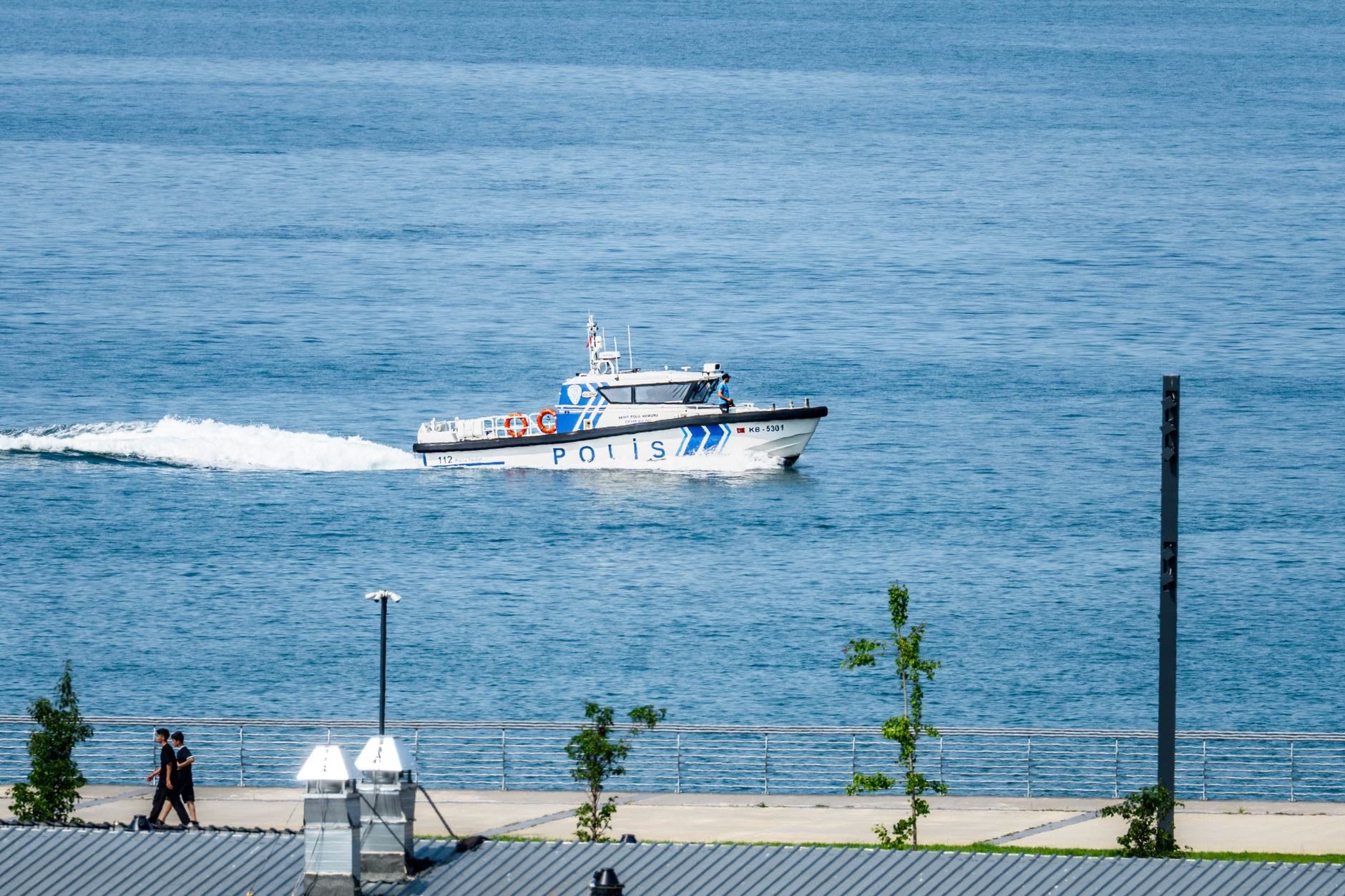
The Black Sea region stands as a pivotal geopolitical crossroads, connecting Europe, Asia, and the Middle East. Its strategic importance is underscored by the numerous vital ports that dot its coastline, serving as critical hubs for international trade, energy transit, and naval operations. The security of these maritime gateways is paramount, not only for the littoral states but also for global economic stability and energy supply chains. Understanding the multifaceted challenges to Black Sea port security requires an examination of historical contexts, contemporary geopolitical dynamics, and the inherent vulnerabilities of maritime infrastructure.
Historical Significance of Black Sea Ports
The Black Sea has historically been a contested region, a nexus of empires and trade routes. From ancient Greek colonies to the Ottoman and Russian empires, control over its waters and ports has consistently conferred significant strategic advantages. These ports facilitated the exchange of goods, cultures, and military power, shaping the geopolitical landscape for centuries. Today, their role remains undiminished, evolving with modern economic and security paradigms. The infrastructure developed over generations continues to support vast commercial enterprises, making any disruption a matter of international concern.
Economic Lifelines and Global Trade
Black Sea ports are indispensable economic lifelines. They handle substantial volumes of grain, oil, gas, and various manufactured goods, connecting landlocked regions to global markets. For instance, the export of agricultural products from the region is crucial for global food security, while energy exports are vital for European consumption. Any impediment to the free flow of commerce through these ports can trigger ripple effects across international supply chains, leading to price volatility, shortages, and economic instability far beyond the immediate vicinity. The efficiency and uninterrupted operation of these ports are therefore a constant focus for international stakeholders.
Geopolitical Tensions and Regional Instability
The contemporary security environment in the Black Sea is characterized by heightened geopolitical tensions. Various regional and extra-regional powers vie for influence, leading to a complex and often volatile security landscape. This competition manifests in increased military presence, naval exercises, and diplomatic maneuvering. The presence of multiple actors with divergent interests creates an environment where maritime incidents, whether accidental or intentional, can escalate rapidly. Maintaining a delicate balance of power and ensuring freedom of navigation are constant challenges in this intricate geopolitical mosaic.
Threats to Maritime Infrastructure
Ports and their associated maritime infrastructure are inherently vulnerable to a range of threats. These include conventional military actions, such as missile strikes or naval blockades, which can severely damage facilities, disrupt operations, and endanger personnel. Beyond direct military engagement, ports face risks from asymmetric threats, including sabotage, cyberattacks, and terrorism. Cyber vulnerabilities, in particular, pose a growing concern, as sophisticated attacks can cripple port management systems, navigation aids, and logistics networks, leading to widespread chaos and economic losses without physical destruction. Protecting these critical assets requires robust, multi-layered security protocols.
Impact on Energy and Food Security
The Black Sea region is a significant conduit for global energy and food supplies. Disruptions to port operations can have immediate and severe consequences for both. Blockades or attacks on ports involved in grain exports, for example, can exacerbate global food crises, particularly affecting vulnerable populations dependent on these supplies. Similarly, any interruption to oil and gas transit through Black Sea ports can lead to energy price spikes and supply shortages, impacting industries and consumers worldwide. The interconnectedness of global markets means that regional instability in the Black Sea has far-reaching implications for international energy and food security.
International Cooperation and Security Measures
Addressing the complex security challenges in the Black Sea necessitates robust international cooperation. Collaborative efforts among littoral states and international organizations are essential for intelligence sharing, coordinated patrols, and the development of common security protocols. Enhancing maritime domain awareness, investing in advanced surveillance technologies, and strengthening coastal defenses are crucial steps. Furthermore, diplomatic initiatives aimed at de-escalation and conflict resolution play a vital role in fostering a more stable and predictable environment. The long-term security and prosperity of the Black Sea region depend on a concerted and sustained commitment to peace and cooperation among all stakeholders.
Future Outlook for Black Sea Port Security
The future of Black Sea port security remains intertwined with broader geopolitical developments. As global trade patterns evolve and regional rivalries persist, the need for resilient and secure maritime infrastructure will only grow. Adapting to emerging threats, such as advanced drone technologies and sophisticated cyber warfare, will require continuous innovation in security strategies and investments in cutting-edge defense systems. The strategic importance of these ports ensures that their security will remain a top priority for nations worldwide, influencing international relations and global economic stability for years to come.





















Leave a Reply