


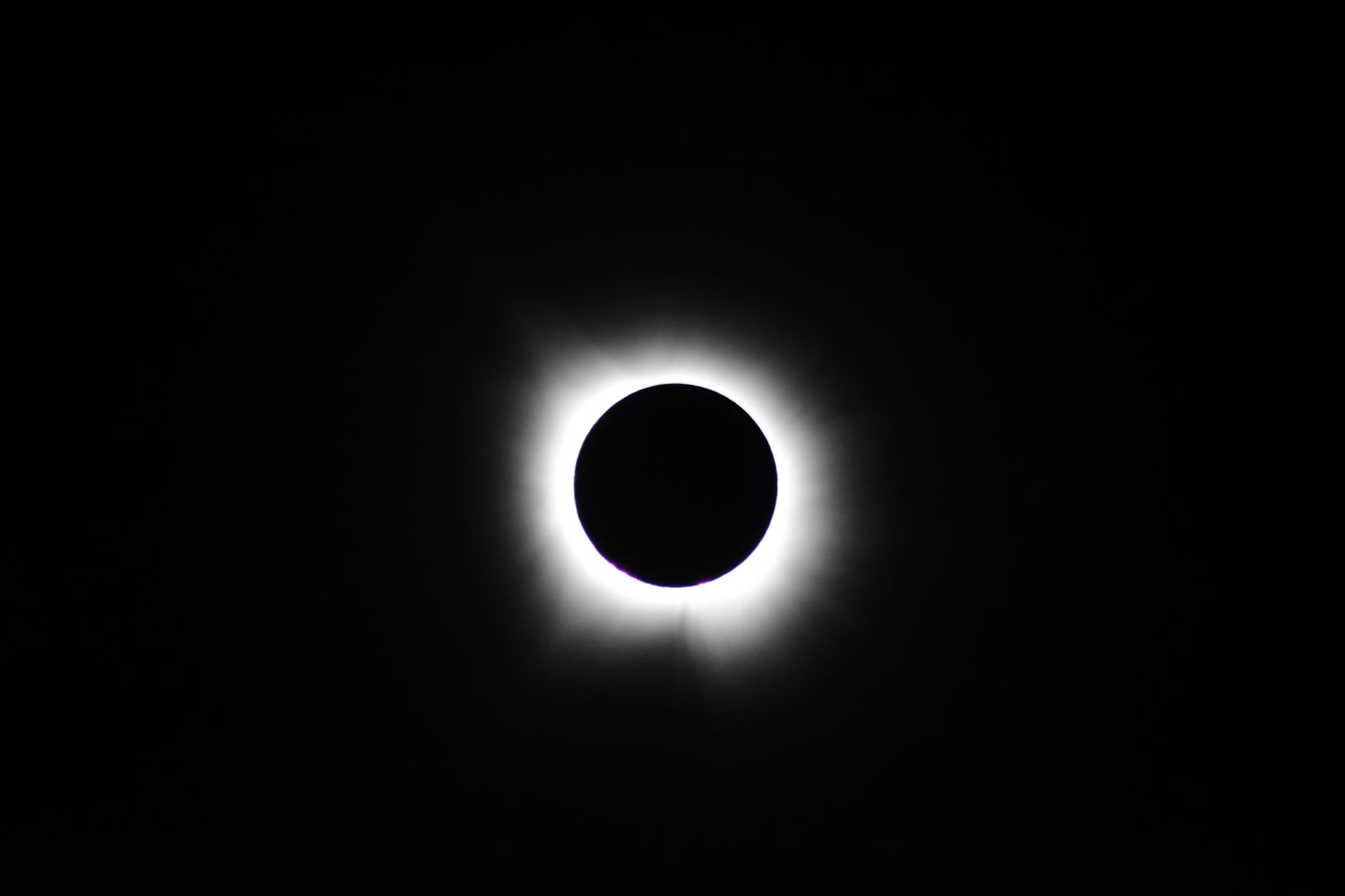
Europe is currently abuzz with anticipation for a truly exceptional astronomical event: a total solar eclipse. This rare celestial phenomenon, where the Moon perfectly obscures the Sun, is set to captivate millions across the continent. Such an occurrence provides a unique opportunity for both scientific observation and public wonder, prompting extensive preparations from various sectors. The upcoming total solar eclipse in Europe is not merely a visual spectacle; it represents a moment of collective engagement with the cosmos, demanding careful planning for safety and optimal viewing experiences.
Understanding the Total Solar Eclipse
A total solar eclipse transpires when the Moon passes directly between the Sun and Earth, casting a shadow that temporarily plunges parts of our planet into twilight. This alignment is precise, with the Moon appearing to perfectly cover the Sun’s disk. During this brief period of totality, the Sun’s magnificent corona, its ethereal outer atmosphere, becomes visible to the unaided eye. This phenomenon is distinct from a partial eclipse, where only a portion of the Sun is obscured, or an annular eclipse, where the Moon appears smaller than the Sun, leaving a bright ring of sunlight. The path of totality, the narrow corridor where the total eclipse is visible, is relatively small, making such events rare for any specific geographical location.
The Significance of This European Event
For many regions within Europe, witnessing a total solar eclipse is an infrequent occurrence, sometimes separated by decades or even centuries. This particular event holds immense significance due to its path traversing populated areas, offering a substantial number of residents and visitors the chance to experience totality. The rarity amplifies the excitement and underscores the importance of adequate preparation. Governments, scientific institutions, and local communities across the continent are collaborating to ensure that the event is both safely enjoyed and scientifically leveraged. The anticipation for this total solar eclipse in Europe is palpable, reflecting a deep-seated human fascination with the wonders of the universe.
Prioritizing Safety During Eclipse Viewing
Ensuring public safety is paramount during any solar eclipse, especially a total one. Directly viewing the Sun without proper protection, even for a brief moment, can cause permanent eye damage. Standard sunglasses offer no adequate protection. Certified eclipse glasses, handheld solar viewers, or pinhole projectors are essential for safe observation during the partial phases of the eclipse. These specialized filters block harmful ultraviolet, visible, and infrared radiation. Only during the brief period of totality, when the Sun is completely covered by the Moon, is it safe to look directly at the corona. As soon as the Sun begins to reappear, protective eyewear must be immediately put back on. Educational campaigns are actively underway across Europe to disseminate these vital safety guidelines, emphasizing the critical need for certified equipment and responsible viewing practices to prevent ocular injury.
Scientific Endeavors During Totality
Beyond its visual appeal, a total solar eclipse presents an invaluable opportunity for scientific research. Astronomers and researchers from various European institutions are deploying specialized equipment along the path of totality to conduct experiments that are only feasible during this unique alignment. Studies often focus on the Sun’s corona, which is usually obscured by the Sun’s intense brightness. Observing the corona during an eclipse allows scientists to better understand its temperature, structure, and dynamics, providing crucial insights into solar flares, coronal mass ejections, and space weather phenomena that can impact Earth. Additionally, the sudden drop in light and temperature during totality offers opportunities to study atmospheric changes, animal behavior, and even gravitational effects. The data collected during this total solar eclipse in Europe will contribute significantly to our understanding of the Sun and its influence on our solar system.
Economic and Cultural Impact
The impending total solar eclipse is also projected to have a notable economic and cultural impact across the European regions within the path of totality. Anticipating a surge in tourism, local authorities and businesses are preparing for an influx of visitors, including both domestic travelers and international astronomy enthusiasts. This influx is expected to boost local economies through increased demand for accommodation, dining, transportation, and related services. Special events, festivals, and viewing parties are being organized to enhance the visitor experience and celebrate this unique occasion. Culturally, the eclipse serves as a unifying event, bringing people together to share a rare and awe-inspiring experience. It fosters a sense of wonder and connection to the natural world, leaving lasting memories for those fortunate enough to witness it.
Community Engagement and Educational Initiatives
Throughout Europe, extensive efforts are being made to engage the public and educate them about the upcoming total solar eclipse. Schools, museums, science centers, and astronomical societies are hosting workshops, lectures, and interactive exhibits to explain the science behind eclipses and promote safe viewing practices. Distribution of certified eclipse glasses, often free or at subsidized costs, is a key component of these outreach programs. Public viewing events, equipped with telescopes fitted with solar filters and guided by experts, are being planned in numerous locations. These initiatives aim not only to inform but also to inspire a new generation of scientists and astronomers, fostering a deeper appreciation for space and scientific inquiry. The collective excitement surrounding the total solar eclipse in Europe underscores its potential as a powerful educational tool.
Conclusion
The preparations across Europe for the upcoming total solar eclipse highlight the profound human fascination with celestial events. This rare alignment promises not only a breathtaking visual spectacle but also a wealth of scientific opportunities and a significant boost to local economies and community engagement. As the continent gears up for this extraordinary moment, the emphasis remains on safety, education, and shared wonder. The total solar eclipse in Europe is poised to be an unforgettable experience, uniting millions under a momentarily shadowed sky, reminding us of the grandeur and precision of the universe.






















Leave a Reply