


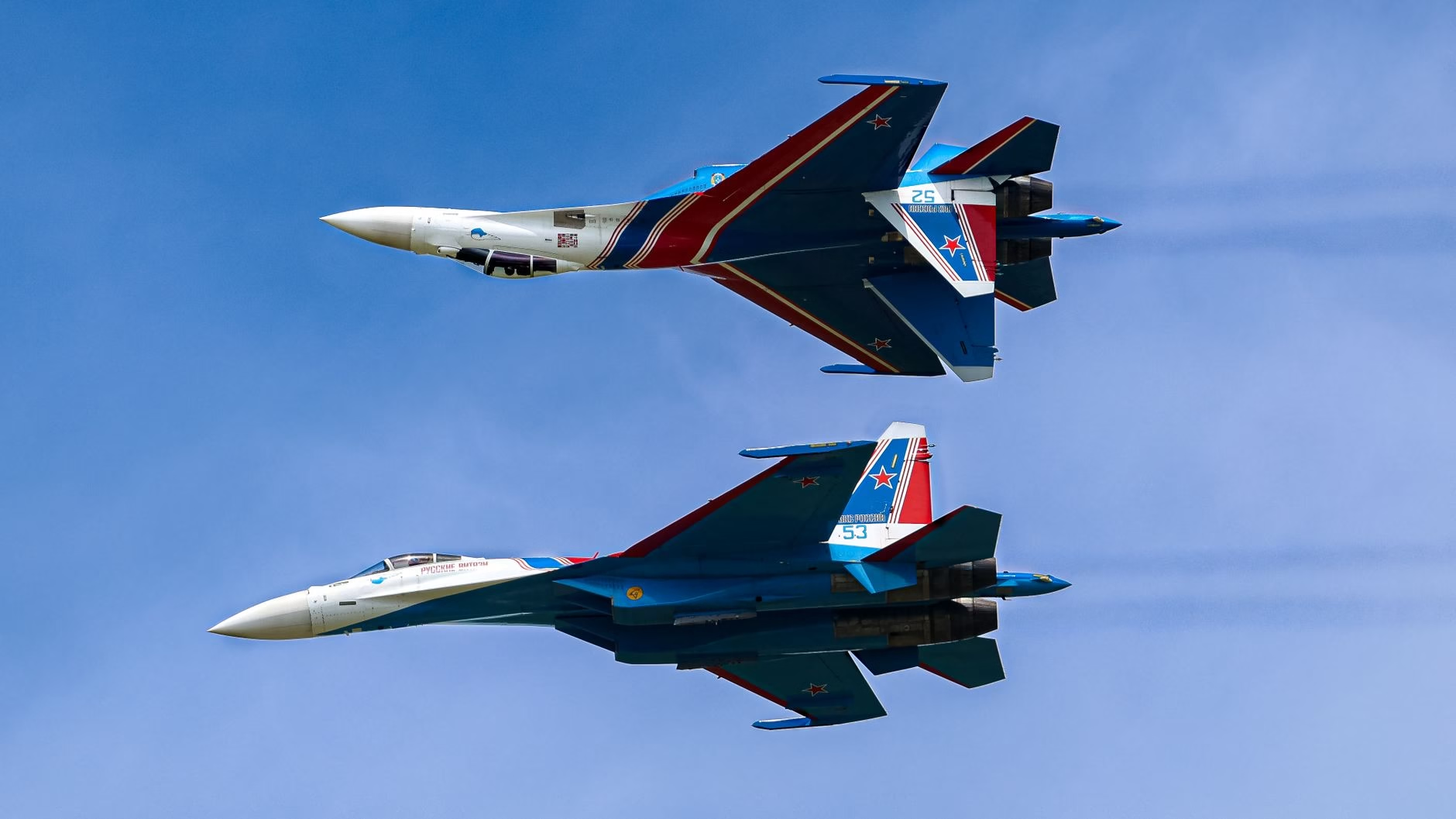
The Ukrainian president has issued a significant warning, indicating that Russia may be preparing for a new phase of escalation in the ongoing conflict. This alert suggests a potential increase in military activity and a deepening of strategic maneuvers. A key element of this concern is the possibility that upcoming parliamentary elections in Russia could serve as a strategic pretext for declaring a new national mobilization, a move that would have profound implications for the conflict’s trajectory and regional stability.
This presidential statement underscores the persistent tensions and the dynamic nature of the geopolitical landscape. It highlights the need for continuous vigilance regarding military developments and political rhetoric emanating from the region. The prospect of a new mobilization, particularly one framed within the context of domestic political events, signals a potentially critical juncture in the conflict.
Understanding Military Escalation
Military escalation refers to an increase in the intensity, scope, or duration of armed conflict. It can manifest in various forms, including the deployment of additional forces, the use of more advanced or destructive weaponry, the expansion of conflict zones, or an increase in the frequency and scale of attacks. Such a development typically indicates a strategic shift aimed at achieving more decisive military objectives or altering the balance of power on the battlefield.
An escalation often carries significant risks, potentially leading to a more protracted and destructive conflict. It can also draw in additional international actors, further complicating diplomatic efforts and increasing the potential for broader regional instability. The warning from the Ukrainian leadership suggests that any such escalation would not be a minor adjustment but a substantial shift in operational strategy, demanding careful observation and analysis from the international community.
The Concept of National Mobilization
National mobilization is a comprehensive process by which a state prepares its military forces and civilian resources for war or a significant military operation. This can involve calling up reserve personnel, conscripting new recruits, converting civilian industries to military production, and redirecting national resources to support the war effort. A full-scale mobilization represents a significant commitment of a nation’s human and material capital, signaling a long-term strategic intent.
For a country to undertake a new mobilization, it typically implies a perceived need for a substantial increase in manpower and resources to achieve military objectives or to sustain a prolonged conflict. Such a decision has far-reaching consequences, affecting not only military capabilities but also the economy, social fabric, and political stability of the mobilizing nation. It often requires significant public support or, alternatively, robust state control to implement effectively.
Elections as a Strategic Pretext
The notion that parliamentary elections could serve as a pretext for a new mobilization is a critical aspect of the Ukrainian president’s warning. In political strategy, a pretext is an ostensible reason given to justify an action, often concealing the true underlying motive. Using a domestic political event like an election could provide a convenient narrative framework for such a significant military decision.
Elections can be leveraged to rally public sentiment, create a sense of national unity, or frame military actions as a necessary response to external threats or internal mandates. A government might use the period surrounding an election to consolidate power, legitimize controversial policies, or present a new mobilization as a popular mandate or a defensive measure. This strategic timing can be crucial for managing public perception both domestically and internationally, potentially deflecting criticism or garnering support for an otherwise unpopular decision.
Potential Impact on the Conflict Landscape
Should a new Russian military mobilization occur, its impact on the conflict landscape would likely be substantial. An influx of additional personnel could potentially bolster frontline forces, replenish losses, and enable new offensive operations or strengthen defensive positions. This could lead to an intensification of fighting, a prolongation of the conflict, and a significant shift in the operational dynamics.
Furthermore, a new mobilization could strain logistical networks and economic resources, both for the mobilizing nation and for those involved in supporting the opposing side. It would also likely necessitate a reassessment of military strategies and resource allocation by all parties involved, potentially leading to a more entrenched and complex conflict environment. The humanitarian consequences of such an escalation would also be a grave concern, with increased displacement and civilian suffering.
Broader Geopolitical Implications
The broader geopolitical implications of a new Russian military mobilization and escalation would be significant. It could lead to increased tensions with international partners and alliances, potentially triggering new rounds of sanctions or further diplomatic isolation. Regional stability would be further jeopardized, and the security architecture of Europe could face renewed challenges.
International organizations and global powers would likely intensify their diplomatic efforts, though the effectiveness of such efforts would depend on the willingness of all parties to de-escalate. The prospect of a prolonged and intensified conflict also carries implications for global energy markets, supply chains, and overall economic stability, extending the ripple effects far beyond the immediate conflict zone.
Conclusion: Monitoring Future Developments
The warning from the Ukrainian president serves as a crucial reminder of the volatile nature of the ongoing conflict and the potential for significant shifts in its trajectory. The interplay between military preparations, domestic political events like parliamentary elections, and the potential for a new national mobilization highlights a complex and evolving situation. Continuous monitoring of military movements, political rhetoric, and diplomatic engagements will be essential in anticipating and responding to future developments. The international community remains keenly focused on these unfolding events, recognizing the profound implications for global peace and security.



















Leave a Reply