


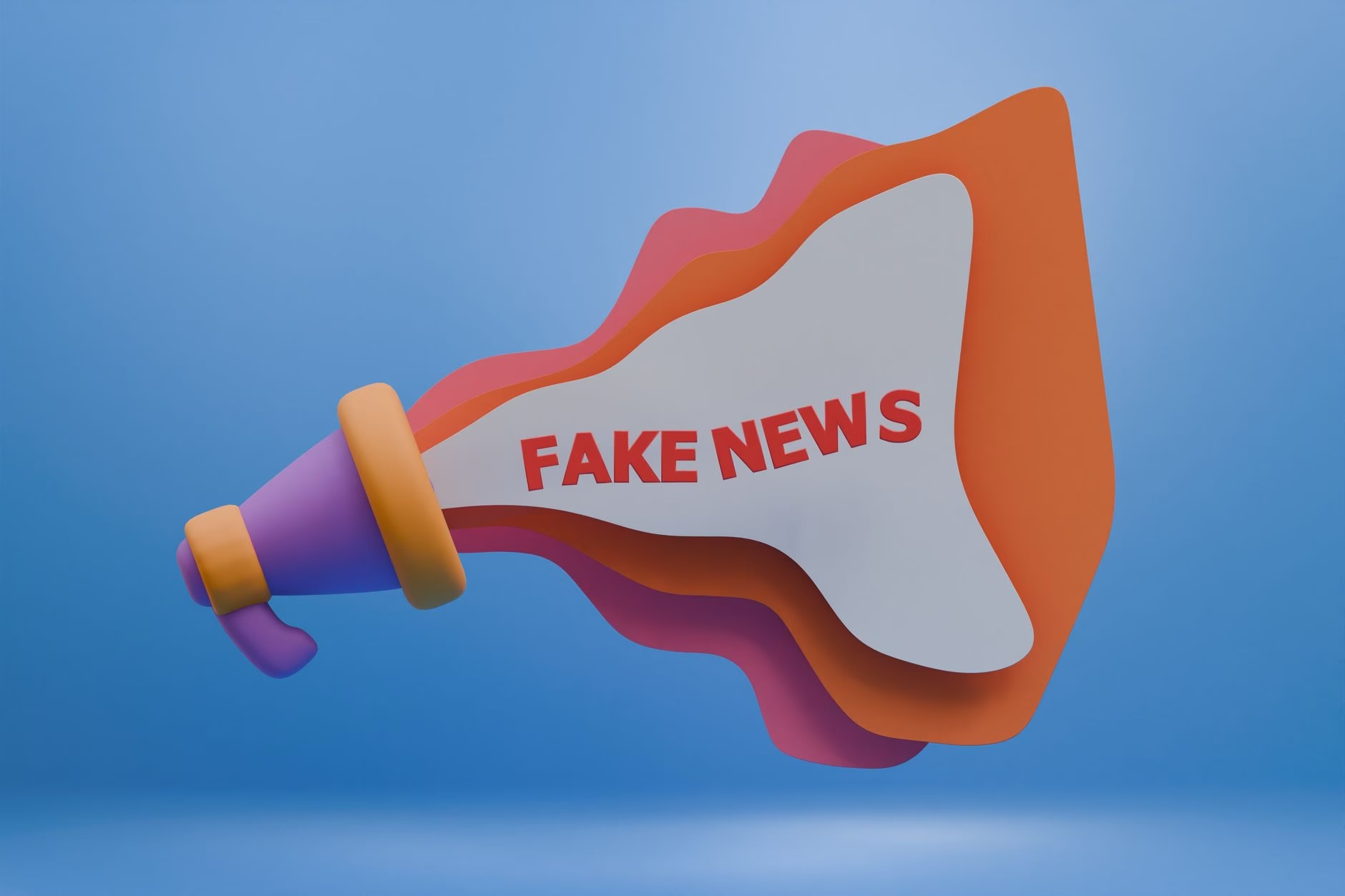
Introduction to Digital Deception
The digital landscape, while offering unprecedented connectivity and access to information, also presents significant challenges, particularly concerning the spread of misinformation. A notable concern in various nations, including Malaysia, involves the proliferation of fabricated official statements. These deceptive communications, often designed to mimic legitimate government or law enforcement announcements, pose a serious threat to public trust and national stability. The recent emergence of a misleading statement, falsely attributed to Malaysian police regarding an anti-corruption operation, underscores the persistent and evolving nature of this digital menace. Such incidents highlight the critical need for heightened vigilance and robust strategies to counter the deliberate dissemination of false information online.
The Anatomy of Fabricated Statements
Fabricated official statements are typically crafted with malicious intent, aiming to manipulate public perception, sow discord, or undermine legitimate institutions. These deceptive messages often leverage sophisticated techniques to appear authentic, including the use of official-looking logos, letterheads, and language. They are then rapidly disseminated across various online platforms, including social media, messaging applications, and unverified news sites. The speed and reach of digital networks mean that a fake statement can gain significant traction and influence public opinion long before it can be officially debunked. This rapid propagation makes them particularly effective tools for those seeking to exploit digital vulnerabilities for nefarious purposes. The ease with which digital content can be altered and shared contributes to the challenge of distinguishing genuine information from deliberate falsehoods.
Erosion of Public Trust
One of the most damaging consequences of fake official statements is the erosion of public trust in legitimate authorities and media outlets. When citizens are repeatedly exposed to conflicting or false information, their ability to discern truth from fiction diminishes. This skepticism can lead to a general distrust of all official communications, regardless of their veracity. In a democratic society, public trust in institutions like the police, government agencies, and the judiciary is fundamental for effective governance and social cohesion. Incidents involving fabricated police statements, especially those concerning sensitive matters like anti-corruption efforts, can severely damage this trust, making it harder for authorities to communicate effectively with the populace and maintain order. The long-term effects of such erosion can be profound, impacting civic engagement and national unity.
Implications for Governance and Security
Beyond public trust, the spread of fake official statements carries significant implications for national governance and security. Misinformation can be strategically deployed to destabilize political processes, incite social unrest, or even influence economic markets. In the context of law enforcement operations, particularly those targeting corruption, fabricated statements can disrupt ongoing investigations, compromise sensitive intelligence, or unfairly tarnish the reputations of individuals or organizations. The potential for such deception to interfere with justice and public safety is immense. Governments are therefore compelled to invest in robust digital security measures and public awareness campaigns to safeguard their operations and protect their citizens from the adverse effects of online manipulation. The integrity of national institutions hinges on their ability to counter these digital threats effectively.
The Challenge to Anti-Corruption Initiatives
The specific targeting of anti-corruption operations with fake statements is particularly concerning. Anti-corruption efforts are inherently sensitive, often involving high-profile individuals and significant financial stakes. Those seeking to obstruct justice or evade accountability may resort to spreading misinformation to discredit investigations, create confusion, or rally public opposition against legitimate enforcement actions. A fabricated police statement regarding an anti-corruption probe could, for instance, falsely implicate innocent parties, divert attention from real culprits, or cast doubt on the integrity of the entire operation. This weaponization of misinformation poses a direct threat to the rule of law and the fight against corruption, undermining the very foundations of good governance and transparency. Protecting these crucial initiatives from digital sabotage is paramount.
Strengthening Official Communication Channels
In response to the pervasive threat of online misinformation, it is imperative for official bodies to strengthen their communication channels and strategies. This includes establishing clear, authoritative platforms for disseminating verified information, such as official websites, authenticated social media accounts, and reputable news partnerships. Proactive communication, rapid debunking of falsehoods, and consistent messaging are vital in countering the narratives propagated by fake statements. Transparency in official processes and timely updates can help build resilience against misinformation by providing the public with reliable sources to consult. Furthermore, educating the public on how to identify fake news and verify information sources empowers individuals to become more discerning consumers of online content, reducing their susceptibility to deception.
Collaborative Efforts Against Misinformation
Combating online misinformation effectively requires a multi-faceted and collaborative approach involving various stakeholders. Governments, law enforcement agencies, technology companies, media organizations, and civil society groups all have a crucial role to play. Technology platforms, in particular, bear a responsibility to implement stricter policies against the spread of false information and to develop tools for identifying and removing deceptive content. Media organizations must uphold rigorous journalistic standards and prioritize fact-checking to avoid inadvertently amplifying misinformation. Educational institutions can contribute by fostering digital literacy skills from an early age. International cooperation is also essential, as misinformation campaigns often transcend national borders, requiring coordinated responses to track and mitigate their impact.
Conclusion: A Call for Digital Vigilance
The persistent threat of fake official statements and online misinformation underscores a fundamental challenge in the digital age. Incidents involving fabricated police announcements, such as those falsely linked to anti-corruption operations in Malaysia, serve as stark reminders of the vulnerability of public discourse to malicious manipulation. Addressing this complex issue demands continuous innovation in detection technologies, robust legal frameworks, enhanced public education, and unwavering commitment from all sectors of society. By fostering a culture of digital vigilance and promoting critical thinking, societies can better protect themselves against the insidious effects of digital deception, thereby safeguarding public trust, national security, and the integrity of democratic processes. The collective effort to ensure the authenticity of information in the digital realm remains an ongoing and critical endeavor.




















Leave a Reply