


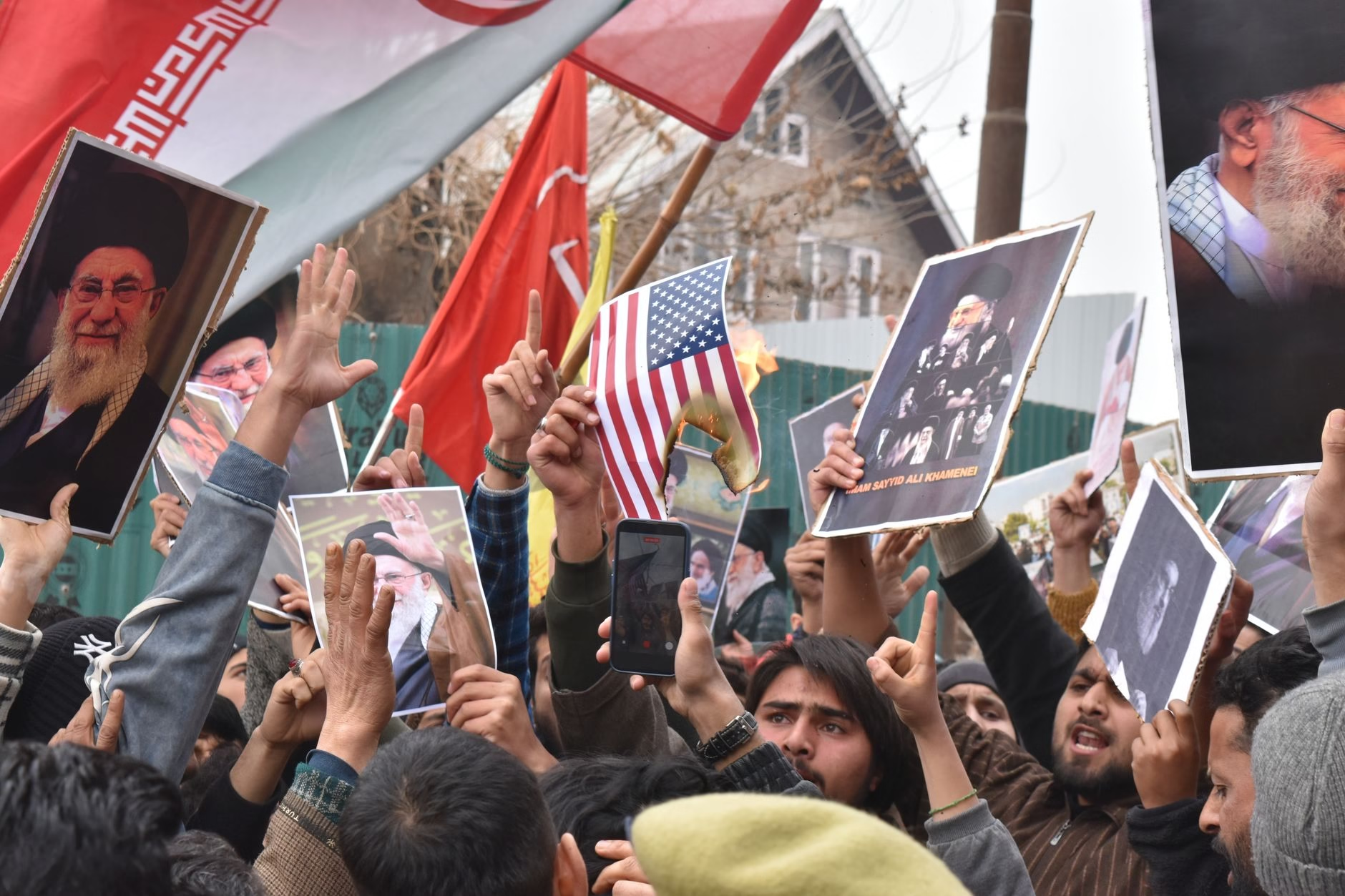
The diplomatic landscape between Iran and the United States remains intricate, characterized by a notable absence of direct, formal negotiations. A recent statement from Iran’s foreign minister has shed light on the current state of engagement, confirming that while direct discussions are not underway, communication channels are nevertheless active through the involvement of third-party intermediaries. This revelation underscores the complex and often circuitous nature of international relations, particularly between nations with long-standing geopolitical tensions.
The Nuance of Diplomatic Engagement
The distinction between “engaging in talks” and “exchanging messages” is critical in the realm of international diplomacy. Formal talks typically imply a structured dialogue, often with specific agendas, delegations, and a public acknowledgment of the process. In contrast, the exchange of messages, especially through intermediaries, suggests a more discreet and less formal line of communication. This method allows states to convey positions, seek clarifications, or even explore potential common ground without the political implications or public scrutiny associated with direct negotiations. For nations like Iran and the U.S., where domestic political sensitivities are high, such an approach can offer a pragmatic pathway to manage relations.
Historical Context of Iran-U.S. Relations
The relationship between Iran and the United States has been marked by decades of profound mistrust and intermittent confrontation. Following significant geopolitical shifts, direct diplomatic ties were severed, leading to a prolonged period where communication has largely relied on indirect means. Key issues, including regional stability, nuclear ambitions, and economic sanctions, have consistently fueled tensions. Against this backdrop, any form of communication, even if indirect, holds considerable significance. It signals a recognition of the need for some level of interaction, however limited, to prevent misunderstandings or unintended escalation.
The Indispensable Role of Intermediaries
In situations where direct engagement is politically unfeasible or strategically undesirable, intermediaries become indispensable. These third parties, often neutral nations, international organizations, or respected individuals, facilitate communication by relaying messages, interpreting nuances, and sometimes even proposing solutions. Their role extends beyond mere message delivery; they can help bridge cultural divides, build trust where it is absent, and provide a safe space for sensitive exchanges. For Iran and the U.S., the involvement of intermediaries suggests a mutual, albeit tacit, acknowledgment that certain lines of communication must remain open, even if the parties are unwilling or unable to engage face-to-face. This indirect conduit allows for the exploration of diplomatic avenues without requiring either side to make overt concessions regarding their stance on direct engagement.
Implications for Future Engagement
The confirmation of ongoing message exchanges, despite the absence of direct talks, carries several implications for the future trajectory of Iran-U.S. relations. Firstly, it indicates a baseline level of communication that could, under favorable circumstances, evolve into more direct forms of dialogue. This indirect channel serves as a vital pressure valve, enabling both sides to articulate concerns or proposals without the immediate commitment of formal negotiations. Secondly, it highlights the enduring complexity of their relationship, where even basic communication requires careful orchestration. The reliance on intermediaries suggests a cautious approach, where each step is carefully weighed to avoid misinterpretation or political backlash. This method of engagement, while slow, can lay foundational groundwork for future diplomatic breakthroughs, provided there is sustained political will from both parties.
Challenges and Opportunities of Indirect Communication
While indirect communication offers a viable path for engagement in strained relationships, it is not without its challenges. The potential for misinterpretation of messages, delays in relaying information, and the inherent limitations of not having direct, real-time dialogue are significant hurdles. Nuances in tone, body language, and immediate responses, which are crucial in direct diplomacy, are often lost when messages are filtered through third parties. However, this approach also presents unique opportunities. It allows both nations to test the waters, gauge the other’s readiness for dialogue, and explore potential areas of compromise without the public pressure that often accompanies direct talks. It provides a degree of deniability or flexibility, enabling positions to be floated and retracted more easily if they do not find resonance. This strategic ambiguity can be a powerful tool in navigating highly sensitive geopolitical landscapes.
Global Repercussions of Iran-U.S. Relations
The state of relations between Iran and the United States has profound global repercussions, particularly for stability in the Middle East. The region is frequently impacted by the dynamics of this bilateral relationship, influencing everything from oil markets to regional conflicts. The existence of even indirect communication channels, therefore, offers a glimmer of hope for de-escalation and the potential for a more stable regional environment. It suggests that despite public rhetoric, there is an underlying recognition of the need to manage tensions and prevent outright conflict. International observers often view such indirect diplomatic efforts as crucial indicators of broader geopolitical intentions and potential shifts in foreign policy approaches.
Sustaining Diplomatic Pathways
Maintaining any form of diplomatic pathway, however indirect, is a testament to the enduring importance of dialogue in international affairs. Even when direct engagement is politically fraught, the capacity to exchange messages through trusted intermediaries ensures that lines of communication are not entirely severed. This ongoing, albeit discreet, interaction can be instrumental in preventing crises, managing existing tensions, and exploring avenues for future cooperation. The statement from Iran’s foreign minister serves as a reminder that diplomacy, in its various forms, remains a cornerstone of international relations, adapting to complex realities to keep channels open between even the most estranged nations.
Conclusion
The recent confirmation by Iran’s foreign minister regarding the absence of direct talks with the United States, coupled with the acknowledgment of ongoing message exchanges via intermediaries, paints a clear picture of the current diplomatic reality. It highlights a cautious, yet persistent, effort to maintain a degree of communication between two nations with a deeply complicated history. This indirect approach, while challenging, offers a practical mechanism for managing tensions and exploring potential diplomatic resolutions without the immediate political costs of direct engagement. As the international community continues to monitor these critical relations, the role of these discreet channels remains paramount in shaping the future of engagement between Tehran and Washington.




















Leave a Reply