


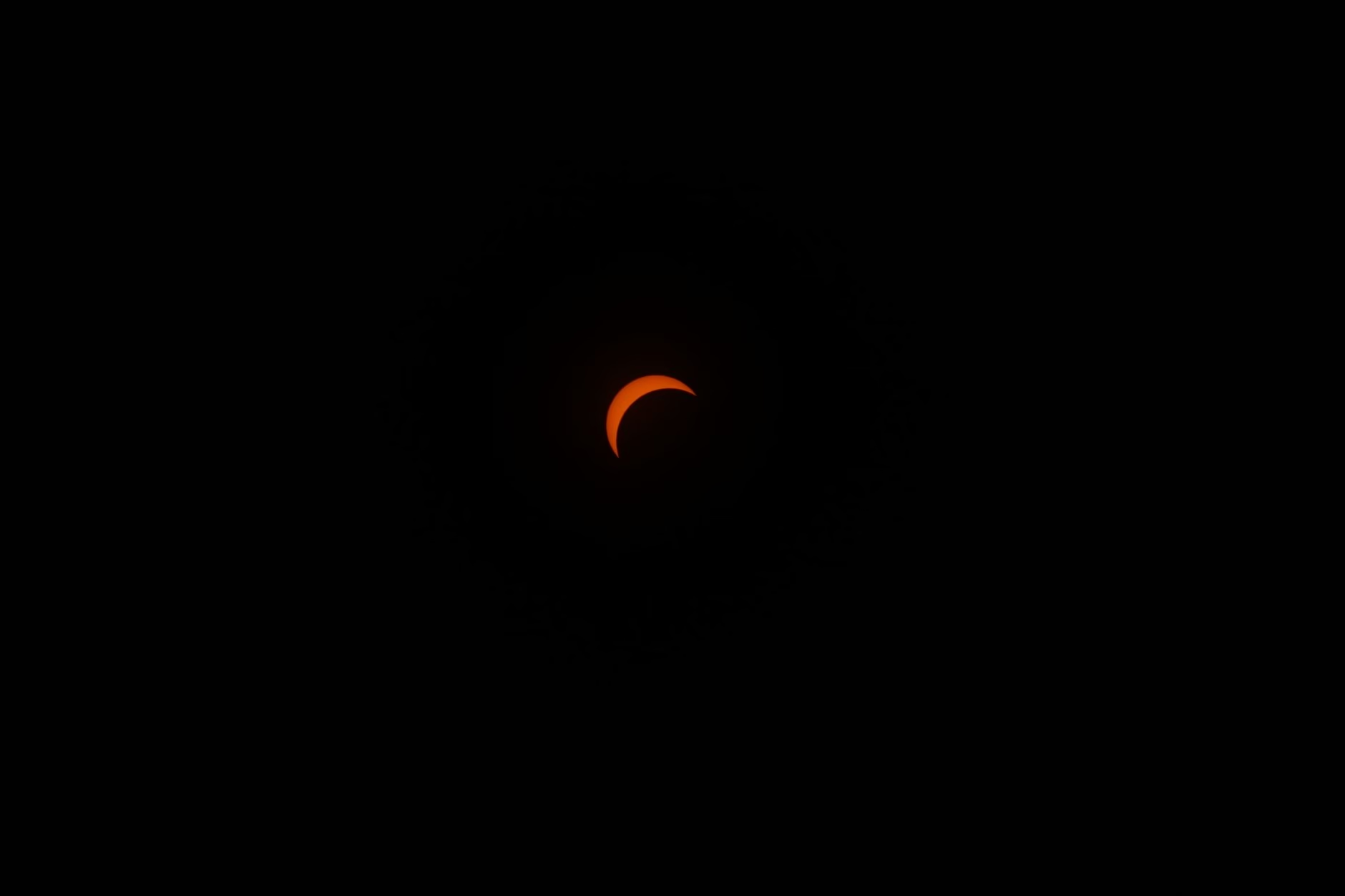
As Spain anticipates the rare celestial event of a total solar eclipse on August 12, 2026, telecommunications giant Telefónica is undertaking extensive preparations to ensure robust and seamless mobile connectivity across the nation. This proactive strategy aims to accommodate the expected surge in data traffic from both residents and the significant influx of tourists drawn to witness this extraordinary phenomenon.
The upcoming eclipse is poised to be a landmark occasion, with the path of totality traversing key regions of Spain, including the Canary Islands and parts of the mainland. Such an event naturally attracts a vast audience, all eager to capture, share, and stream their experiences in real-time. This collective digital activity places immense pressure on existing network infrastructure, necessitating substantial upgrades and strategic deployments to prevent congestion and maintain high-quality service.
Telefónica’s comprehensive plan for Spain eclipse network preparation involves a multi-faceted approach, focusing on enhancing capacity, deploying temporary solutions, and ensuring operational readiness. The objective is to guarantee that every moment of the eclipse, from anticipation to observation, can be shared without interruption, reinforcing the company’s commitment to superior user experience.
The Celestial Spectacle and its Digital Demands
The total solar eclipse of 2026 is a highly anticipated astronomical event, offering a unique opportunity for observation from Spanish territory. The Canary Islands, particularly, are expected to be prime viewing locations, attracting a global audience of astronomers, enthusiasts, and general tourists. On the mainland, regions within the path of totality will also experience a significant gathering of people.
This concentration of individuals, coupled with the inherent desire to document and share such a rare occurrence, will inevitably lead to an unprecedented demand for mobile data. Activities such as live streaming the eclipse, uploading high-resolution photos and videos to social media platforms, making video calls to share the experience with loved ones, and accessing real-time information will collectively drive data traffic to exceptionally high levels. Estimates suggest that data usage in affected areas could see an increase of several hundred percent compared to typical daily volumes, presenting a formidable challenge for any telecommunications provider.
Telefónica’s Strategic Network Enhancements
In response to these projected demands, Telefónica has initiated a substantial program of network enhancements. A core component of this Spain eclipse network preparation involves permanent capacity upgrades in critical geographical zones. This includes reinforcing both 4G and 5G networks to handle higher volumes of simultaneous connections and data throughput.
Beyond permanent infrastructure improvements, the company is strategically deploying a range of temporary mobile base stations, often referred to as Cells on Wheels (COWs) or similar mobile units. These portable stations are designed to provide immediate and flexible capacity boosts in specific areas where large crowds are expected to gather. These targeted zones include popular viewing points, major urban centers along the eclipse path, key transport hubs such as airports and train stations, and areas with high concentrations of tourist accommodation.
The deployment strategy is meticulously planned, leveraging geographical data and crowd predictions to position these temporary units for maximum effectiveness. This ensures that even in remote or less populated areas that become temporary viewing hotspots, robust connectivity will be available.
Ensuring Seamless Connectivity in Key Regions
The geographical diversity of Spain presents unique challenges and opportunities for network planning. The Canary Islands, with their clear skies and strategic location, are a particular focus. Telefónica is dedicating significant resources to bolster network capacity across the archipelago, anticipating a massive influx of visitors specifically for the eclipse.
On the mainland, regions such as those in northern Spain that fall within the path of totality are also receiving considerable attention. The logistical complexities of deploying and managing network resources across varied terrains, from coastal areas to mountainous regions, are being meticulously addressed. This involves close collaboration with local authorities and emergency services to ensure not only connectivity but also public safety and efficient crowd management.
Operational Readiness and Technical Expertise
Effective Spain eclipse network preparation extends beyond physical infrastructure to encompass operational readiness and technical expertise. Telefónica is assembling specialized technical teams who will be on standby before, during, and immediately after the eclipse. These teams are tasked with continuous, real-time network monitoring, allowing for immediate identification and resolution of any potential bottlenecks or service disruptions.
The company’s advanced network management systems will play a crucial role, providing comprehensive oversight of network performance and traffic flows. This proactive monitoring capability enables engineers to anticipate issues and implement solutions swiftly, minimizing any impact on user experience. Telefónica also draws upon its extensive experience from managing network demands during other large-scale events, such as major festivals, sporting championships, and national celebrations, applying lessons learned to optimize its eclipse day strategy.
Investment in Future-Proofing Digital Infrastructure
Telefónica’s extensive preparations for the 2026 solar eclipse represent more than just a temporary response to a unique event; they are an integral part of a broader, ongoing investment in Spain’s digital infrastructure. The capacity upgrades and technological advancements implemented for the eclipse will contribute to the long-term resilience and performance of the national network.
This commitment underscores Telefónica’s dedication to providing reliable, high-speed internet access and mobile connectivity as a fundamental service for all its users. By future-proofing its infrastructure, the company ensures that Spain remains at the forefront of digital connectivity, capable of supporting both everyday demands and extraordinary events.
Conclusion
As the date for the 2026 total solar eclipse approaches, Telefónica’s proactive and comprehensive Spain eclipse network preparation highlights its unwavering commitment to ensuring a seamless and connected experience for everyone. Through strategic capacity enhancements, the deployment of temporary solutions, and a robust operational framework, the company is poised to manage the anticipated surge in mobile data traffic effectively.
This significant undertaking ensures that residents and visitors alike can fully immerse themselves in the wonder of the eclipse, confident that their ability to share and connect will be uninterrupted. Telefónica’s efforts underscore the critical role of advanced telecommunications infrastructure in enabling modern society to experience and share historic moments, reinforcing its position as a leader in digital innovation.



















Leave a Reply