


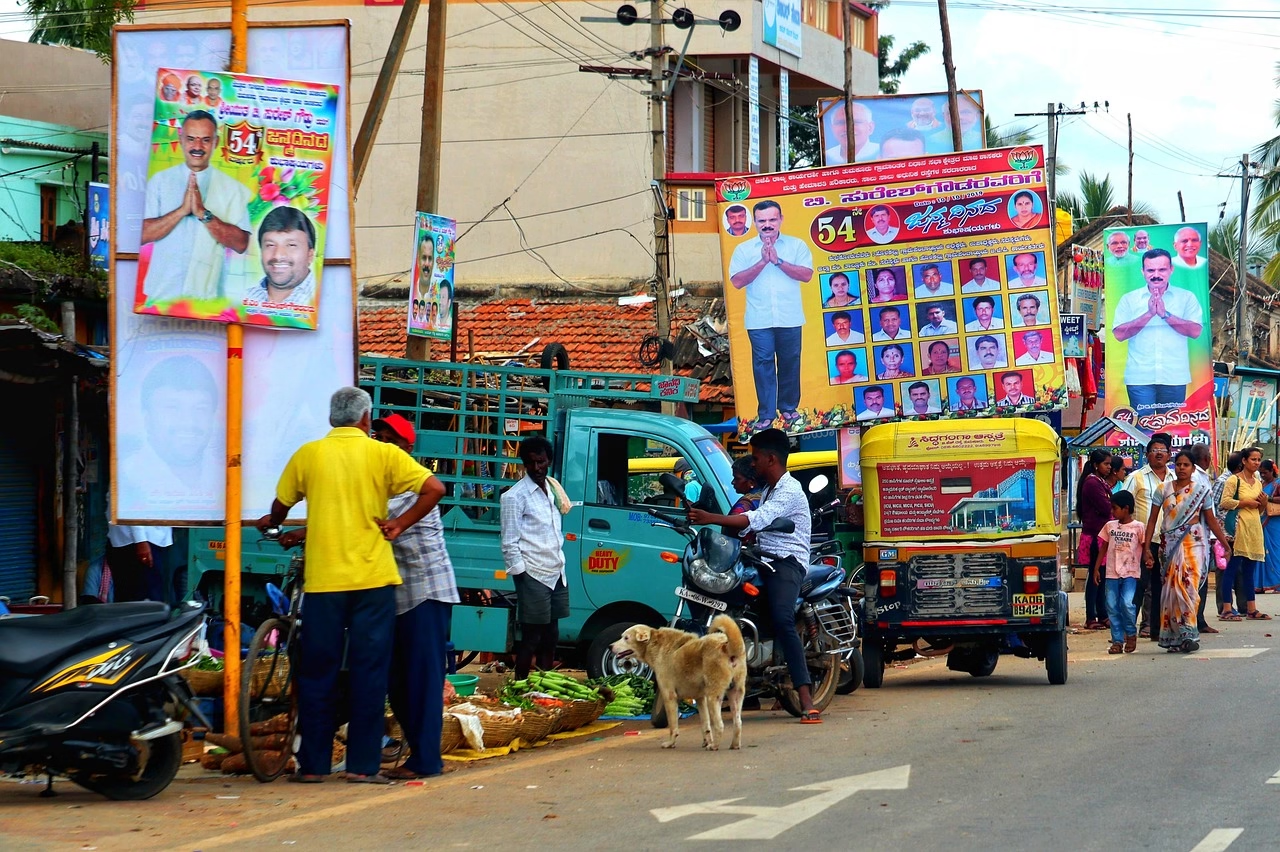
In the immediate aftermath of India’s recent general election results in early June 2024, a wave of old and unrelated videos began circulating widely across social media platforms, falsely depicting widespread post-election violence in West Bengal. This orchestrated misrepresentation, identified and debunked by numerous fact-checking organizations, appears to be an attempt by various actors to fuel political narratives, discredit election outcomes, and potentially incite further division within the state.
Understanding the Volatile Political Landscape
West Bengal has a long-standing history of intense political rivalry, particularly between the ruling Trinamool Congress (TMC) and the Bharatiya Janata Party (BJP). Elections in the state are often fiercely contested, marked by high emotions and, at times, localized clashes. This backdrop of political polarization creates fertile ground for the rapid spread of misinformation, especially during periods of heightened tension such as election result announcements. Past elections have also seen allegations and incidents of violence, making the current claims particularly potent and believable to an unsuspecting audience.
The Anatomy of Digital Deception
Fact-checking organizations, including Alt News and India Today Fact Check, have meticulously documented numerous instances of this digital deception. Videos, some dating back several years and depicting incidents unrelated to West Bengal or even India, have been repurposed and shared with misleading captions. For example, footage from past communal clashes, old political rallies, or even incidents from other countries have been presented as recent post-election violence in specific districts of West Bengal. These videos are primarily disseminated through platforms like X (formerly Twitter), Facebook, and encrypted messaging services such as WhatsApp, leveraging their viral sharing mechanisms to reach a broad audience rapidly.
One prevalent tactic involves taking genuine but isolated incidents and exaggerating their scale or attributing them to specific political parties without verified evidence. Another common method is to use emotionally charged visuals from completely different contexts to evoke strong reactions, bypassing critical scrutiny. The speed at which these videos travel often outpaces the ability of official channels or traditional media to provide accurate context or debunk the claims.
The Role of Fact-Checkers and Digital Forensics
Independent fact-checkers have been crucial in combating this wave of disinformation. Utilizing reverse image and video search tools, geolocation techniques, and cross-referencing with news archives, they have systematically exposed the origins of these misleading videos. Their investigations reveal that many clips originate from events in 2019, 2021, or even earlier, often from different states or contexts entirely. This painstaking work involves verifying timestamps, identifying recognizable landmarks, and cross-referencing with official reports or legitimate news coverage from the time of the original incident.
For instance, a video purported to show recent clashes in Kolkata was identified as footage from a 2019 Lok Sabha election rally in the same city. Another clip, claiming to show post-poll arson, was traced back to a communal incident in a different part of India from a few years prior. “The sheer volume and speed of these misrepresentations make it a significant challenge,” notes a lead researcher from a prominent fact-checking portal. “The goal isn’t always to convince; often, it’s just to sow doubt and confusion.”
Political Motivations and Societal Impact
The motivations behind spreading such misinformation are multi-faceted. Political analysts suggest that these campaigns aim to delegitimize election results, create a narrative of lawlessness, and mobilize political bases through fear and outrage. By painting a picture of widespread violence, political actors can bolster claims of victimhood or accuse opponents of undemocratic practices. This strategy can deepen existing communal and political divides, making reconciliation post-election significantly harder.
The real-world implications of such digital deception are severe. False narratives can incite real violence, damage social cohesion, and erode public trust in democratic institutions and the media. When citizens are constantly exposed to unverified claims, their ability to discern truth from falsehood diminishes, leading to a more polarized and fragmented society. “Misinformation weaponizes emotions, turning public sentiment into a tool for political gain,” states Dr. Anjana Sharma, a political communication expert. “In a hyper-connected world, a single viral video can have devastating offline consequences.”
Looking Ahead: The Battle for Truth in the Digital Age
The proliferation of old videos falsely presented as current events in West Bengal underscores the ongoing challenge of misinformation in the digital age. As future elections approach, the sophistication of disinformation tactics, including the potential use of deepfakes and AI-generated content, is expected to grow. This demands a multi-pronged approach involving proactive content moderation by social media platforms, enhanced media literacy programs for citizens, and robust fact-checking initiatives. Regulatory bodies may also need to explore frameworks that balance free speech with accountability for deliberate falsehoods. The incident serves as a critical reminder that the battle for truth is a continuous one, requiring vigilance from individuals, institutions, and technology companies alike to safeguard democratic processes and social harmony.















Leave a Reply