


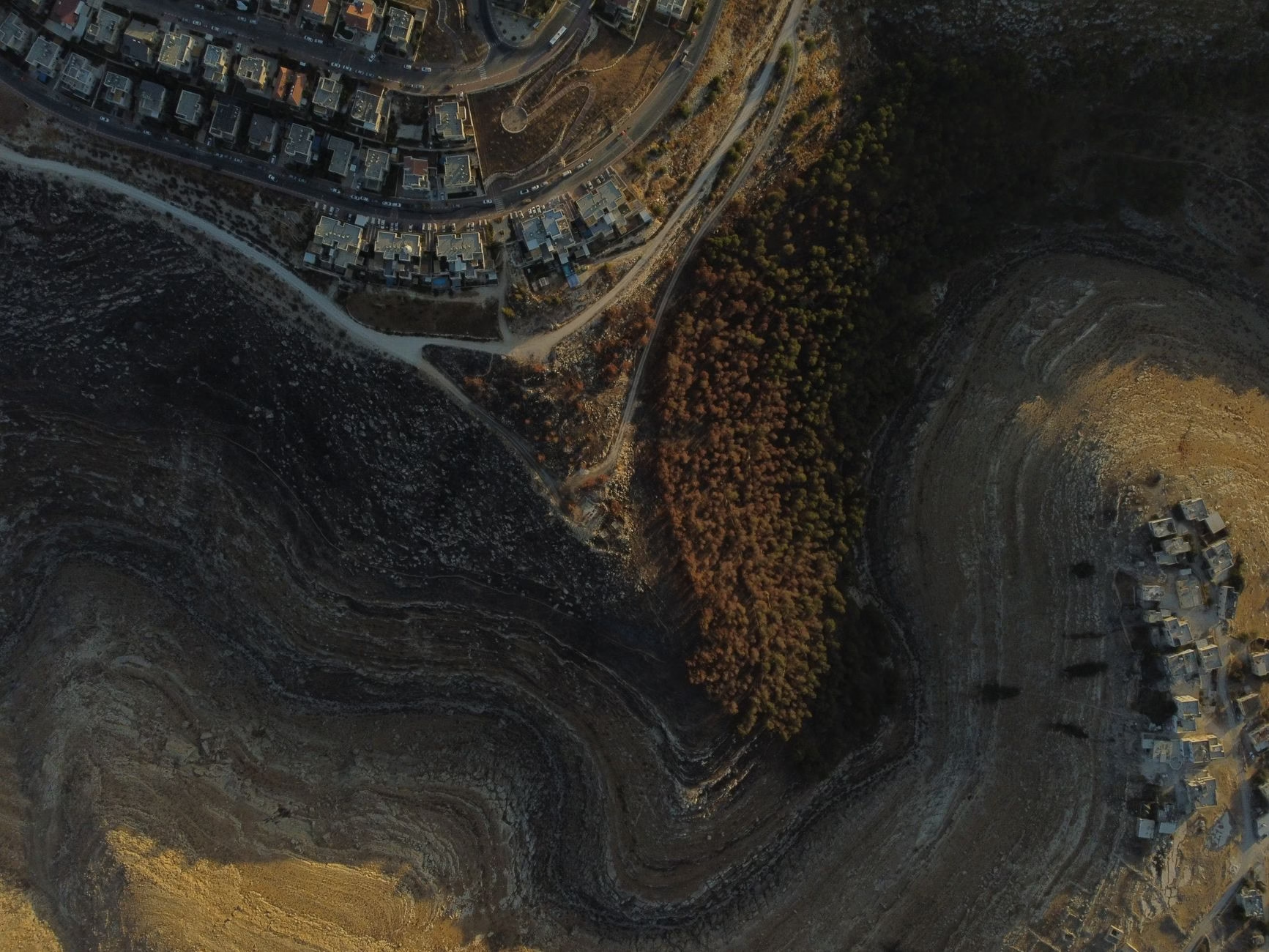
A significant development concerning the Israeli-Palestinian conflict has emerged with Israel’s recent approval of a $37 million allocation. This substantial sum is designated for the seizure of more than 70 sites located within the occupied West Bank. Such decisions invariably draw considerable attention and ignite intense debate, given the long-standing and complex nature of the territorial dispute.
This action represents a continuation of policies that have profound implications for the region’s political landscape, the lives of Palestinian residents, and the prospects for a lasting peace. Understanding the context surrounding this West Bank land seizure is crucial for grasping its potential ramifications.
The Status of the West Bank
The West Bank is a territory east of Israel, largely populated by Palestinians, which Israel occupied following the 1967 Six-Day War. Its status remains one of the most contentious issues in international relations. Under international law, the territory is widely considered occupied, and the establishment of settlements by an occupying power is deemed illegal by most of the international community, including the United Nations.
The West Bank is generally divided into three areas: Area A, under full Palestinian Authority control; Area B, under joint Israeli-Palestinian control; and Area C, under full Israeli civil and security control. The majority of Israeli settlements and land seizures typically occur in Area C, which constitutes over 60 percent of the West Bank and is vital for Palestinian development and contiguity.
Legal Frameworks and Contention
The legal basis for such West Bank land seizure actions is a point of significant dispute. Israel often cites historical ties to the land and security imperatives as justifications for its presence and actions in the West Bank. Israeli legal interpretations may rely on Ottoman land laws or specific military orders to declare land as ‘state land’ or for public purposes, even if it is privately owned by Palestinians.
Conversely, international law, particularly the Fourth Geneva Convention, prohibits an occupying power from transferring its own population into occupied territory and from seizing private property unless absolutely necessary for military operations. Critics argue that these seizures, particularly for settlement expansion, violate these fundamental principles and undermine the possibility of a viable Palestinian state.
Economic Allocation and Purpose
The allocation of $37 million specifically for the seizure of over 70 sites highlights a concerted effort to expand Israeli control and presence in the West Bank. While the precise details of how this funding will be utilized for the seizure are not fully disclosed, such funds typically cover a range of activities. These may include administrative costs associated with land registration, legal processes, security infrastructure, and potentially compensation, although compensation often remains a contentious issue for affected Palestinian landowners.
This financial commitment underscores the strategic importance placed on these territories by the Israeli government. The funding facilitates the practical implementation of policies aimed at consolidating Israeli presence and control over specific areas within the West Bank, often paving the way for further settlement expansion or infrastructure development.
Impact on Palestinian Communities
The human cost of West Bank land seizure is profound. For Palestinian communities, these actions often lead to displacement, loss of homes, and the confiscation of agricultural land that has been a source of livelihood for generations. Families face the disruption of their social fabric and economic stability, with limited recourse to challenge these decisions effectively.
Restricted access to land and resources exacerbates existing challenges, contributing to poverty and hindering economic development within Palestinian areas. The psychological impact of living under constant threat of land confiscation and displacement creates an environment of uncertainty and distress, affecting the well-being of individuals and communities.
International Reactions and Diplomacy
Decisions involving West Bank land seizure consistently draw strong condemnation from the international community. The United Nations, the European Union, and numerous individual countries routinely issue statements expressing concern that such actions undermine the prospects for a two-state solution and violate international law. These condemnations often call for adherence to international agreements and for steps that promote peace and stability.
Diplomatic efforts to resolve the Israeli-Palestinian conflict are frequently complicated by these developments. Many international actors view continued land seizures and settlement expansion as significant obstacles to restarting meaningful peace negotiations and achieving a just and lasting resolution.
Domestic Political Context
Within Israel, decisions regarding the West Bank are often shaped by complex domestic political dynamics. Government coalitions frequently include parties with strong ideological commitments to expanding Israeli sovereignty or presence in the West Bank. Such policies can be a reflection of internal political agreements and the priorities of various factions within the ruling government.
The approval of funds for land seizures can also be seen as a response to internal pressures or as a means to consolidate political support among certain segments of the Israeli electorate. This interplay of domestic politics and foreign policy significantly influences the trajectory of actions in the occupied territories.
Historical Precedent and Future Outlook
This latest approval for West Bank land seizure is not an isolated incident but rather fits into a broader historical pattern of land disputes and territorial changes in the region. The ongoing expansion of settlements and the consolidation of Israeli control over strategic areas have been a consistent feature of the conflict for decades. Each such action further entrenches the existing realities on the ground, making future territorial compromises increasingly difficult.
The implications for future peace negotiations are significant. As more land is seized and more settlements are established, the viability of a contiguous and independent Palestinian state becomes more challenging to achieve. This perpetuates a cycle of conflict and mistrust, with profound consequences for regional stability.
Conclusion
Israel’s approval of $37 million for the seizure of over 70 sites in the occupied West Bank represents a critical juncture in the ongoing Israeli-Palestinian conflict. This decision carries substantial legal, political, and humanitarian implications, further complicating efforts towards a peaceful resolution. The international community continues to monitor these developments closely, emphasizing the urgent need for adherence to international law and for steps that foster an environment conducive to dialogue and a lasting peace.





















Leave a Reply