


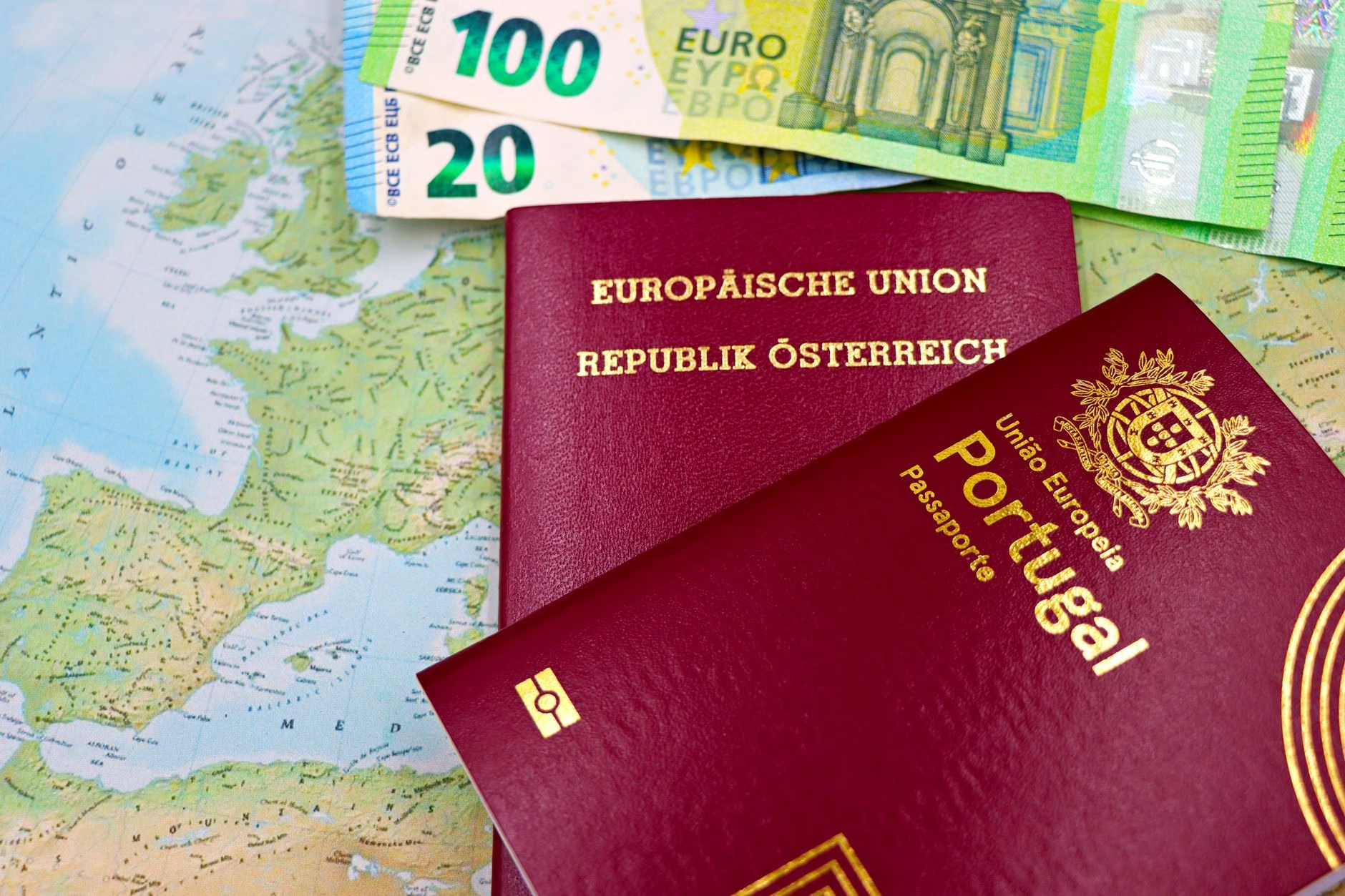
The European Union consistently prioritizes the integrity and security of its external borders. This commitment is frequently reiterated in response to various migratory movements and geopolitical developments that test the existing frameworks. Discussions surrounding enhanced border security measures are a recurring theme within EU policy circles, reflecting a continuous effort to manage complex challenges effectively.
These discussions often gain renewed urgency following significant migratory events, particularly in strategically sensitive areas. The autonomous cities of Ceuta and Melilla, situated on the northern coast of Africa, represent critical points along the EU’s external frontier. Their unique geographical and political status positions them as direct entry points into European territory, making them focal points for both migratory flows and border management strategies.
Strategic Importance of Ceuta
Ceuta, a Spanish enclave bordering Morocco, holds immense strategic importance for the European Union. Its land border with an African nation makes it a distinctive and often challenging segment of the EU’s external perimeter. The pressures experienced at this border are indicative of broader migratory trends and underscore the need for robust, yet adaptable, security protocols. The management of this border requires intricate cooperation between Spain and the EU, as well as engagement with neighboring countries.
Historically, Ceuta has been a site where individuals seeking entry into Europe have gathered, leading to periodic increases in crossings. These events, whether involving large groups or sustained individual attempts, consistently prompt a re-evaluation of current security measures and a call for stronger, more coordinated responses from the European Union as a whole. The situation in Ceuta highlights the multifaceted nature of border control, encompassing not only physical barriers but also diplomatic and humanitarian considerations.
Evolution of EU Border Policy
The European Union’s approach to external border management has evolved significantly over decades. Initially, the focus was largely on individual member states securing their own national frontiers. However, with the establishment of the Schengen Area, which abolished internal border controls, the collective responsibility for external borders became paramount. This shift necessitated a more unified and cooperative strategy.
Key milestones in this evolution include the creation of the European Border and Coast Guard Agency, commonly known as Frontex. This agency plays a crucial role in supporting member states with technical and operational assistance, including joint operations, risk analysis, and training. The continuous development of Frontex’s mandate and capabilities reflects the EU’s ongoing effort to adapt its border policy to changing realities and increasing pressures.
Challenges in Managing External Borders
Managing the European Union’s external borders presents a myriad of challenges. These include vast geographical expanses, diverse terrains ranging from land borders to extensive coastlines, and the inherent complexities of human mobility. The motivations behind migratory movements are varied, often driven by conflict, economic hardship, or the pursuit of better opportunities, making a one-size-fits-all solution impractical.
Furthermore, the management of borders is not solely a security issue; it also involves navigating intricate legal and ethical considerations. International law, including the principle of non-refoulement and the right to asylum, must be upheld. This requires a delicate balance between ensuring state security and protecting the fundamental rights of individuals seeking protection. The political dimension also adds complexity, as member states often have differing perspectives and priorities regarding migration and border control.
The Role of Frontex and Collaborative Efforts
Frontex serves as a cornerstone of the EU’s integrated border management strategy. The agency deploys border guards and equipment to member states facing significant migratory pressures, facilitating joint operations and rapid interventions. Its role extends to intelligence gathering, risk assessment, and the development of best practices for border control.
Beyond Frontex, the EU emphasizes collaborative efforts with third countries. Partnerships with nations bordering the EU, or those along key migratory routes, are considered vital for managing flows, combating human smuggling, and facilitating returns. These collaborations often involve capacity building, information sharing, and joint initiatives aimed at addressing the root causes of irregular migration. The effectiveness of EU border security is thus intrinsically linked to the strength of its international partnerships.
Balancing Security with Humanitarian Principles
A fundamental aspect of the European Union’s border policy is the commitment to upholding humanitarian principles and international law. While the call for stronger borders emphasizes security and control, it is consistently framed within the context of respecting human rights and ensuring access to asylum procedures for those in need. This dual responsibility is a defining characteristic of the EU’s approach.
Member states are obligated to process asylum applications in accordance with EU and international law, providing protection to eligible individuals. The EU also funds various programs aimed at supporting migrants and refugees, both within and outside its borders. Striking the right balance between robust security measures and compassionate humanitarian responses remains a continuous challenge and a subject of ongoing debate within the Union.
Future Directions for EU Border Management
Looking ahead, the European Union is exploring various avenues to further strengthen its border management capabilities. This includes leveraging advanced technologies for surveillance and detection, enhancing data sharing and interoperability among national authorities, and investing in more resilient infrastructure. There is also a continuous focus on improving the efficiency and fairness of asylum procedures.
Policy discussions frequently revolve around the need for greater solidarity among member states in managing migratory pressures, including mechanisms for relocation and burden-sharing. The aim is to build a comprehensive, sustainable, and humane system that can effectively respond to future challenges while upholding the core values of the European Union. The ongoing dialogue underscores the dynamic nature of border security in an interconnected world.
Conclusion
The European Union’s call for stronger external borders is a consistent policy objective, driven by the imperative to safeguard its territory and manage migratory flows effectively. Events at critical points like Ceuta serve as reminders of the persistent pressures and the need for continuous adaptation and reinforcement of existing strategies. The EU remains committed to developing a robust, technologically advanced, and cooperatively managed border system that simultaneously respects international law and humanitarian principles. This ongoing effort reflects the Union’s determination to ensure security while upholding its fundamental values.






















Leave a Reply