


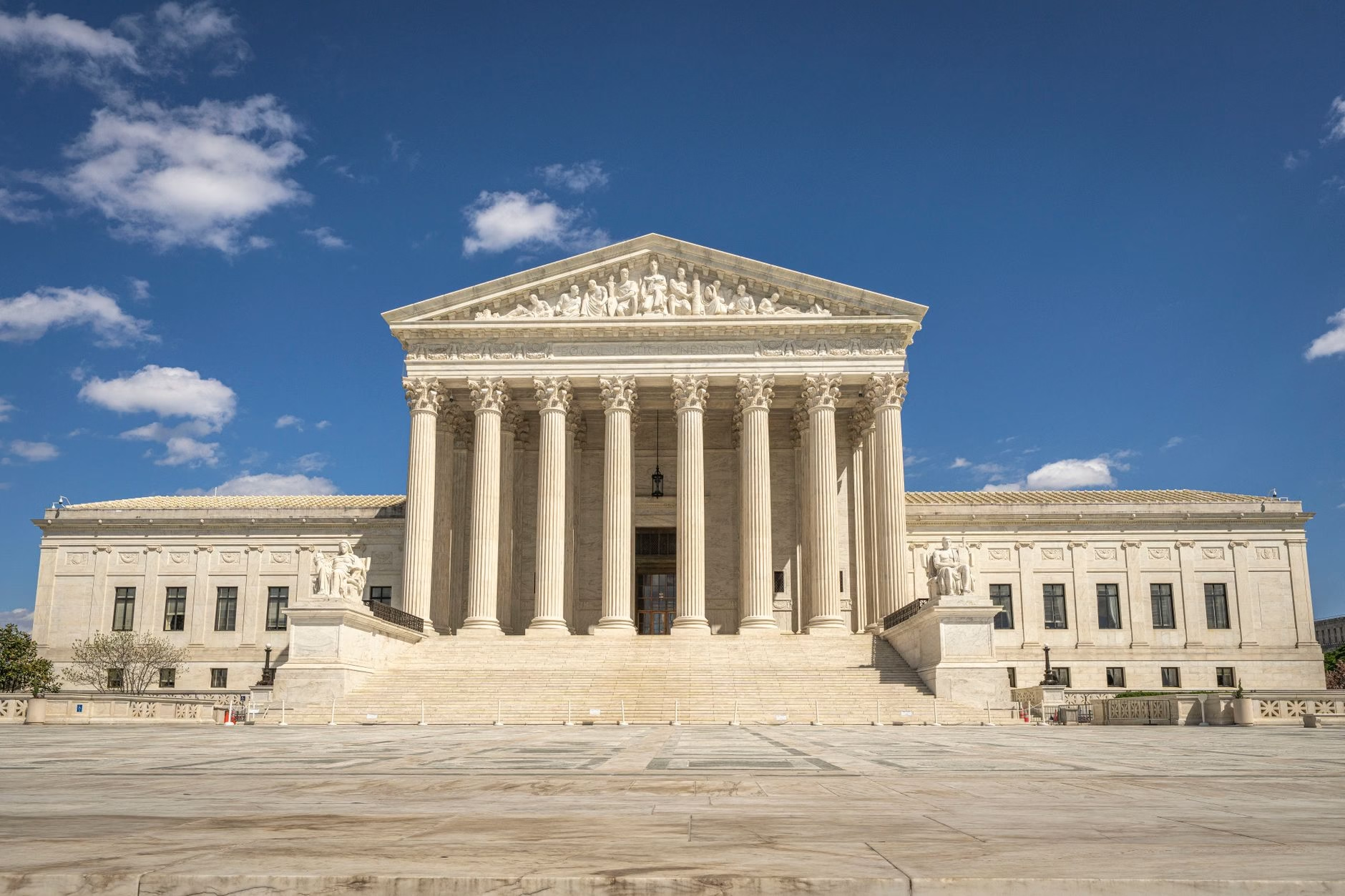
A significant legal development has unfolded as the United States Supreme Court opted not to intervene in a substantial $656 million judgment levied against Palestinian entities. This decision effectively upholds a prior ruling in a case brought by American citizens who suffered casualties or injuries during various attacks in Israel.
This refusal by the nation’s highest court to halt the financial penalty marks a pivotal moment in a protracted legal battle. The judgment, which targets the Palestine Liberation Organization (PLO) and the Palestinian Authority (PA), stems from allegations related to their responsibility for acts of violence that impacted American lives.
Background of the Legal Challenge
The lawsuit originated from a series of devastating incidents in Israel where American citizens were either killed or wounded. These victims and their families sought justice and compensation through the U.S. legal system, alleging that the Palestinian organizations were liable for the harm inflicted. The legal action was initiated under specific U.S. anti-terrorism statutes, which allow American victims of international terrorism to seek damages in federal courts.
The plaintiffs presented evidence aiming to demonstrate a connection between the Palestinian Authority and the PLO and the attacks. Their legal strategy focused on establishing accountability for the suffering endured by American nationals abroad. The initial proceedings involved extensive testimony and documentation, laying the groundwork for the substantial financial award.
Journey Through the Courts
The case navigated a complex path through the American judicial system. Following the initial verdict, which found in favor of the American plaintiffs and imposed the $656 million judgment, the Palestinian entities mounted a vigorous defense. They challenged the jurisdiction of U.S. courts, the interpretation of the anti-terrorism laws, and the factual basis of the claims against them.
Appeals were filed, leading to reviews by higher courts. These appellate stages involved detailed legal arguments concerning sovereign immunity, the extraterritorial application of U.S. law, and the evidentiary standards applied in the original trial. Each stage brought intense scrutiny to the procedural and substantive aspects of the case, reflecting the high stakes involved for all parties.
Supreme Court’s Decision Not to Intervene
The ultimate recourse for the Palestinian entities was an appeal to the U.S. Supreme Court. Their request was for the court to review the lower court’s decision or, at a minimum, to issue a stay that would temporarily halt the enforcement of the $656 million judgment. However, the Supreme Court declined to grant either request.
This refusal does not necessarily signify an endorsement of the lower court’s legal reasoning or factual findings. Instead, it indicates that the Supreme Court chose not to exercise its discretionary power to hear the case. Such decisions are common, as the Supreme Court accepts only a small fraction of the petitions it receives annually. For the parties involved, however, the practical effect is that the judgment stands, and the legal avenues for appeal within the U.S. system are now exhausted.
Implications for the Palestinian Entities
The upholding of the $656 million judgment carries significant financial and political implications for the PLO and the Palestinian Authority. Such a substantial sum could pose considerable challenges to their financial stability and operational capabilities. The enforcement of the judgment could involve efforts to seize assets held by these entities within the United States or potentially internationally, where legally permissible.
Beyond the immediate financial burden, the ruling also has symbolic weight. It reinforces the principle that foreign entities may be held accountable in U.S. courts for actions that harm American citizens, particularly under specific anti-terrorism legislation. This could influence how these organizations operate and interact on the international stage, especially concerning their engagement with U.S. law and citizens.
Broader Legal Context and Future Outlook
This decision by the US Supreme Court contributes to the evolving landscape of international legal accountability. It underscores the robust nature of U.S. anti-terrorism laws designed to provide recourse for victims. The ruling may serve as a precedent or at least an influential data point for future cases involving foreign entities and claims of responsibility for acts of violence.
The pursuit of justice by victims of terrorism through civil litigation remains a complex but vital avenue. While the immediate legal battle concludes with this Supreme Court action, the broader implications for international law, victim compensation, and the conduct of foreign entities will likely continue to be debated and observed by legal scholars and policymakers alike. The resolution of this case highlights the enduring commitment of the U.S. legal system to address grievances stemming from international conflicts and acts of terror affecting its citizens.




















Leave a Reply