


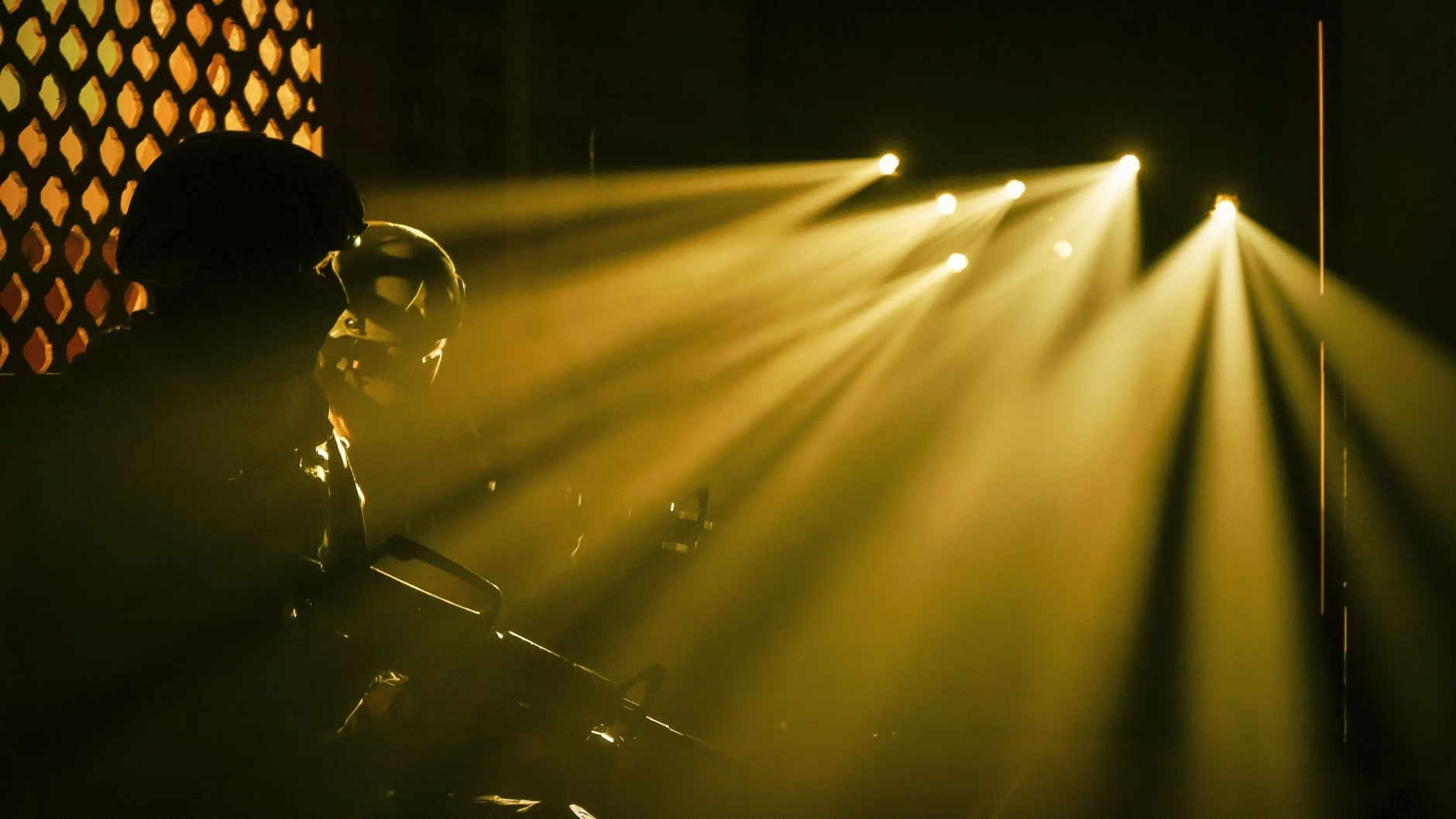
The acclaimed musical group Massive Attack has reportedly been barred from future performances in Singapore. This significant development stems from an incident involving a flag display during a previous concert, which authorities deemed to be in violation of local regulations. The decision highlights the complex interplay between artistic expression, national sovereignty, and the diverse regulatory landscapes faced by international artists touring globally.
Understanding the Incident’s Core
The core of the issue revolves around a flag display that occurred during a past Massive Attack performance in Singapore. While specific details regarding the nature of the flag or the exact context of its display have not been publicly elaborated, the outcome is clear: the incident led to a prohibition on the band’s return to the city-state. This situation underscores the stringent guidelines that often govern public performances and displays in certain jurisdictions, particularly when they are perceived to carry political or sensitive connotations.
Artistic Expression Versus Regulatory Control
This incident reignites a perennial debate concerning the boundaries of artistic freedom, especially for performers operating across different national borders. Artists frequently use their platforms to convey messages, provoke thought, or express solidarity with various causes. For a group like Massive Attack, known for its politically charged lyrics and socially conscious themes, such expressions are often integral to their artistic identity and performance style.
However, host nations maintain the right to enforce their own laws and cultural sensitivities. Governments often implement regulations to prevent public events from becoming platforms for what they consider divisive political statements, foreign interference, or content that could disrupt social harmony. The challenge for artists lies in navigating these varied expectations and legal frameworks without compromising their artistic integrity or inadvertently violating local statutes.
Singapore’s Regulatory Environment for Public Events
Singapore is widely recognized for its meticulous approach to public order and social cohesion. The nation has a well-established framework for regulating public gatherings, demonstrations, and artistic performances, particularly those involving foreign entities. These regulations are designed to ensure that events align with national interests and do not incite discord or challenge governmental authority.
For international performers, obtaining permits and adhering to content guidelines are standard procedures. These guidelines can encompass a broad range of elements, from lyrical content and visual projections to stage props and audience interaction. Incidents like the one involving Massive Attack serve as a stark reminder that deviations from these established norms can lead to significant repercussions, including future bans.
Implications for International Touring Artists
Such bans carry substantial implications for international touring artists and the global music industry. They compel artists to meticulously research and understand the socio-political and legal landscapes of every country they intend to visit. What might be acceptable artistic expression in one nation could be deemed offensive or illegal in another.
This necessitates a delicate balance between an artist’s desire for uninhibited expression and the pragmatic need to comply with local laws to ensure their ability to perform. It can also influence tour planning, potentially leading artists to avoid certain regions where regulatory environments are perceived as overly restrictive or where their artistic message might be misinterpreted or censored.
The Broader Debate on Art and Politics
Beyond the immediate impact on Massive Attack, this incident contributes to a larger, ongoing global conversation about the intersection of art and politics. Many argue that art inherently possesses a political dimension, serving as a mirror to society, a catalyst for change, or a voice for the marginalized. Restricting such expression, from this perspective, can be seen as an infringement on fundamental freedoms.
Conversely, proponents of strict regulation emphasize national sovereignty and the right of a country to define acceptable public discourse within its borders. They argue that foreign artists, while welcome to share their craft, must respect the host nation’s laws and cultural norms, especially when performing in public spaces.
Navigating Cultural Sensitivities
The situation underscores the critical importance for artists and their management teams to engage in thorough due diligence when planning international tours. Understanding not just the legal framework but also the prevailing cultural sensitivities and political climate of a host country is paramount. This proactive approach can help prevent misunderstandings and avoid situations that could lead to bans or other punitive measures.
While the desire for artistic freedom is universal, the practicalities of international performance often demand a degree of adaptation and respect for local customs and laws. The incident involving Massive Attack and Singapore is a poignant illustration of the challenges inherent in this dynamic, serving as a case study for artists navigating the complex global stage.
Conclusion
The reported ban of Massive Attack from returning to Singapore following a flag display incident during a past concert highlights the persistent tension between artistic expression and governmental regulation. It serves as a significant reminder for all international artists about the necessity of understanding and adhering to the diverse legal and cultural standards that govern public performances worldwide. The incident will undoubtedly continue to fuel discussions on the role of art in political discourse and the responsibilities of both artists and host nations in fostering an environment where creativity can flourish respectfully within established boundaries.
















Leave a Reply