


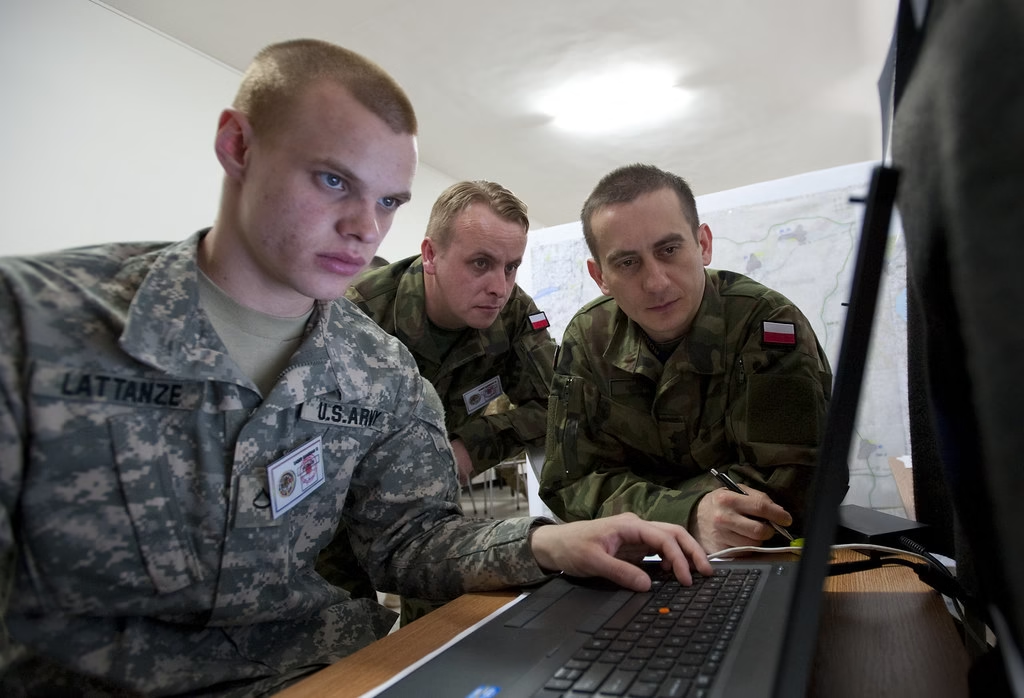
Moscow and Kyiv launched their heaviest cross-border aerial bombardments in months early Friday morning, battering critical energy infrastructure across Ukraine and targeting Russian industrial hubs, while NATO’s top military chief issued a stark warning that any Russian aggression against the Baltic states would lead to devastating losses for the Kremlin.
Heavy Aerial Strikes Signal Winter Escalation
Ukrainian air defense forces engaged dozens of incoming Russian cruise missiles and kamikaze drones over Kyiv and regional urban centers overnight. Local authorities reported severe power grid disruptions, damaged residential structures, and civilian casualties as emergency crews worked around the clock to restore basic municipal services.
Simultaneously, Ukrainian long-range strike drones struck deep inside Russian territory, targeting oil refineries, storage depots, and logistical nodes across border provinces. The coordinated counter-strikes mark one of Ukraine’s most aggressive campaigns this year aimed at crippling Russia’s military supply network.
Energy analysts estimate that recent Ukrainian drone strikes have temporarily knocked out significant portions of Russia’s domestic oil refining capacity. The resulting infrastructure fires have forced local operational shutdowns, triggering regional fuel shortages and pushing up refined product prices.
NATO Reinforces Eastern Defense Posture
Addressing the escalating hostilities during a press briefing in Brussels, the Chairman of the NATO Military Committee delivered an explicit deterrent message directly to Moscow. NATO military leadership warned that any potential invasion or hybrid attack targeting Estonia, Latvia, or Lithuania would trigger an immediate and decisive collective defense response under Article 5.
Alliance intelligence reports indicate that while the primary body of Russian ground forces remains locked in heavy fighting in Ukraine, Moscow continues to conduct electronic warfare operations and airspace incursions along NATO’s northeastern border. In response, NATO has fortified its enhanced Forward Presence battle groups stationed across the Baltic nations.
Member states across Europe are accelerating military logistics initiatives to guarantee rapid troop movements toward eastern flank nations in the event of direct conflict with Russia.
Energy Market Volatility and Defense Logistics Strain
The sudden surge in mutual infrastructure bombardments sent immediate shockwaves through international energy markets. Global crude oil prices climbed over two percent as traders evaluated the heightened risk of long-term disruptions to Russian petroleum exports and Black Sea transit routes.
Market analysts caution that prolonged damage to Russian processing facilities could tighten global supplies, complicating broader economic stabilization efforts across Europe and North America ahead of the winter heating season.
The intense pace of aerial warfare has also placed immense strain on air defense inventories. Kyiv continues to call upon Western allies for urgent delivery of advanced air defense systems, including Patriot and NASAMS batteries, to safeguard urban centers and vulnerable electrical substations.
Defense industry data highlights that interceptor consumption rates are outpacing production capacities in NATO countries, prompting military planners to push for accelerated manufacturing schedules to maintain operational readiness.
What to Watch Next
Military observers and geopolitical analysts are closely monitoring several critical indicators over the coming weeks. A key focus remains on whether Ukrainian forces can sustain their deep-strike drone campaign against Russian energy infrastructure while preserving remaining surface-to-air missile stockpiles.
On the geopolitical front, intelligence agencies are watching for potential Russian retaliatory measures against European energy assets or increased hybrid warfare activities along NATO borders. Allies are expected to review immediate military aid packages and energy security protocols in direct response to the expanding target zones on both sides.






















Leave a Reply