


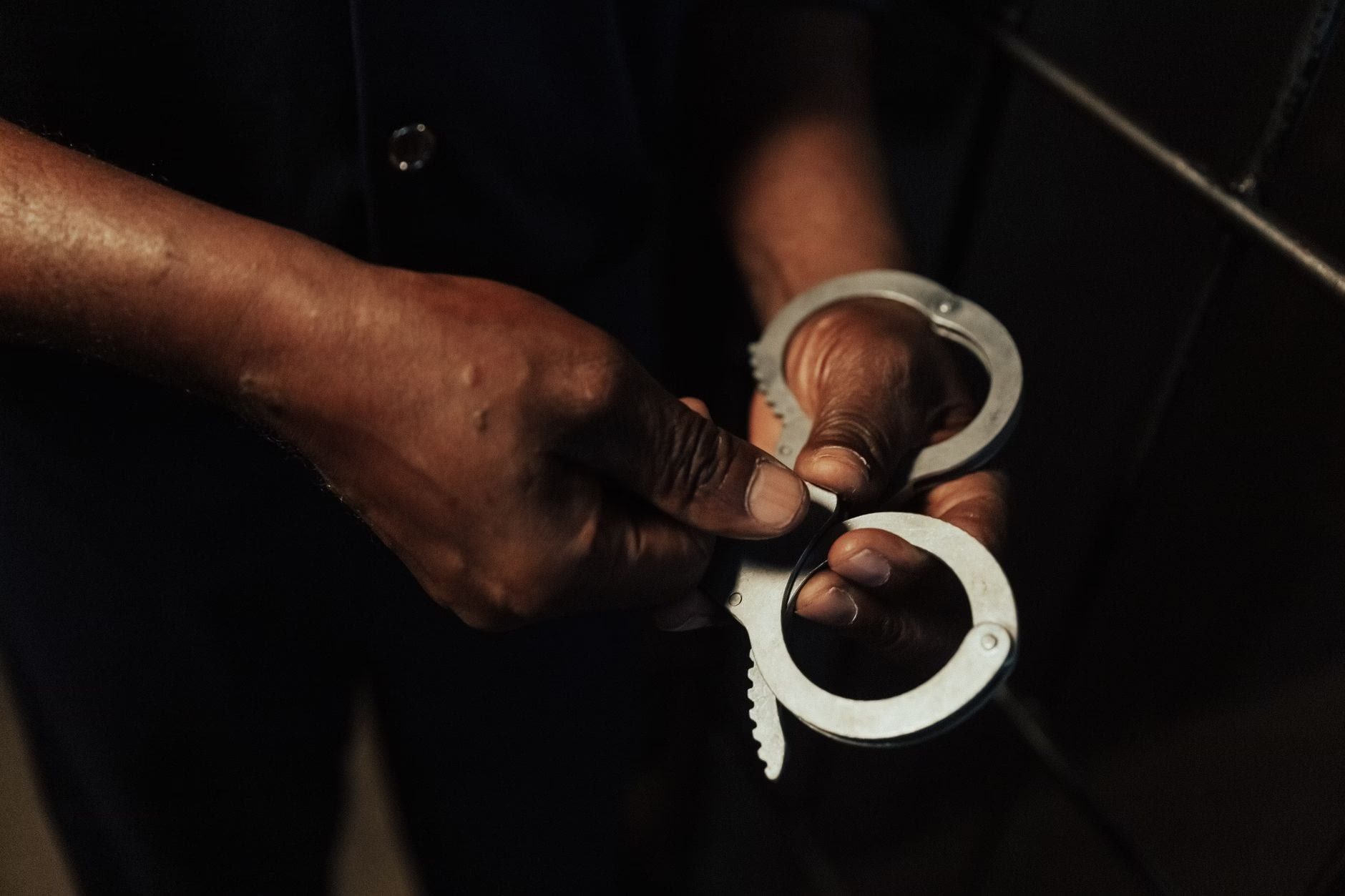
Costa Rican law enforcement officials captured Alejandro Arias-Monge, a 41-year-old alleged drug kingpin known by the alias “Diablo,” during a high-stakes intelligence operation in Costa Rica after years of international evasion. Wanted by United States federal authorities on severe narcotics trafficking charges, Arias-Monge carried a $500,000 bounty from the U.S. Department of State for his instrumental role in directing international cocaine smuggling operations across Central America.
A Decade of Evasion and Criminal Expansion
For nearly a decade, Arias-Monge operated as one of Central America’s most elusive fugitives, establishing a powerful criminal network centered in Costa Rica’s Caribbean province of Limón. His organization specialized in maritime logistics, receiving bulk cocaine shipments from South American cartels before organizing their northward transit toward North American markets.
As his influence expanded, Arias-Monge built a reputation for evading law enforcement through sophisticated operational security and deep local informant networks. Repeated police raids over the past five years failed to apprehend him, elevating his status among regional transnational organized crime groups.
The U.S. Department of State added Arias-Monge to its Narcotics Rewards Program, offering up to half a million dollars for information leading to his arrest or conviction. U.S. prosecutors allege that his command structure coordinated multi-ton cocaine shipments that significantly impacted public health and security in North America.
Tactical Intelligence and Joint Operations
The arrest was the result of months of sustained intelligence sharing between Costa Rica’s Judicial Investigation Organism (OIJ), national security forces, and international law enforcement agencies. Tactical teams executed a coordinated raid after signal intelligence and physical surveillance successfully pinpointed his location.
Officials reported that the capture occurred without casualties, swiftly neutralizing the fugitive’s immediate security detail. Law enforcement officers seized communication equipment, encrypted devices, and financial records from the scene to dismantle remaining operational cells.
International cooperation proved vital throughout the multi-year investigation. U.S. agencies, including the Drug Enforcement Administration (DEA), provided continuous technical assistance and analytical support to narrow down searching zones across remote rural provinces.
Impact on Local Security and National Statistics
The apprehension comes at a critical time for Costa Rica, which has faced unprecedented surges in violent crime linked to international drug trafficking routes. Historically regarded as a peaceful sanctuary in Central America, the nation has seen local gangs clash violently over territorial control of maritime transit corridors.
Data from the OIJ indicates that Costa Rica suffered record homicide numbers in recent years, with over two-thirds of homicides attributed directly to gang rivalries and drug-related conflicts. Security reports frequently linked Arias-Monge’s network to aggressive enforcement tactics aimed at securing dominant control over key Atlantic ports.
“Targeting high-level leaders like Arias-Monge is crucial for dismantling the financial and logistical backbones of cartels,” said Latin American security analyst Maria Morales. “However, empirical data demonstrates that removing top-tier leaders often triggers short-term violent fragmentation among lower-level operatives vying for control.”
Extradition Proceedings and What to Watch Next
Arias-Monge now faces formal extradition procedures to the United States, where federal indictments await him in multiple jurisdictions. Costa Rican judicial authorities are reviewing the administrative framework required to process the extradition request in compliance with international legal protocols.
Legal experts anticipate that defense counsel may file procedural appeals, but the presence of active federal warrants in the United States makes eventual transfer highly likely. In the interim, Arias-Monge remains held under maximum security protocols within the Costa Rican penal system.
Security forces across Central America are now monitoring potential vacuum effects along the Caribbean coastline. Authorities have deployed additional police resources to Limón and surrounding regions to deter rival syndicates from attempting to seize control of established smuggling routes in the wake of the kingpin’s arrest.




















Leave a Reply