


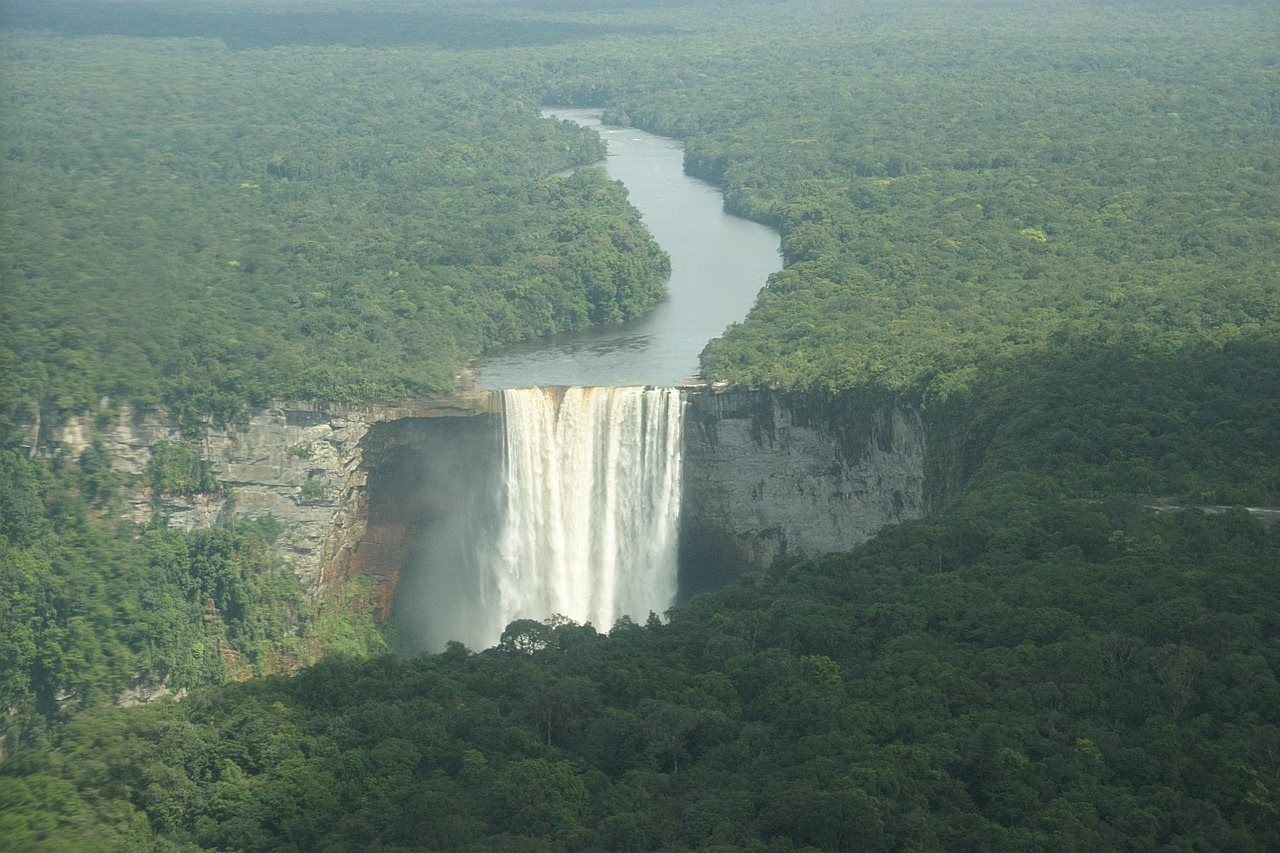
Wildlife researchers conducting a biodiversity survey in southern Guyana’s remote Rupununi river basin captured rare, high-resolution camera trap footage of an elusive jaguar traversing a pristine riverbank corridor this month. The automated camera equipment was originally deployed by ecological monitoring teams to track endangered giant river otters, highlighting the rich and interconnected biodiversity of the Guiana Shield rainforest ecosystem.
Background and Ecosystem Context
The Guiana Shield encompasses one of the largest continuous tracts of primary tropical rainforest remaining on Earth, covering parts of Guyana, Suriname, French Guiana, and northern Brazil. According to data from the World Resources Institute, Guyana maintains more than 85 percent of its primary forest cover, making it a critical global stronghold for large carnivores.
Jaguars (Panthera onca) are the largest cat species in the Americas and require vast, unbroken territories to maintain healthy breeding populations. Despite their apex predator status, jaguars face mounting pressure across South America due to habitat loss, agricultural expansion, and retaliatory hunting by livestock owners.
Conservation organization Panthera estimates that jaguars have been extirpated from nearly 50 percent of their historic natural range. As a result, dense riverine forests like those in Guyana serve as vital refuges and biological movement corridors for the species.
A Surprise Discovery Along the Riverbanks
The unexpected capture occurred during a multi-week ecological monitoring campaign aimed at assessing the population health of giant river otters (Pteronura brasiliensis). Researchers mounted motion-activated infrared cameras along key waterways where otters construct dens and establish scent-marking sites.
Reviewing the digital footage, field biologists discovered a healthy adult male jaguar stepping into the camera frame during the twilight hours. The animal walked calmly along the muddy edge of the river, pausing to inspect the damp soil before vanishing back into the thick undergrowth.
Biologists note that camera traps set for one specific aquatic or semi-aquatic species frequently yield crucial baseline data on sympatric terrestrial mammals. The shared use of river corridors underscores how aquatic and terrestrial systems are deeply intertwined in Amazonian habitats.
Data Points and Expert Insights
Each jaguar possesses a unique pattern of dark rosettes on its coat, functioning essentially like a human fingerprint. By analyzing the distinct spot arrangements visible in the new images, researchers can cross-reference the individual against regional photographic databases to establish movement patterns and density estimates.
Ecologists from the Iwokrama International Centre for Rain Forest Conservation and Development emphasize that camera trap monitoring remains the most effective non-invasive tool for tracking cryptic carnivores. Dense foliage and low population densities make direct human sightings of wild jaguars extremely rare.
Data collected over the past decade indicates that riverbanks act as essential travel highways for solitary predators, especially during seasonal flooding when interior land becomes inundated. Conserving these riparian buffer zones is essential for maintaining genetic connectivity between isolated animal populations across borders.
Economic Pressures and Conservation Challenges
The discovery comes at a critical juncture for Guyana, which is experiencing rapid economic transformation driven by major offshore petroleum discoveries and expanding infrastructure development. Expanding road networks and timber extraction threaten to fragment wild landscapes that were previously inaccessible to heavy machinery.
Furthermore, small-scale alluvial gold mining along regional river systems poses ongoing threats to riverbank habitat structure and aquatic food webs. Toxic runoff, such as mercury used in mining processes, bioaccumulates in top predators, posing unseen long-term health risks to both giant otters and jaguars.
Local Indigenous communities, including the Macushi people, play a central role in monitoring these remote lands through community-based conservation initiatives. Environmental organizations are increasingly pairing traditional ecological knowledge with scientific field technology to safeguard key hunting and fishing territories from illegal industrial encroachment.
Implications and What to Watch Next
This rare footage provides valuable empirical evidence supporting the expansion of protected corridor networks throughout the Rupununi wetlands and surrounding forests. Regional conservation group coalitions plan to use the dataset to advocate for formal legal protections covering high-biodiversity riverine zones.
Over the coming months, field teams will deploy additional camera traps across neighboring tributaries to establish a comprehensive baseline count of large mammals in the area. Observers will be watching closely to see if Guyana’s ongoing National Biodiversity Strategy effectively integrates real-time camera trap data into land-use planning and sustainable development policies.


















Leave a Reply