


Veteran conflict cameraman Derek Williams passed away on Wednesday following a courageous battle with Parkinson’s disease and a recent cancer diagnosis, his family confirmed. Renowned across international newsrooms as “the mate you would want in any war zone,” Williams spent decades documenting pivotal global events from the frontlines, earning the enduring respect of correspondents, producers, and field crews worldwide.
Decades on the Frontlines of History
To understand the history of global conflict over the past several decades is to look through the lens of dedicated news gathering professionals like Derek Williams.
Operating behind the camera, field operators carry extraordinary physical and operational burdens to bring raw, verified visual truth from volatile environments to global audiences.
Williams established a widespread reputation for technical mastery under fire, paired with an uncanny ability to maintain calm during high-stress military engagements and humanitarian crises.
Colleagues frequently noted that while on-air reporters provided the narrative voice, it was Williams’ sharp eye, situational awareness, and composure that captured the human reality of war.
The Critical Role of the Field Cameraman
The profession of the combat cameraman demands an exceptional combination of physical endurance, journalistic instincts, and acute risk management.
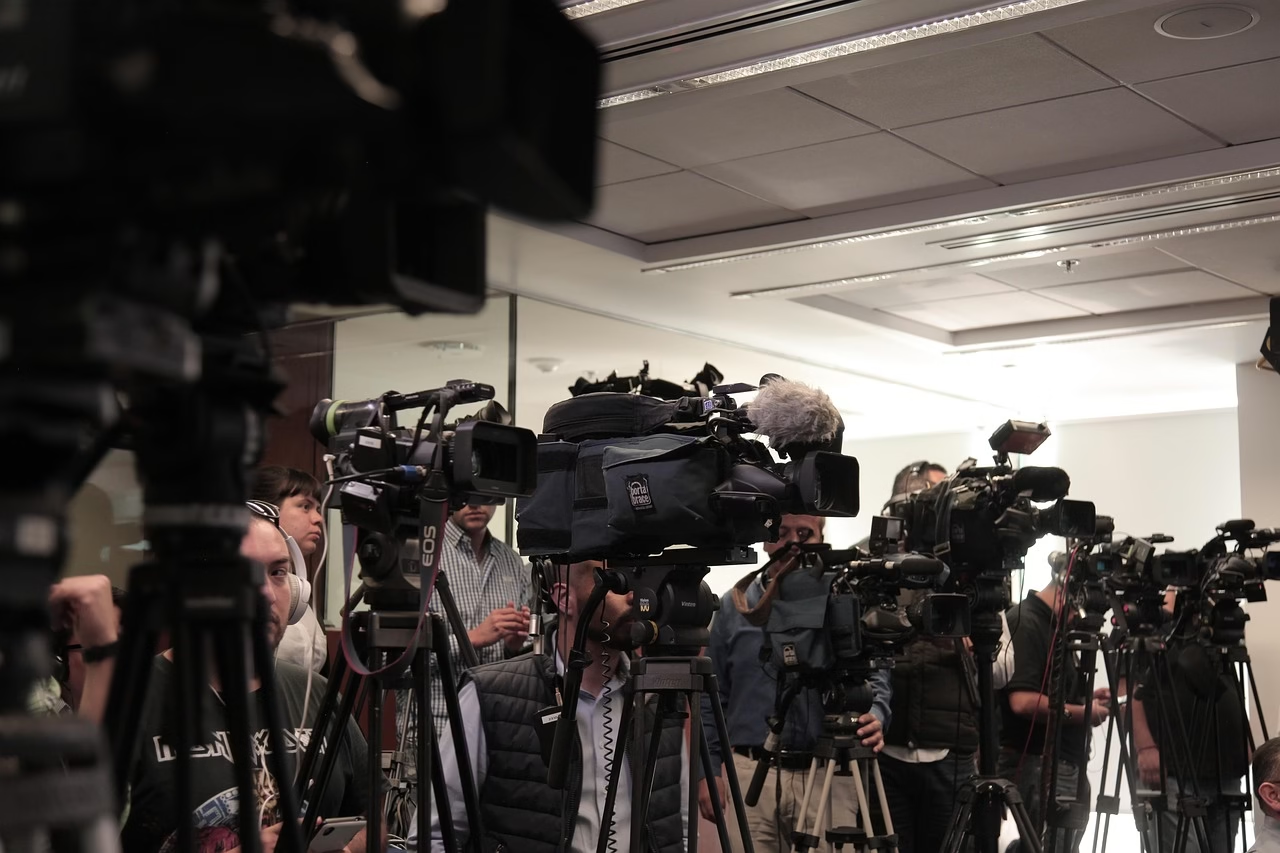
News crews in frontline settings routinely navigate incoming artillery, urban ambushes, and unpredictable checkpoints while lugging heavy broadcast apparatus and protective gear.
Throughout his career, Williams prioritized illuminating the human toll of warfare over personal accolades or cinematic sensationalism.
Peers highlighted his unique skill in building instant trust with local populations, de-escalating hostility at militarized borders, and bolstering team morale during grueling deployments.
Data Points to Rising Perils for News Crews
Williams’ passing comes at a critical juncture for conflict journalism, as the operational hazards facing field technicians continue to escalate globally.
According to historical monitoring by the Committee to Protect Journalists (CPJ), camera operators, fixers, and technical staff constitute a substantial proportion of media casualties recorded in active combat zones.
Advocacy groups note that support crew members often face the highest exposure to immediate physical threats during tactical field movements.
Media historians emphasize that veteran operators like Williams established the operational standards for modern field safety, convoy communication, and field ethics that guide current combat deployments.
The Long-Term Toll on Frontline Veterans
Beyond immediate physical threats in conflict zones, news organizations are increasingly recognizing the cumulative health toll carried by lifetime field journalists.
Medical researchers and press freedom groups have documented clear links between prolonged exposure to high-stress environments and long-term health challenges, including neurodegenerative conditions and severe post-traumatic stress.
The broadcast industry has historically lacked comprehensive long-term health tracking for retired field personnel who spent decades in hazardous chemical, environmental, or conflict settings.
Tributes pouring in for Williams reflect a broader momentum within newsrooms to honor and support visual journalists both during their service and throughout their post-fielding years.
The Future of Frontline Visual Journalism
As news organizations transition heavily toward drone technology, user-generated content, and remote gathering tools, the traditional discipline of field camera work faces rapid structural change.
Industry analysts stress that automated platforms cannot replace the moral judgment, empathy, and verified accuracy that seasoned professionals bring to active battlefields.
Newsroom leaders are watching how media houses will fund, train, and protect the next generation of visual journalists tasked with covering high-risk geopolitics.
The ultimate legacy of pioneer cameramen like Derek Williams serves as a lasting benchmark for the necessity of human presence and courageous storytelling in documenting world history.



















Leave a Reply