


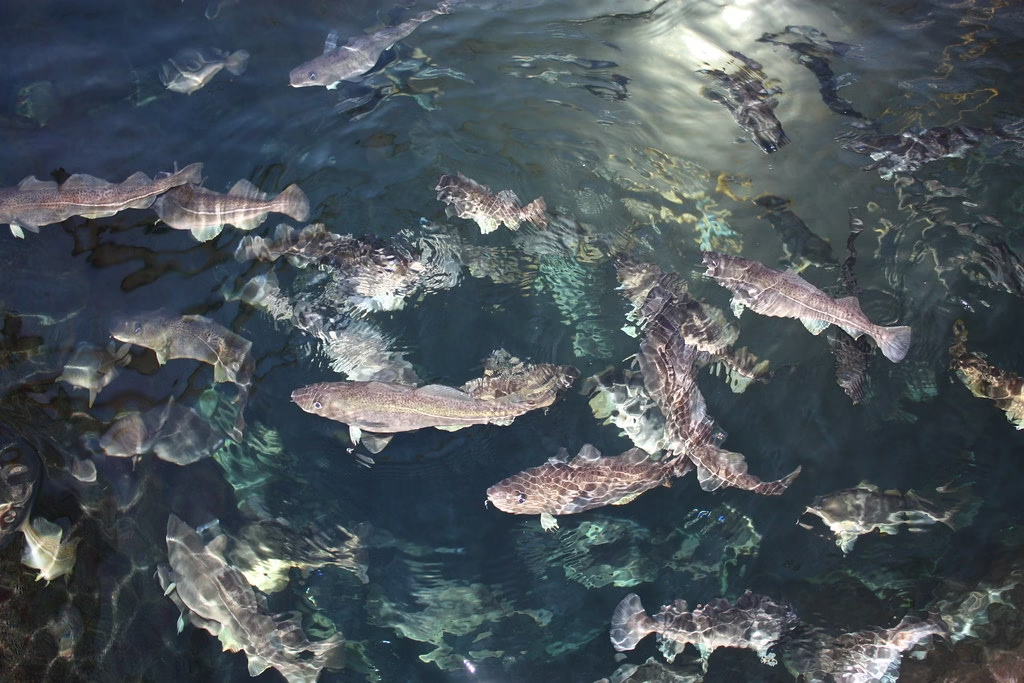
Global seafood prices face an imminent upward shift as a severe shortage of anchovies, triggered by environmental volatility in the South Pacific, ripples through the international supply chain. The scarcity of these small forage fish, primarily harvested off the coast of Peru, has disrupted the production of fishmeal and fish oil—essential components for feeding farm-raised salmon, shrimp, and even livestock.
The Critical Role of Forage Fish in Aquaculture
Anchovies serve as the backbone of the global aquaculture industry. Because they are nutrient-dense and rich in omega-3 fatty acids, they are processed into meal that serves as a primary protein source for carnivorous farmed species like Atlantic salmon.
When anchovy populations decline, the cost of fishmeal skyrockets. Producers are forced to either absorb these costs or pass them on to consumers, leading to higher retail prices at supermarket seafood counters worldwide.
Environmental Factors and Supply Chain Instability
The current crisis is largely attributed to climate-driven shifts in the Humboldt Current, which has reduced the biomass of anchoveta available for commercial harvest. According to data from the Peruvian Ministry of Production, recent fishing quotas have been slashed significantly to prevent overfishing during these periods of environmental stress.
The lack of supply has created a bottleneck in the aquaculture feed market. As the cost of feed accounts for nearly 50% to 70% of the total production cost for farmed salmon, even minor fluctuations in ingredient prices have a magnified effect on the final retail product.
Expert Perspectives on Market Volatility
Industry analysts note that while the aquaculture industry has attempted to diversify feed ingredients—incorporating soy, algae, and insect protein—the transition remains slow. “The industry is currently tethered to marine-based inputs,” says Dr. Elena Vance, a senior analyst in marine economics. “Until alternative proteins reach the same price point and nutritional profile as fishmeal, we remain highly vulnerable to these ecological disruptions.”
Market data from the FAO (Food and Agriculture Organization) indicates that global fishmeal prices have reached multi-year highs. This trend is expected to persist as long as weather patterns, such as El Niño, continue to impact the nutrient-rich upwelling zones that support anchovy populations.
Implications for Consumers and Producers
For the average shopper, this means the price of a standard salmon fillet is likely to remain elevated throughout the coming fiscal year. Retailers are already reporting thinner margins, and many are signaling that price hikes are inevitable as existing inventories of lower-cost feed are depleted.
Looking ahead, the industry is closely watching the next fishing season in the Pacific. If environmental conditions remain unfavorable, aquaculture firms may be forced to accelerate the adoption of synthetic omega-3s and plant-based feeds to maintain price stability. Investors and consumers should prepare for a period of ongoing volatility in the protein market as the global food supply chain continues to reckon with the climate-sensitive nature of its most basic ingredients.
























Leave a Reply