


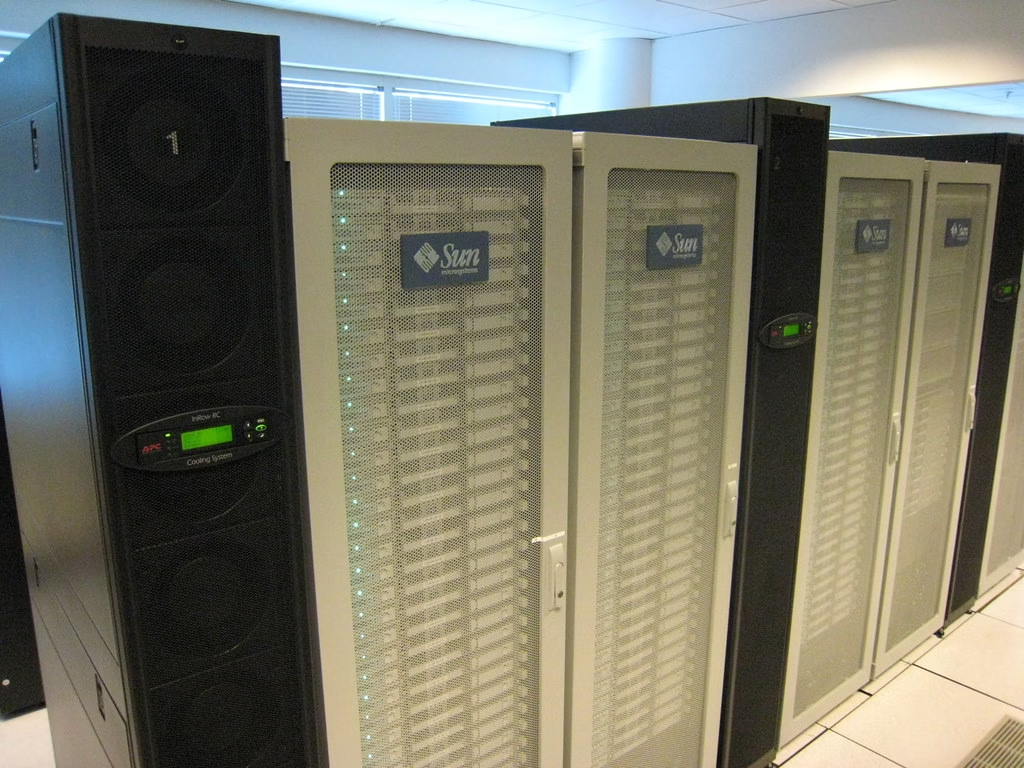
In a strategic pivot to secure technological sovereignty, national leaders including French President Emmanuel Macron and Indian Prime Minister Narendra Modi have launched aggressive campaigns this year to attract massive investments from global artificial intelligence giants. As governments worldwide scramble to host the next generation of cloud infrastructure and data centers, these leaders are offering regulatory incentives and direct partnerships to tech titans like Microsoft, Google, and NVIDIA, aiming to cement their nations as pivotal hubs in the burgeoning AI economy.
The Global Scramble for Sovereign Computing
For decades, the digital architecture of the world has been dominated by a handful of Silicon Valley corporations, leaving many nations reliant on foreign cloud services. Recent geopolitical tensions and the rapid acceleration of generative AI have forced a realization among policymakers: control over data infrastructure is now synonymous with national security.
France, under President Macron, has positioned itself as the gateway to the European AI market. By fostering domestic champions like Mistral AI while simultaneously inviting American giants to build massive data centers on French soil, Paris seeks to create a hybrid ecosystem that balances innovation with European regulatory standards.
India’s Digital Leap
In India, Prime Minister Modi has framed AI infrastructure as the cornerstone of the nation’s next phase of economic development. With a massive population and a rapidly maturing tech workforce, India is marketing itself as the ideal location for the energy-intensive data centers required to power the global AI revolution.
The Indian government has eased land acquisition processes and offered production-linked incentives to ensure that the infrastructure supporting global AI models is physically housed within its borders. This approach is designed to keep the value-add of AI development domestic, rather than merely exporting data to be processed elsewhere.
Expert Perspectives on the AI Arms Race
Industry analysts note that the competition is as much about energy as it is about software. “Data centers are the new oil refineries of the 21st century,” says Dr. Elena Rossi, a senior technology policy advisor. “Governments are not just competing for capital; they are competing for the power grids and cooling capacity required to sustain these massive computing clusters.”
Data from the International Energy Agency suggests that global electricity consumption from data centers could double by 2026. Consequently, countries that can provide reliable, sustainable energy—often through nuclear or renewable initiatives—are winning the favor of companies like Microsoft and Amazon, which face intense pressure to meet net-zero carbon targets.
Economic and Geopolitical Implications
For the tech giants, these government overtures offer a rare opportunity to bypass traditional market barriers. By negotiating directly with heads of state, companies can secure tax breaks, streamlined permits, and political protection that would be otherwise inaccessible.
However, this trend carries significant risks for smaller nations and startups. Critics argue that the concentration of AI infrastructure in a few powerful countries could create a “digital divide,” where nations lacking the capital to lure Big Tech are relegated to being passive consumers of AI services rather than developers.
Looking ahead, the market will likely see a surge in public-private partnerships centered on infrastructure development. Observers should watch for how these nations manage the environmental impact of these facilities, as the tension between AI growth and climate goals will become a defining political issue in the upcoming election cycles. Furthermore, the ability of these governments to maintain neutrality while hosting US-based tech infrastructure will remain a critical variable in global diplomatic relations.





















Leave a Reply