


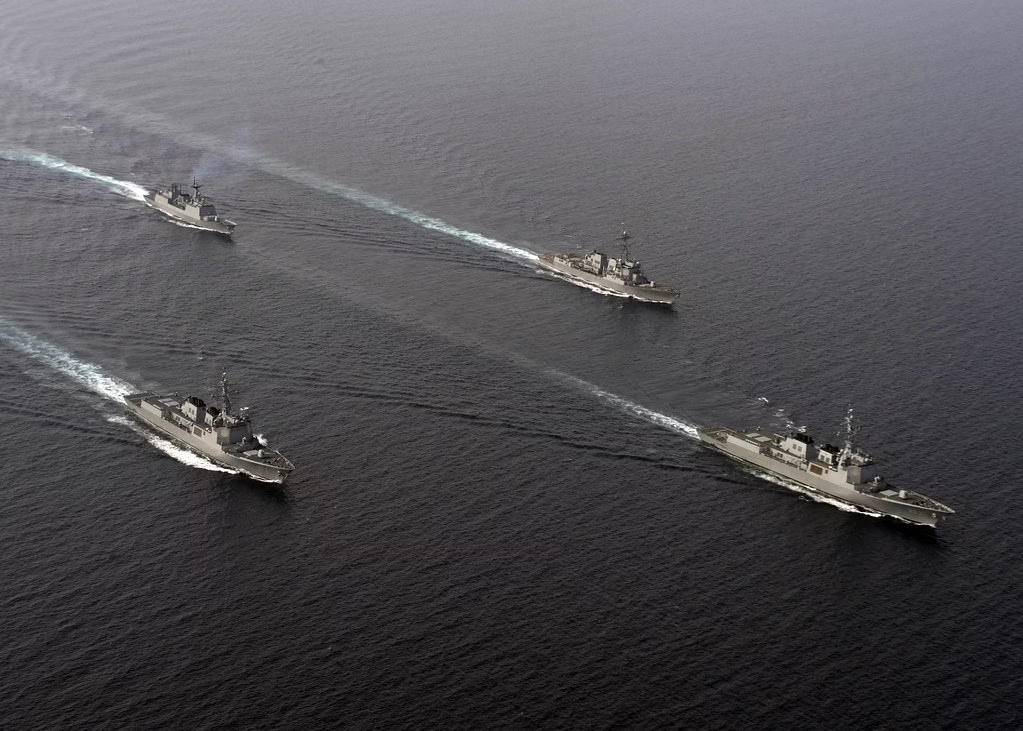
The United States military launched a series of targeted strikes against Iranian-linked assets early this week, marking a significant escalation in response to a sustained campaign of attacks against commercial shipping vessels in the Middle East. The operation, centered on critical logistical nodes, follows months of mounting tensions that have threatened the stability of global trade routes and prompted an urgent reassessment of maritime security protocols in the region.
Contextualizing the Maritime Conflict
The Strait of Hormuz remains the world’s most critical maritime chokepoint, serving as a transit artery for approximately 20% of the world’s total oil consumption. Prior to the recent surge in hostilities, U.S. and Iranian officials had been engaged in delicate, back-channel negotiations aimed at de-escalating friction regarding commercial transit through these waters.
These diplomatic efforts have largely stalled as the frequency of drone and missile strikes against international merchant ships increased. The U.S. Department of Defense maintains that these actions are necessary to protect the freedom of navigation and ensure the uninterrupted flow of global energy supplies, characterizing the strikes as a direct response to provocations that endanger international crews.
Strategic Implications of the Strikes
Defense analysts suggest that the latest military engagement represents a shift from passive monitoring to a more proactive posture of deterrence. By targeting specific infrastructure used to coordinate maritime interference, the U.S. aims to degrade the operational capacity of actors responsible for the disruption of shipping lanes.
Data from the International Maritime Bureau indicates that insurance premiums for vessels traversing the Strait of Hormuz have risen by nearly 15% since the inception of the current maritime conflicts. This inflationary pressure on shipping costs poses a direct risk to global supply chains, which are already struggling with post-pandemic recovery challenges.
Expert Perspectives on Regional Stability
Security experts emphasize that the situation remains highly volatile, with the risk of miscalculation looming over every military maneuver. Dr. Elena Vance, a senior fellow at the Center for Maritime Security, notes that the conflict has evolved from localized skirmishes into a broader geopolitical confrontation.
“The challenge for policymakers is to project strength without triggering a wider regional conflict that could shut down the Strait entirely,” Vance stated. She added that the current trajectory suggests a long-term deployment of increased naval assets in the region, regardless of the immediate outcome of these specific tactical strikes.
Looking Ahead: The Future of Maritime Security
The coming weeks will likely see an intensification of surveillance operations as the U.S. and its regional partners attempt to create a more robust defensive umbrella for merchant vessels. Observers are closely monitoring whether Tehran will respond with further asymmetrical tactics or if the current military pressure will force a return to the negotiating table.
Market participants are bracing for continued volatility in energy prices, as any further disruption in the Strait could lead to immediate price spikes in global oil markets. The focus for the international community remains on whether a diplomatic framework can be re-established to mitigate the risk of a sustained maritime blockade or accidental escalation between state actors.























Leave a Reply