


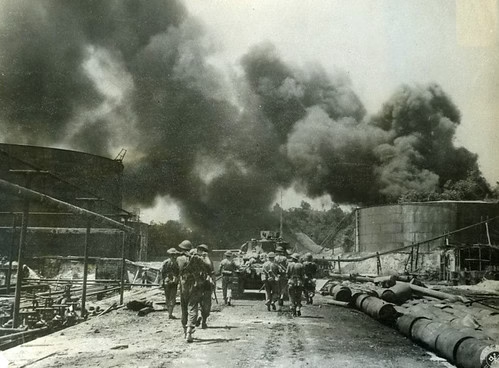
Ukrainian forces launched a sophisticated long-range drone strike against the Taneco oil refinery in Tatarstan, Russia, on Tuesday, marking a significant escalation in Kyiv’s campaign to cripple the Russian energy sector. Located over 1,200 kilometers from the Ukrainian border, the facility is one of Russia’s largest and most vital oil processing hubs. President Volodymyr Zelenskyy confirmed the strike, signaling that Ukrainian military reach now extends deep into the Siberian industrial heartland, a development that coincides with the lead-up to a pivotal NATO summit in Washington.
Shifting Strategic Landscapes
The Taneco refinery, operated by Tatneft, plays a critical role in Russia’s refined petroleum output. By targeting such deep-seated infrastructure, Kyiv is attempting to disrupt the logistical supply chains that fuel the Russian military machine.
This strike represents a departure from earlier tactics, which primarily focused on border regions or occupied territories. The ability to penetrate deep into Russian airspace suggests a rapid evolution in Ukrainian domestic drone production and navigation technology.
The Anatomy of the Attack
Local authorities in the Republic of Tatarstan reported that emergency services were deployed to the site following reports of explosions. While Russian officials claimed the damage was limited and did not disrupt the facility’s overall production capacity, independent analysts point to the symbolic and psychological impact of the strike.
Intelligence reports suggest that Ukraine has invested heavily in autonomous, long-range unmanned aerial vehicles (UAVs) specifically designed to bypass electronic warfare defenses. These drones utilize satellite navigation and terrain-following flight paths to evade detection by Russian radar systems.
Expert Perspectives on Energy Security
Energy analysts note that Russia’s refining capacity is the backbone of its economic resilience against Western sanctions. According to data from the International Energy Agency (IEA), even minor disruptions to major refineries can lead to significant localized fuel shortages and increased inflationary pressure within the Russian domestic market.






















Leave a Reply