


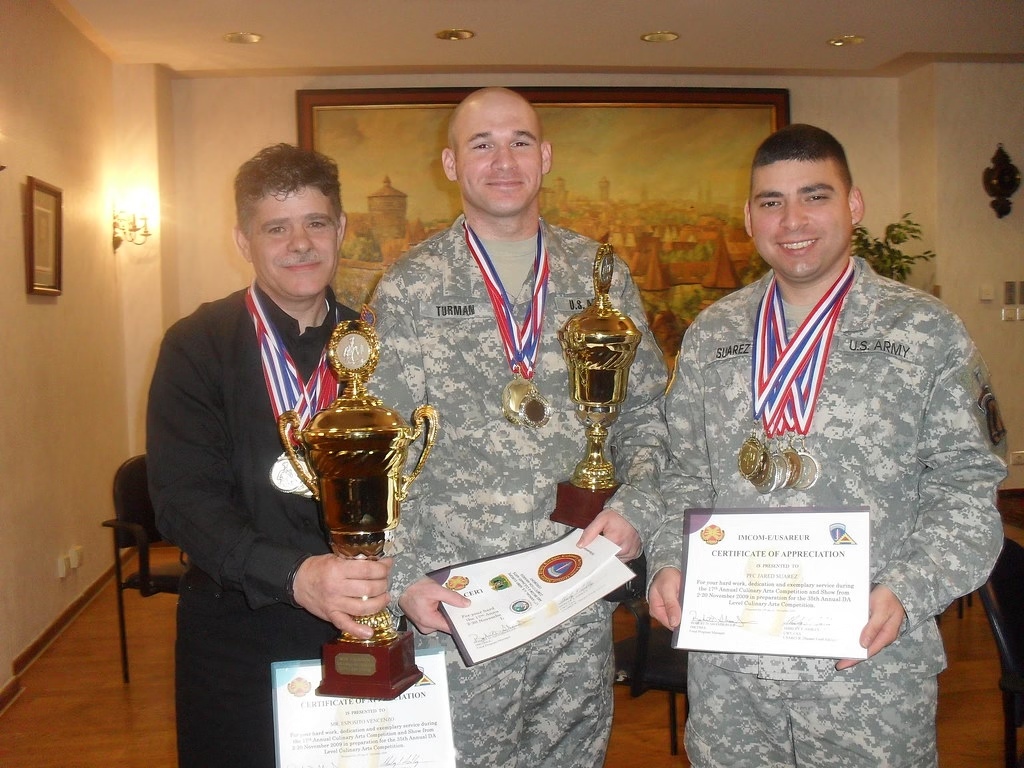
President Donald Trump bestowed the nation’s highest military honor, the Medal of Honor, upon three veterans during a solemn ceremony at the White House this week, recognizing extraordinary acts of valor displayed during combat operations in Vietnam and Afghanistan. The recipients, honored for their disregard for personal safety in the face of enemy fire, represent the enduring legacy of service within the United States Armed Forces.
A Legacy of Courage Under Fire
The Medal of Honor is reserved for service members who distinguish themselves through conspicuous gallantry and intrepidity at the risk of their lives above and beyond the call of duty. Established during the Civil War, the award is the most prestigious military decoration in the United States, requiring a rigorous vetting process that includes multiple levels of command review and often spans decades of investigation.
Historical records from the Department of Defense indicate that fewer than 3,600 service members have received the medal since its inception. The ceremony serves as both a recognition of individual sacrifice and a reminder of the historical intensity of the conflicts in Vietnam and the Global War on Terror.
Profiles in Battlefield Heroism
The ceremony highlighted diverse stories of survival and sacrifice. The veterans honored for their actions in Vietnam were recognized for their decisive leadership and protection of fellow soldiers during intense jungle combat, where rapid decision-making prevented significant casualties.
For the veteran recognized for service in Afghanistan, the award commemorates a specific mission characterized by high-altitude combat and the successful extraction of wounded personnel while under heavy insurgent fire. Defense analysts note that these awards often come long after the events occurred, as the military continues to review past mission reports and eyewitness accounts to ensure all deserving actions are acknowledged.
Institutional Recognition and Military Tradition
Military historians emphasize that the process of awarding the Medal of Honor is intentionally slow to ensure complete accuracy. The Pentagon frequently re-evaluates past combat engagements, particularly as declassified documents become available or as new testimony surfaces from aging veterans.
Dr. Alan Miller, a military history consultant, noted that these late-in-life ceremonies provide critical closure for veterans and their families. “The significance of this award is not diminished by the passage of time; it reinforces the institutional values of the military and the importance of recognizing bravery, regardless of when the combat occurred,” Miller stated.
Implications for Future Recognition
The ongoing commitment to awarding these medals impacts how the military processes modern combat reports and maintains institutional memory. As the nature of warfare shifts toward technological and cyber-based operations, the Defense Department faces the challenge of defining how “valor” will be measured in future conflicts.
Observers should watch for potential changes in the review process for older combat records, as advocacy groups continue to push for the recognition of minority veterans who may have been overlooked due to systemic biases in previous decades. The military’s willingness to revisit these cases suggests a broader trend toward historical transparency and the rectification of past administrative omissions.

















Leave a Reply