


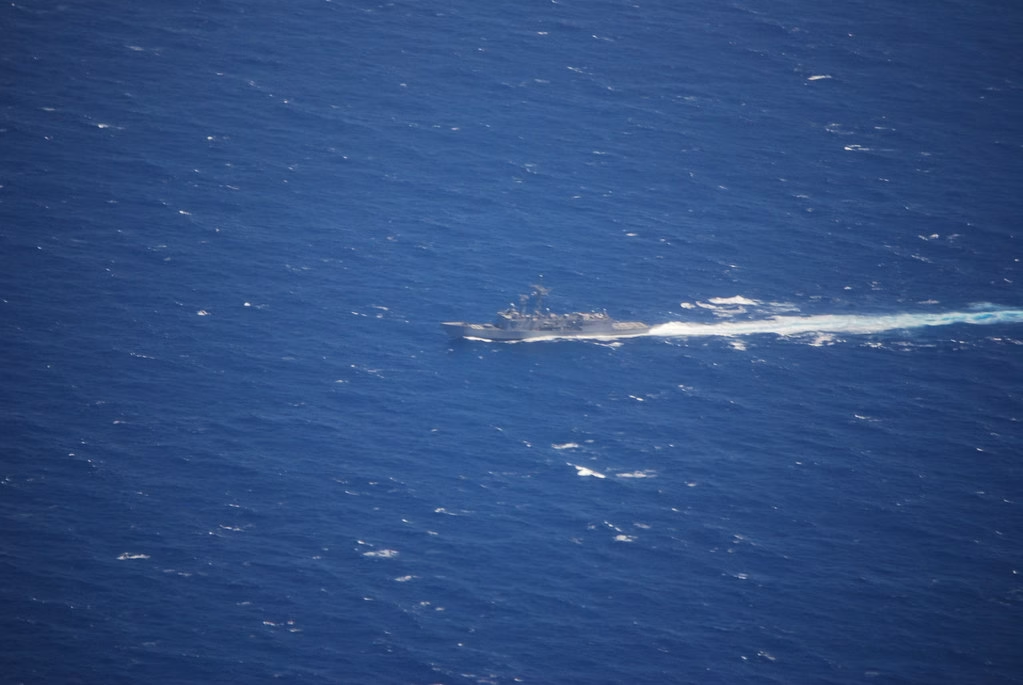
U.S. President Donald Trump announced on Sunday that his administration has secured a comprehensive agreement with Iran to formally end the ongoing conflict and terminate the U.S.-led blockade in the Strait of Hormuz. The surprise announcement marks a significant de-escalation in regional tensions that have gripped the Middle East for months, promising a restoration of maritime commerce and a cessation of military hostilities.
Context of the Strait of Hormuz Crisis
The Strait of Hormuz serves as one of the world’s most vital maritime chokepoints, through which approximately one-fifth of the world’s oil consumption passes. Tensions reached a boiling point earlier this year as the U.S. imposed a naval blockade in response to what officials described as Iranian provocations against commercial shipping vessels.
International markets reacted with significant volatility throughout the blockade, as global energy prices spiked due to fears of a complete closure of the waterway. Diplomatic channels had remained largely stagnant until recent back-channel negotiations suggested a potential pathway toward a ceasefire.
The Scope of the New Agreement
The agreement, which officials characterize as a fundamental shift in bilateral relations, involves a mutual withdrawal of military assets from the immediate proximity of the Strait. By authorizing an end to the blockade, the White House aims to stabilize global oil markets and reduce the immediate risk of a direct military confrontation.
White House officials, including former press secretary Jay Carney, have expressed surprise at the speed and depth of the deal. Carney remarked that the terms of the agreement























Leave a Reply