


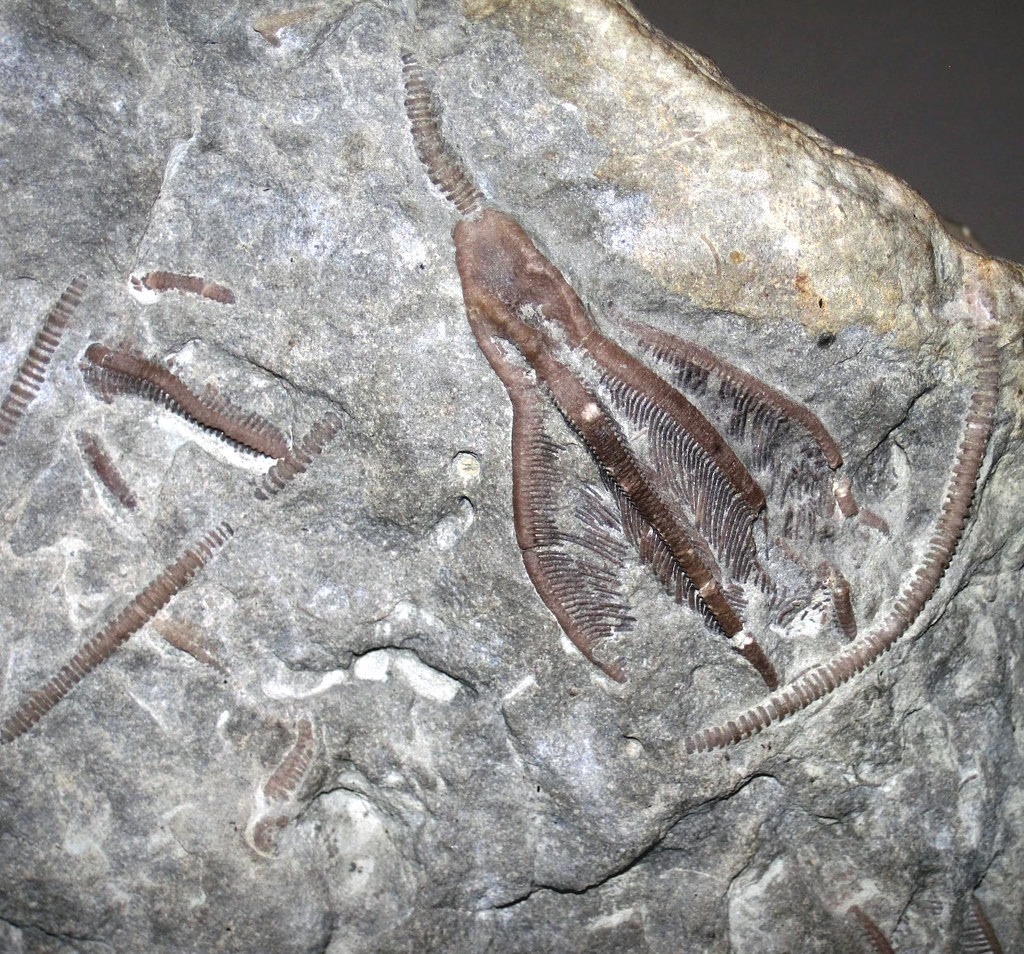
The Geological Catalyst for Biological Innovation
A new study published this month reveals a transformative link between the rise of ancient mountain ranges and the rapid diversification of shelled animals during the Cambrian period. Researchers analyzing geological formations across the globe discovered that tectonic activity roughly 500 million years ago accelerated the erosion of minerals into the oceans, providing the essential chemical ingredients required for organisms to construct protective shells.
The Chemistry of Construction
For decades, paleontologists have puzzled over the ‘Cambrian Explosion,’ a period characterized by a sudden proliferation of complex life forms. The recent findings suggest that the uplift of massive mountain belts triggered a massive influx of calcium, magnesium, and other minerals into shallow marine environments. This sudden chemical enrichment allowed primitive organisms to synthesize calcium carbonate, the primary component of modern shells and exoskeletons.
Tectonics and Biological Evolution
The research team examined isotopic signatures in ancient sedimentary rocks, tracking the geochemical fluctuations that coincided with the emergence of hard-bodied creatures. As mountains rose, weathering processes broke down silicate rocks, stripping ions from the earth and transporting them via river systems into the global ocean. This mineral surge effectively lowered the energetic cost for animals to develop protective armor, fundamentally altering the evolutionary trajectory of marine life.
Expert Perspectives and Data
Dr. Elena Vance, a lead geologist on the project, notes that this correlation between mountain building and biological innovation was previously under-recognized. ‘We are seeing a clear synchronization between the tectonic pulses of the Earth and the sudden appearance of diverse shell structures in the fossil record,’ Vance stated. Data points from the study indicate that regions with higher rates of tectonic uplift show significantly earlier adoption of calcification in fossilized species compared to stable continental interiors.
Evolutionary Arms Races
The development of shells did more than just protect the individual organism; it triggered a massive ecological cascade. Once animals gained the ability to grow protective shields, they were able to occupy new ecological niches that were previously too dangerous. This development, in turn, spurred the evolution of specialized predators, leading to an evolutionary arms race that defined the complexity of marine ecosystems for millions of years.
Looking Toward Future Discoveries
The implications of this study extend beyond paleontology, offering a new lens through which scientists can view the relationship between planetary geology and life’s development. As researchers continue to map the tectonic history of the Earth, the focus will likely shift to how future climate shifts and sea-level changes might impact the availability of essential minerals for modern marine life. Observers should watch for upcoming studies that aim to simulate how current tectonic activity might be influencing the survival rates of calcifying organisms in the face of modern ocean acidification.





















Leave a Reply