


The Incident
Authorities in Limeira, Brazil, have formally charged three instructors with homicide following the death of a woman who fell more than 130 feet from a bridge while participating in a rope-jumping activity. The incident occurred when the victim, whose identity has not been released, plummeted to the ground after failing to be properly secured to the safety equipment intended to arrest her fall.
Context of Extreme Sports Regulation
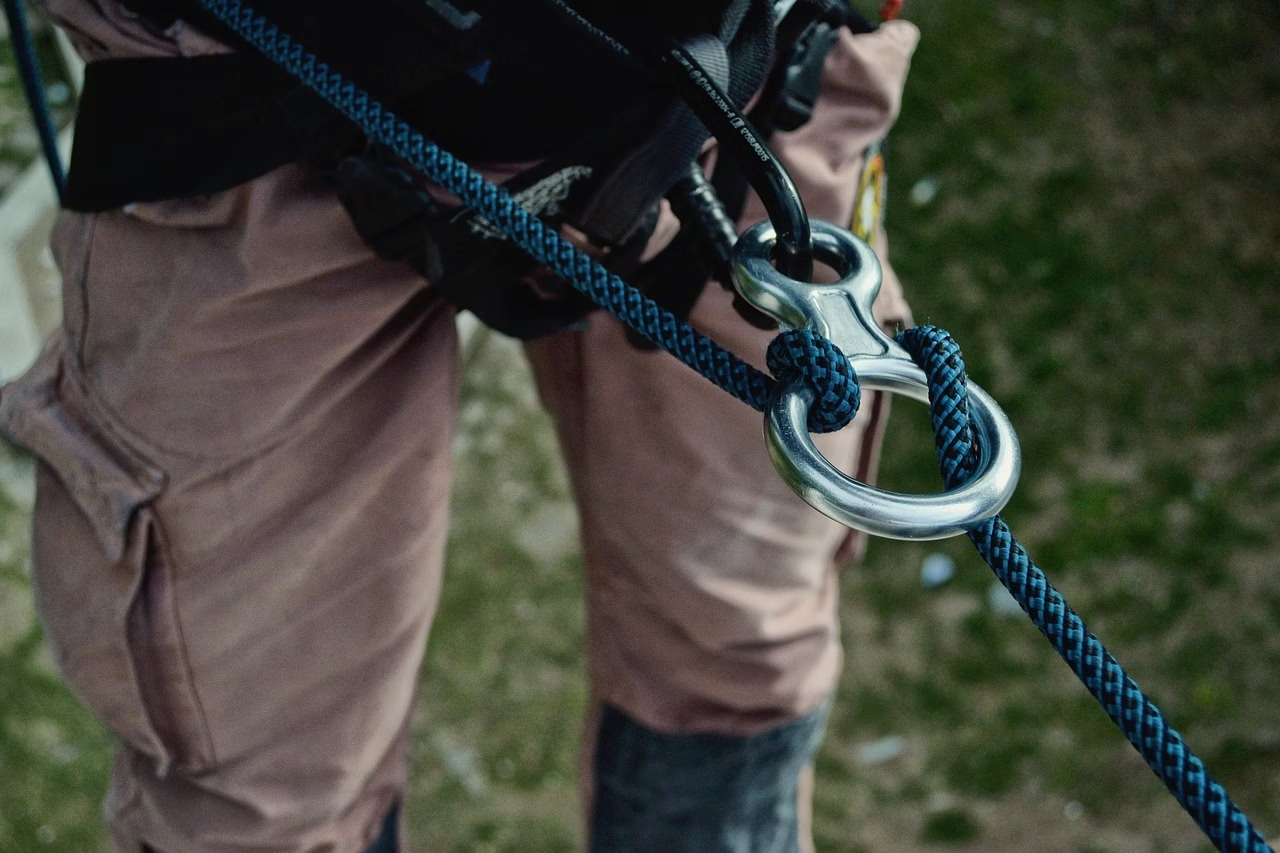
Rope jumping, often confused with bungee jumping, involves participants leaping from heights while attached to a system of static ropes and harnesses. Unlike bungee jumping, which uses elastic cords to provide a bouncing effect, rope jumping utilizes non-elastic ropes to create a pendulum-like swing. In Brazil, the extreme sports industry operates under a patchwork of local ordinances and voluntary safety certifications, often leading to inconsistent enforcement of safety protocols.
The Investigation Findings
Police investigators revealed that the instructors failed to secure the victim’s harness to the primary rope system before signaling for the jump. Forensic reports indicate that the equipment itself was functional, pointing to human error rather than mechanical failure as the primary cause of the tragedy. The three men, who were managing the operation at the bridge, were taken into custody shortly after the incident to face charges related to negligence and involuntary manslaughter.
Expert Perspectives
Safety experts in the adventure sports sector emphasize that redundancy is the cornerstone of high-altitude activities. “In any professional rig, there should be multiple points of verification before a participant is cleared for a jump,” says Marcus Thorne, a consultant for international adventure sports safety standards. He notes that the lack of a ‘double-check’ system by a secondary operator is a common failure point in poorly regulated commercial operations.
Industry Implications
The incident has sparked a national debate regarding the oversight of commercial extreme sports in Brazil. Industry leaders are now calling for mandatory state-level licensing for operators, which would require rigorous background checks and standardized training certifications. For participants, the tragedy serves as a grim reminder of the inherent risks involved in adventure tourism and the necessity of vetting operators before engaging in high-risk activities.
Future Outlook
Legal analysts suggest that this case will likely set a precedent for how extreme sports liability is handled in Brazilian courts. Observers should monitor upcoming legislative sessions in São Paulo, where lawmakers are expected to debate new safety requirements for bridge-based recreation. As the legal proceedings unfold, the focus will remain on whether these charges will lead to a broader, mandatory framework for safety in the adventure sports industry.




















Leave a Reply