


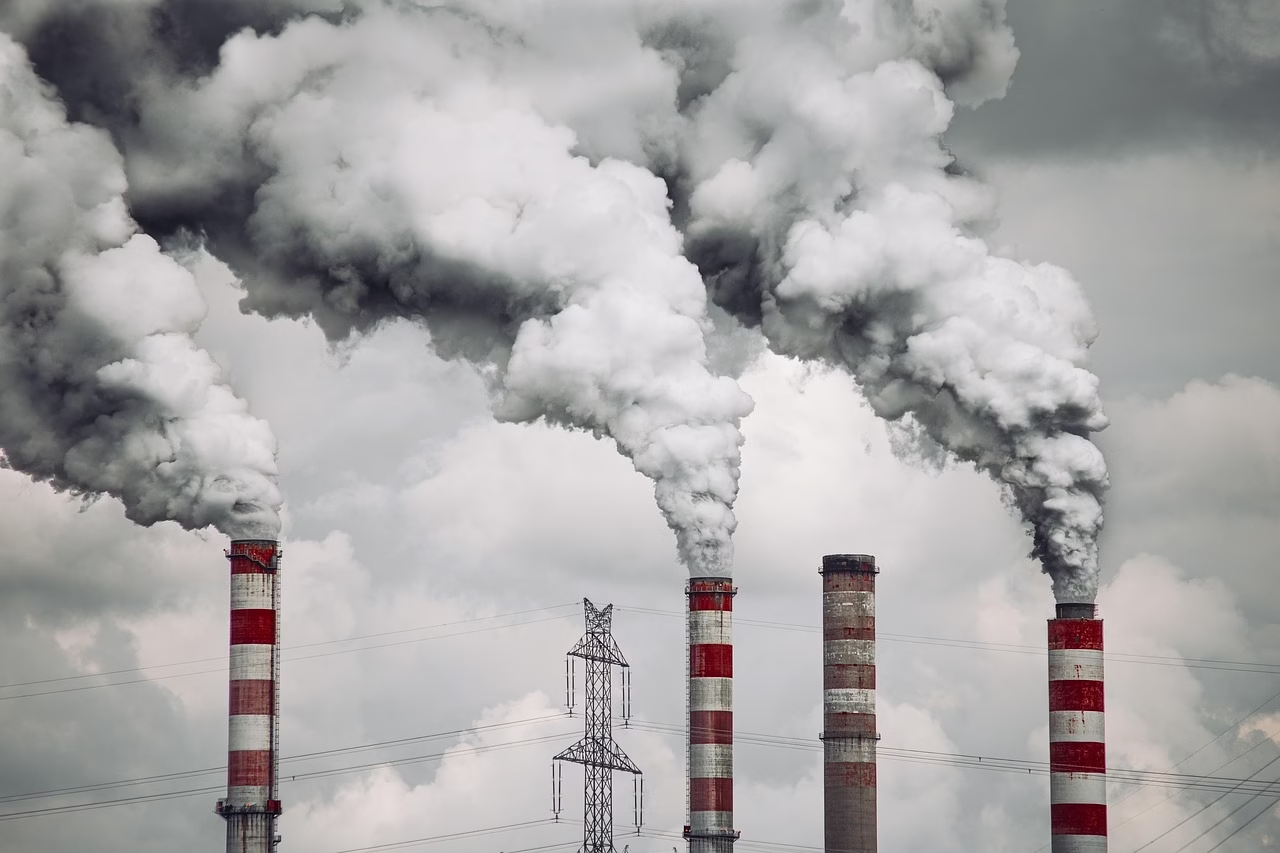
North Korean state media, including the Korean Central News Agency (KCNA), reported this week that the country has surpassed its industrial production targets for the current cycle, citing a series of “miracles” in key manufacturing sectors. These claims, issued from Pyongyang, assert that factories across the nation have exceeded government-mandated quotas in chemicals, metallurgy, and consumer goods, despite ongoing international sanctions and reports of severe resource constraints.
Context of the Industrial Drive
The announcement follows a multi-year effort by the Workers’ Party of Korea to revitalize the domestic economy through a policy of “self-reliance.” In recent party plenums, leadership has emphasized the need to reduce dependence on imports and modernize aging industrial infrastructure. This rhetoric aligns with a broader push for the “20-point major goal” of economic development outlined by the current administration to improve living standards.
Analyzing the Production Claims
State media reports highlight specific gains in the iron and steel sectors, claiming that new technical innovations have increased efficiency in blast furnace operations. However, independent analysts remain skeptical regarding the accuracy of these figures. The lack of verifiable data from external audits makes it difficult to distinguish between genuine industrial gains and state-sponsored propaganda designed to boost domestic morale.
International observers note that North Korea’s economy faces significant headwinds, including chronic energy shortages and the lingering effects of pandemic-era border closures. Satellite imagery often provides a contrasting view, showing varying levels of activity at key industrial complexes that do not always align with the narrative of a booming manufacturing sector. The disparity between official reports and satellite observations remains a central point of contention for intelligence agencies monitoring the region.
Expert Perspectives
Economic researchers studying the region suggest that even if production targets are met, the quality and utility of the goods produced remain questionable. “Meeting a quota for steel output does not necessarily translate to a functioning supply chain or a modernized economy,” says Dr. Hans Schmidt, an analyst specializing in East Asian industrial policy. “The focus on ‘miracles’ often masks deep-seated structural issues like aging machinery and the absence of high-tech manufacturing components.”
Furthermore, data from neighboring trade partners indicates that North Korea’s import of industrial raw materials remains heavily restricted. Without access to global markets for advanced technology, experts argue that the country’s industrial growth is likely capped by its limited internal resources. The reliance on labor-intensive methods rather than automation suggests a high human cost for the reported production increases.
Implications for the Future
For the North Korean population, the government’s insistence on these production successes serves as a primary tool for social mobilization. If these claims are used to justify further austerity measures or to divert resources toward military-industrial projects, the average citizen may see little improvement in daily living conditions. Observers are now watching for the upcoming end-of-year economic reports to see if the government adjusts its long-term development plans based on these alleged successes.
Market watchers and geopolitical analysts will continue to monitor trade data from China and Russia, the primary conduits for North Korean commerce, to see if there is any tangible evidence of an uptick in industrial production. Any significant shift in the volume of raw material imports or technological trade could provide the first concrete evidence of a genuine shift in North Korea’s industrial capacity.





















Leave a Reply