


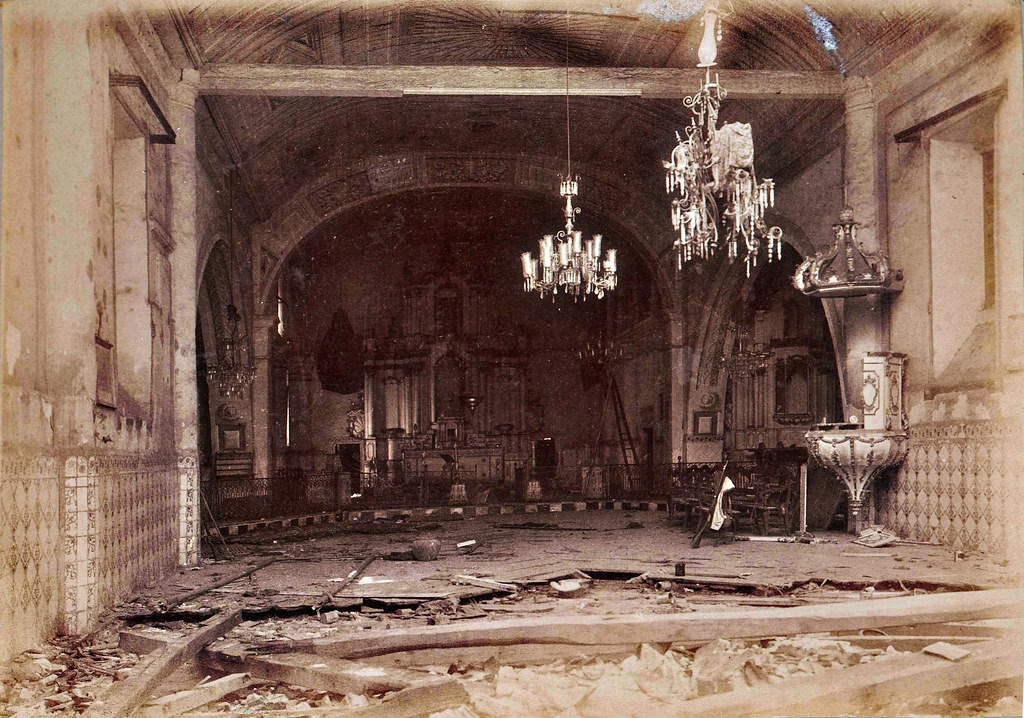
A series of coordinated Russian missile and drone strikes across Ukraine on Thursday resulted in the destruction of a centuries-old religious site in Kyiv and the deaths of five civilians in the northeastern city of Kharkiv. The escalation, which occurred in the early hours of the morning, marks a significant surge in hostilities targeting both critical infrastructure and cultural heritage centers, according to regional military officials.
The Escalation of Conflict
The strikes in Kyiv targeted the historic district, where a fire engulfed a landmark religious structure dating back to the 17th century. Emergency services worked for several hours to contain the blaze, which threatened to spread to adjacent historical buildings. While the exact extent of the architectural damage is still being assessed by heritage conservationists, initial reports indicate severe structural instability.
In Kharkiv, the regional governor confirmed that a residential district was hit by a barrage of missiles, killing five people and leaving over a dozen others injured. The attack, which hit during the early morning commute, struck a densely populated neighborhood, causing widespread panic and significant property damage.
Background and Military Context
The ongoing conflict, which has persisted for over two years, frequently sees Russian forces utilizing long-range weaponry to pressure Ukrainian logistical hubs and urban centers. Military analysts suggest that these strikes are intended to degrade civilian morale and complicate the defensive efforts of the Ukrainian Armed Forces as they attempt to hold the front lines.
The targeting of religious and cultural sites has become a recurring point of international contention. UNESCO has documented hundreds of damaged cultural sites in Ukraine since the full-scale invasion began in February 2022, citing the destruction as a violation of international humanitarian law and the 1954 Hague Convention.
Expert Perspectives and Data
Security experts note that the increased frequency of these attacks coincides with shifting front-line dynamics. “The tactical shift toward precision strikes on urban centers is designed to create a sense of persistent insecurity throughout the country,” said Dr. Elena Volkov, a regional security analyst. Data from the Ukrainian Interior Ministry indicates that civilian casualties have risen by 15% over the past quarter, largely due to intensified aerial bombardment of residential areas.
International observers have condemned the strikes, emphasizing the protected status of historical landmarks under international law. The lack of military utility in striking such sites has fueled further calls for increased air defense support for Ukraine’s major cities.
Future Implications for the Region
As the winter months approach, the focus remains on the resilience of Ukraine’s energy grid and the protection of urban populations. The destruction of cultural heritage sites is expected to intensify diplomatic efforts to establish protected zones around historical centers, though the effectiveness of such measures remains uncertain given the current intensity of the conflict.
Observers are closely monitoring the potential for further escalatory strikes in the coming weeks. The ability of domestic air defense systems to intercept incoming missiles will be the primary metric for assessing the safety of civilians in metropolitan areas, while the international community weighs the possibility of additional sanctions on military supply chains.






















Leave a Reply