


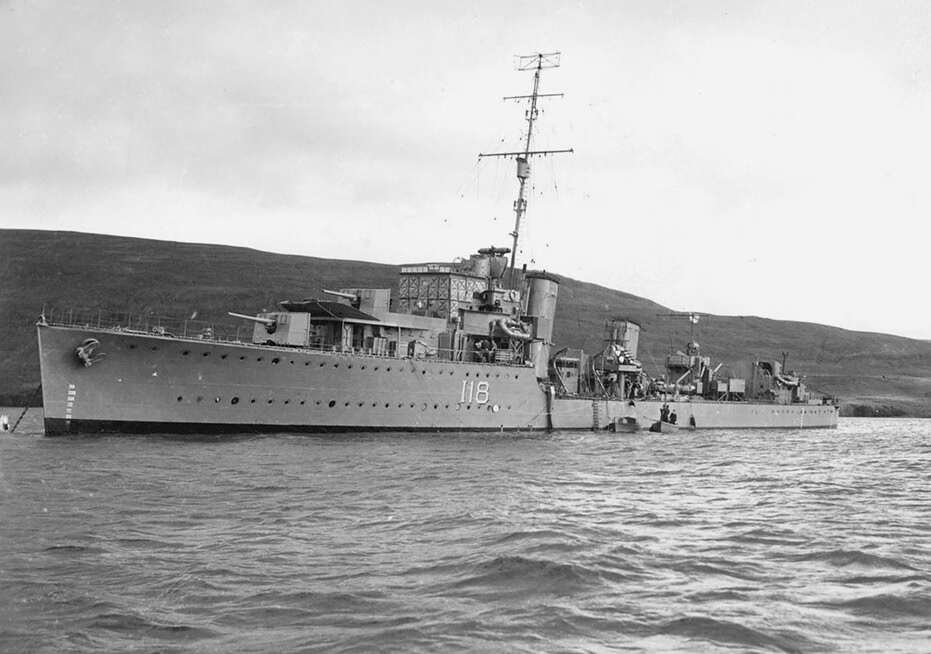
British naval and maritime forces intercepted a Russian shadow fleet oil tanker in the English Channel on Sunday morning, marking a significant escalation in the United Kingdom’s efforts to disrupt Moscow’s sanctions-evasion network. The Ministry of Defence confirmed the operation, which took place within the U.K.’s exclusive economic zone, as part of a coordinated push to tighten the enforcement of international trade restrictions imposed following the 2022 invasion of Ukraine.
The Anatomy of the Shadow Fleet
The term “shadow fleet” refers to a clandestine network of aging, often uninsured oil tankers operating outside of Western maritime insurance and regulatory frameworks. These vessels frequently switch off their Automatic Identification Systems (AIS) to obscure their movements and origins.
By utilizing these vessels, Russia has managed to continue exporting crude oil to global markets despite G7-imposed price caps. According to the Centre for Research on Energy and Clean Air, hundreds of these vessels have been identified globally, often operating with opaque ownership structures that make legal accountability difficult.
Tactical and Geopolitical Significance
The interception represents a tactical shift for the British military, moving from monitoring to active disruption of illicit maritime trade. By challenging these vessels in the English Channel—one of the world’s busiest shipping lanes—the U.K. is signaling a zero-tolerance policy toward sanctions evasion in its domestic waters.
Maritime security analysts suggest this move is intended to increase the operational costs for Russian entities. If the insurance risk for these shadow vessels rises due to the threat of interception or detention, the financial viability of using such ships to bypass Western price caps diminishes.
Expert Perspectives and Economic Impact
“The shadow fleet represents a direct challenge to the rules-based international order,” says Dr. Elena Rossi, a maritime security researcher at the Royal United Services Institute. “Interventions like this are not just about a single cargo; they are about disrupting the entire logistical chain that allows the Russian state to fund its military operations.”
Data from the International Maritime Organization (IMO) indicates that these tankers often pose significant environmental risks due to their age and lack of maintenance. An accident involving one of these vessels in the English Channel could lead to a catastrophic oil spill, adding an environmental security dimension to the geopolitical tension.
Future Implications for Global Trade
Looking ahead, the industry should anticipate more frequent boardings and inspections of vessels suspected of sanctions evasion. As Western nations align their maritime enforcement strategies, the “shadow” nature of these operations will face increasing scrutiny and technological tracking.
Observers will be watching to see if other European nations follow the U.K.’s lead in active interception. The primary focus for the coming months will be whether these disruptions effectively force Russian oil back into the regulated market or if the shadow fleet will simply adapt by shifting routes to less monitored regions of the Atlantic and Pacific.




















Leave a Reply