


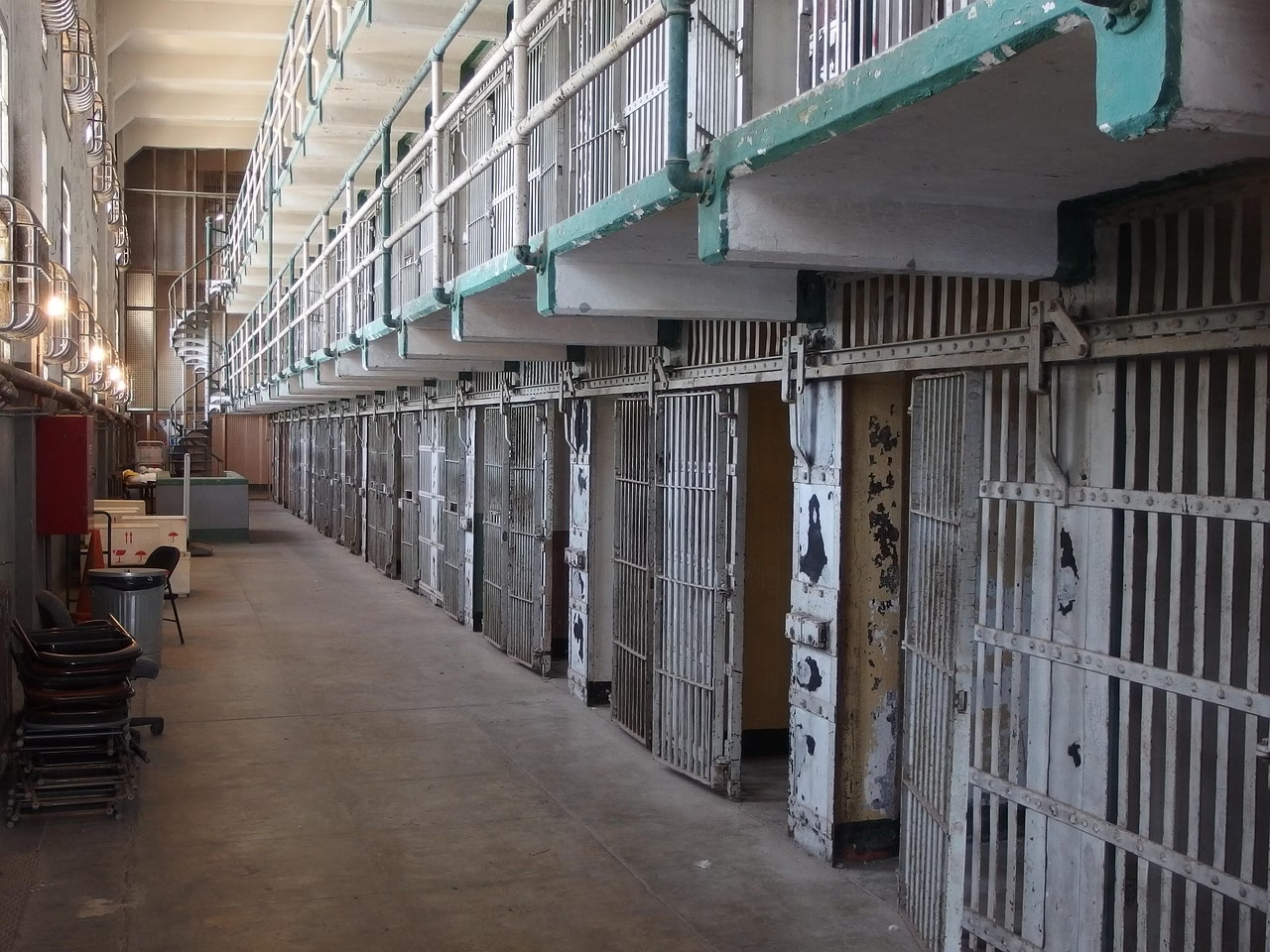
Inside the Segregated Cell of Rex Heuermann
Rex Heuermann, the Manhattan architect accused of being the Gilgo Beach serial killer, has spent the last three years in solitary confinement within the Suffolk County Jail, where he reportedly spends his time reading crime novels and corresponding with other incarcerated individuals. Suffolk County Sheriff Errol Toulon Jr. confirmed that the high-profile inmate remains strictly isolated for security reasons, following his arrest in July 2023 for the murders of three women whose remains were discovered along a remote stretch of Long Island coastline.
The Background of the Gilgo Beach Investigation
The arrest of Heuermann marked a significant breakthrough in a decade-long investigation that had baffled law enforcement since the first remains were found in 2010. Authorities linked Heuermann to the victims through a combination of discarded pizza crust DNA evidence, burner phone records, and sophisticated digital forensics. Before his arrest, Heuermann lived a quiet, seemingly mundane life in Massapequa Park, working as an architect in Manhattan while concealing what prosecutors describe as a violent double life.
Current Conditions and Institutional Oversight
Sheriff Toulon noted that Heuermann is held in a specialized unit designed to minimize his contact with the general jail population. This measure is standard for high-profile defendants to ensure both the safety of the inmate and the integrity of the facility. Despite the isolation, jail officials report that Heuermann has maintained a routine that includes reading materials provided by the facility’s library, specifically focusing on the crime genre.
Legal experts suggest that such correspondence from an accused serial killer is closely monitored by correctional staff. Any letters sent or received by Heuermann are subject to standard jail security protocols, which allow officials to intercept communication that could compromise ongoing legal proceedings or jail safety. The nature of his correspondence remains a point of interest for prosecutors who continue to build their case against the former architect.
Expert Perspectives on High-Security Detention
Criminal justice analysts indicate that solitary confinement for defendants in capital cases is a common practice to prevent potential violence from other inmates. Dr. Katherine Ramsland, an expert in forensic psychology, notes that for individuals accused of heinous crimes, isolation often acts as a protective shield against the volatility of the general prison population. However, she adds that the psychological toll of such isolation can be profound, potentially impacting a defendant’s ability to assist in their own legal defense.
Implications for the Ongoing Legal Strategy
The details emerging from the jail cell underscore the immense scale of the legal battle ahead for the Suffolk County District Attorney’s office. With the trial proceedings pending, every aspect of Heuermann’s behavior behind bars is being documented for potential use in court. Defense attorneys often scrutinize the conditions of confinement to ensure that their client’s constitutional rights are protected, which may lead to future motions regarding his treatment in the facility.
As the legal process moves toward trial, observers should watch for potential shifts in the prosecution’s evidence list or any new developments arising from the ongoing search for additional victims linked to the Gilgo Beach case. The court’s handling of Heuermann’s isolation and his ability to communicate with others will remain a point of contention and interest as the trial date approaches. Future hearings will likely address the extent to which these jailhouse habits and communications could be introduced as evidence of state of mind or character, further complicating an already complex criminal case.





















Leave a Reply