



Cape Verde has officially etched its name into football history as the island nation participates in its first-ever World Cup, sparking a wave of national pride that spans from the archipelago to its vast global diaspora. For the players, coaching staff, and millions of Cape Verdean descendants living in countries like the United States, Portugal, and the Netherlands, this tournament represents a transformative moment of visibility on the world’s most prestigious sporting stage.
A Long-Awaited Sporting Milestone
The journey to the World Cup has been a decades-long endeavor for the Cape Verdean national team, often referred to as the ‘Blue Sharks.’ Despite limited resources and a population of roughly 600,000, the team has steadily climbed the FIFA rankings through disciplined tactical development and the recruitment of dual-national players.
Historically, the nation struggled to gain traction in international qualifying rounds. However, a strategic overhaul of their youth development programs and improved scouting networks in European leagues provided the necessary foundation for this historic qualification.
The Diaspora Factor
Cape Verde possesses a unique demographic profile, with a diaspora population that is estimated to be larger than the number of residents living on the islands. For these communities, the team serves as a vital cultural anchor, bridging the gap between their ancestral homeland and their current countries of residence.
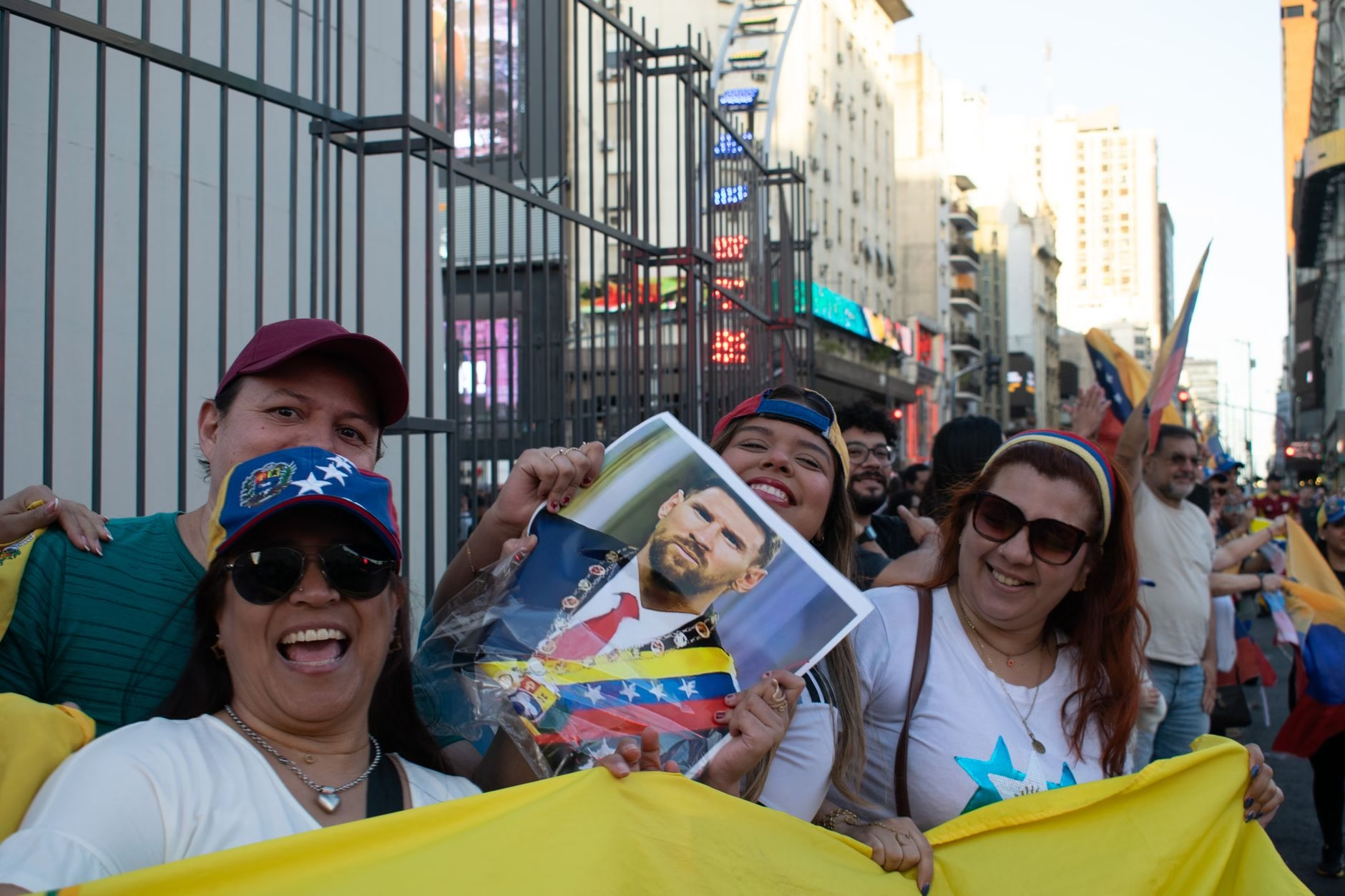
In cities like Boston and Rotterdam, fan zones and community centers have transformed into hubs of celebration. Many fans view this tournament not just as a sporting event, but as a validation of their heritage and a moment for the world to recognize Cape Verde’s unique identity.
Expert Analysis on Impact
Sports analysts suggest that this debut will have significant economic and social implications for the nation. FIFA data indicates that small-nation qualification often leads to a surge in domestic infrastructure investment and increased tourism interest.
“The psychological impact of seeing your flag represented among the global elite cannot be overstated,” says sports sociologist Dr. Elena Rossi. “It fosters a sense of collective identity that transcends borders and strengthens the economic ties between the diaspora and the mainland.”
Looking Toward the Future
As the tournament progresses, the focus shifts to how the nation will capitalize on this momentum to sustain its sporting success. Observers are watching to see if this appearance will lead to improved domestic stadium facilities and greater government funding for grassroots football programs.
The next phase for Cape Verde involves leveraging this global exposure to attract international partnerships and scouts. Whether or not the team advances deep into the knockout stages, the legacy of their participation is already secured as a turning point for the nation’s international standing.





















Leave a Reply