


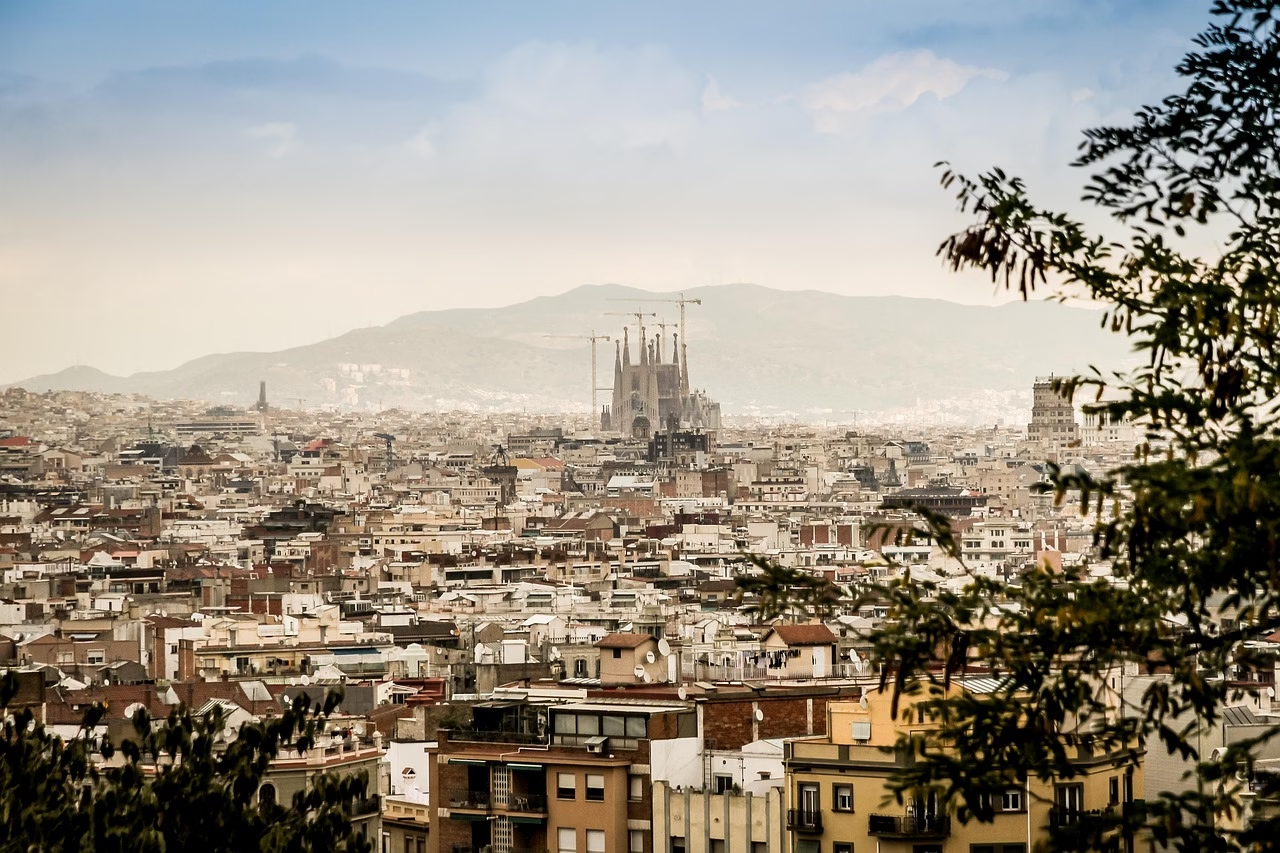
A Historic Consecration in Barcelona
Pope Leo presided over a monumental mass at the Sagrada Família in Barcelona this Sunday, officially consecrating the world-renowned basilica designed by Antoni Gaudí. Thousands of worshippers gathered both inside the nave and throughout the surrounding city streets to witness the pontiff elevate the unfinished masterpiece to the status of a minor basilica. The event marks a significant milestone in the 128-year construction history of the architectural icon, bridging the gap between Gaudí’s original visionary project and its modern-day reality.
The Architectural and Spiritual Legacy
Construction on the Sagrada Família began in 1882, driven by Gaudí’s unique synthesis of Gothic and Art Nouveau styles. The project has long been funded exclusively through private donations and visitor ticket sales, a financial model that has contributed to its slow, deliberate pace of growth. For decades, the site served primarily as a cultural landmark, but the papal visit cements its role as a primary center of Catholic worship in Spain.
Global Significance and Local Impact
The ceremony drew high-ranking officials and thousands of pilgrims from across the globe, highlighting the intersection of tourism and religious devotion. Security was tightened across Barcelona as authorities managed the massive influx of visitors and media personnel. Local businesses reported a record surge in activity, underscoring the basilica’s role as the primary economic engine for the city’s tourism sector.
Expert Insights on the Structural Evolution
Art historians and architects have long debated the challenges of finishing Gaudí’s complex, geometric designs after his death in 1926. Modern digital modeling has accelerated the construction process in recent years, allowing builders to adhere more closely to the original master’s intent. According to the Sagrada Família Foundation, the consecration acknowledges the structural integrity achieved in the central nave, which is now fully enclosed and functional for liturgical use.
Future Implications for the Sagrada Família
The consecration serves as a powerful catalyst for the final phases of construction, which focus on the completion of the central towers. Observers are now looking toward the upcoming completion date, projected for the early 2030s, which would mark the end of over a century of labor. As the basilica transitions from an active construction site to a fully functioning religious institution, the challenge will remain in balancing its status as a UNESCO World Heritage site with its newfound requirements for daily mass and pastoral care.
















Leave a Reply