



A Career Defined by History
David Briscoe, a veteran Associated Press journalist who gained international recognition for his gripping coverage of the Philippines’ 1986 democratic revolution, has died at the age of 82. Known for his unflinching commitment to truth and his ability to navigate complex geopolitical landscapes, Briscoe’s career spanned decades of significant global upheaval, leaving a lasting impact on the standards of foreign correspondence.
Background of a Distinguished Career
Briscoe’s journalism career was marked by his presence at the heart of major historical turning points. During his tenure with the Associated Press, he served in several high-pressure bureaus, including Manila, where he reported on the rise of the People Power Revolution that ultimately ousted President Ferdinand Marcos. His work provided the world with a front-row seat to the collapse of an autocracy and the transition to a new democratic era.
Colleagues remember Briscoe as a reporter who possessed a rare blend of intellectual curiosity and professional rigor. Whether covering political shifts in Southeast Asia or policy changes within the United States, he maintained a reputation for accuracy that earned him the respect of both his peers and the subjects of his reporting.
Reporting from the Front Lines
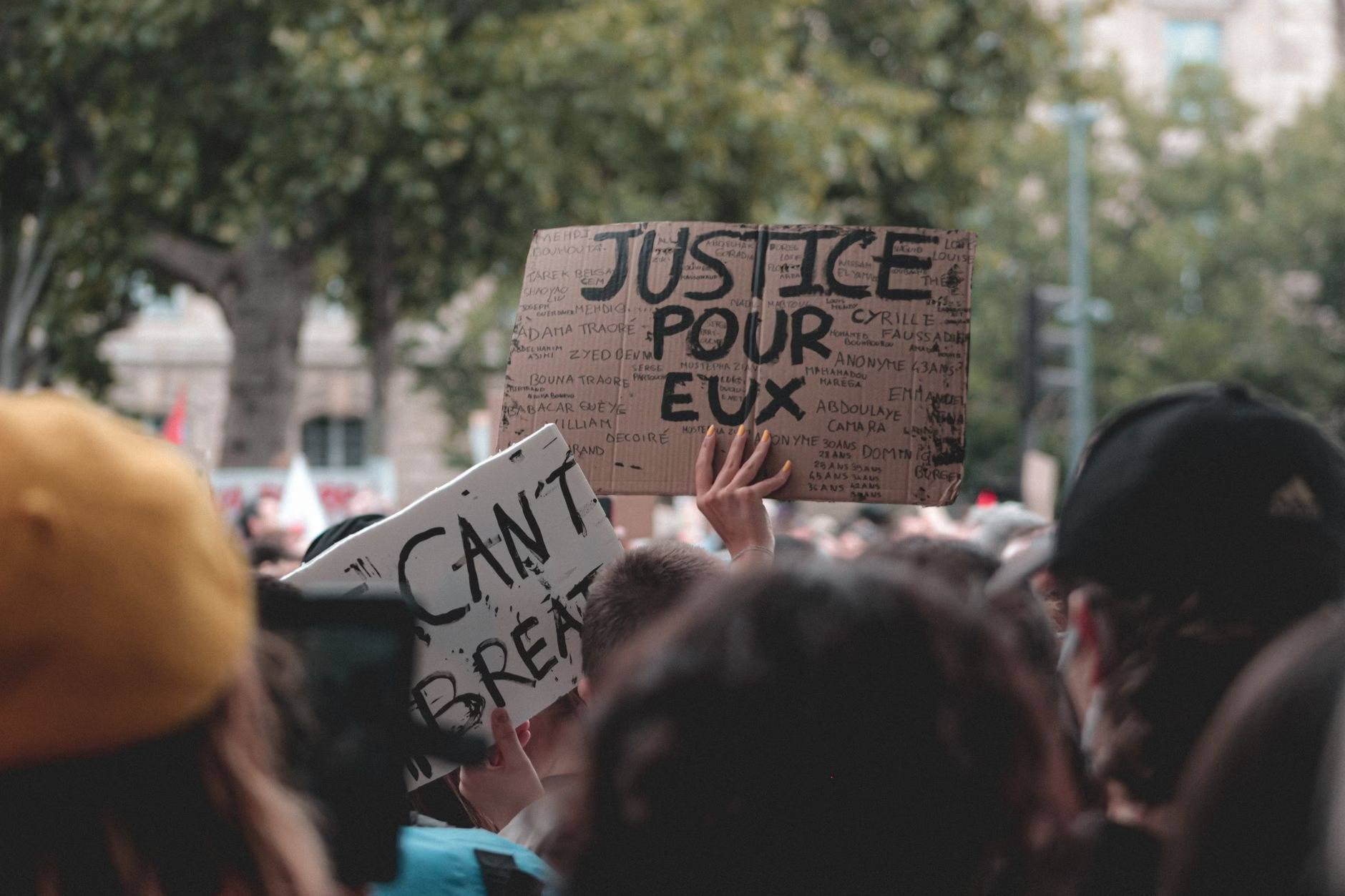
The coverage of the Philippines’ 1986 revolution remains the defining chapter of Briscoe’s professional life. As the streets of Manila filled with protestors, Briscoe navigated the dangerous intersection of military posturing and civilian uprising. His dispatches were instrumental in informing the global community about the fragility of the Marcos regime and the strength of the grassroots movement led by Corazon Aquino.
Experts in media history note that Briscoe operated during an era when foreign correspondence required immense physical endurance and local knowledge. Without the digital tools available today, journalists like Briscoe relied on extensive networks of contacts and a physical presence in the field to verify information. This hands-on approach allowed the Associated Press to maintain a level of depth and reliability that set the benchmark for wire service reporting in the late 20th century.
A Legacy in Journalism
Data from historical media archives suggest that Briscoe’s reporting served as a primary source for many international outlets during the mid-1980s. His ability to distill chaotic, fast-moving events into clear, coherent narratives helped frame the international understanding of Southeast Asian politics. His death marks the end of an era for a generation of reporters who prioritized on-the-ground reporting over speculation.
The influence of his work continues to resonate in modern newsrooms, where the principles of objective, fact-based reporting remain the foundation of credibility. Journalism scholars frequently cite the era of the 1986 Philippine revolution as a critical juncture for the press, and Briscoe’s contributions were central to that historical record.
The Future of Foreign Correspondence
The passing of a veteran like Briscoe serves as a reminder of the evolving nature of news gathering. As the industry moves further into an age of digital transformation and algorithmic content, the value of deep, boots-on-the-ground investigative journalism becomes increasingly clear. Observers will be watching to see how the next generation of foreign correspondents adapts the core principles of accuracy and presence that Briscoe championed to a rapidly changing global media environment.
As international tensions persist in various regions, the legacy of journalists who dedicated their lives to chronicling historical shifts will likely serve as a roadmap for future reporters. The industry must now determine how to maintain the same level of integrity and depth in an era where the speed of information often outpaces the time required for thorough verification.


















Leave a Reply