


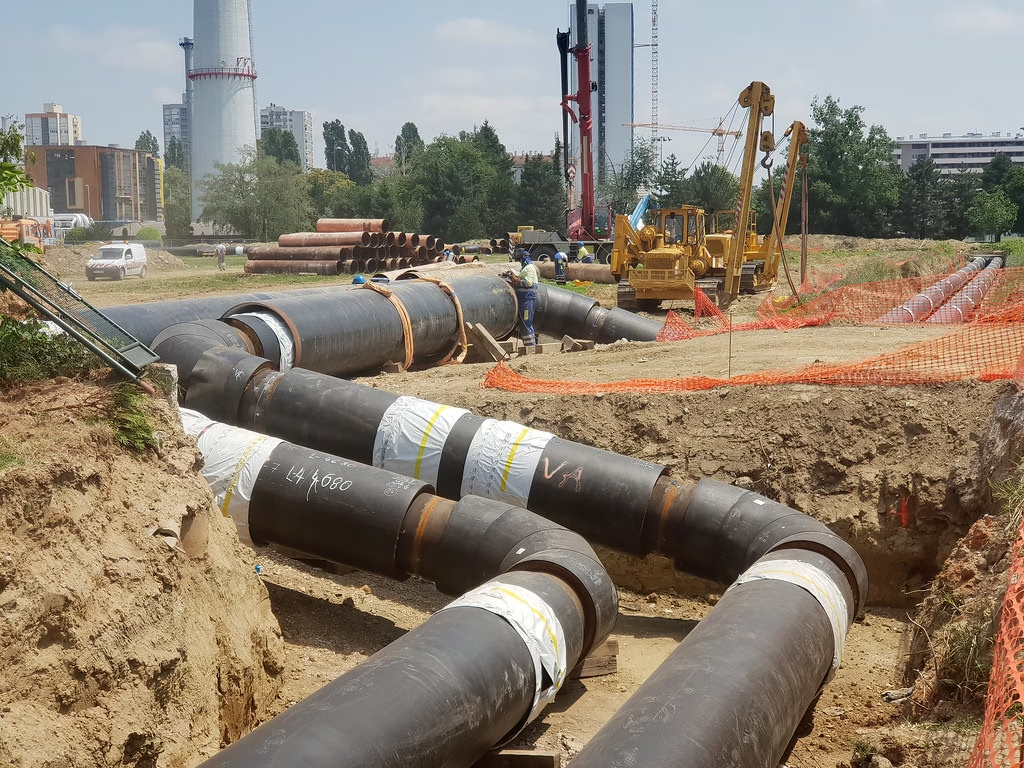
Restoring Infrastructure After a Major Environmental Breach
Mexican authorities confirmed this week that emergency repairs have been completed on a severely ruptured sewage pipeline in Tijuana, successfully halting a massive spill that had been discharging millions of gallons of untreated wastewater into the region’s watershed. The breach, which was identified earlier this month, prompted immediate cross-border environmental concerns as contaminants threatened local ecosystems and coastal waters shared by Mexico and the United States.
The failure occurred within the aging infrastructure of the Tijuana sewage network, a system that has struggled for years to keep pace with the city’s rapid urban expansion. Local utility workers deployed heavy machinery and specialized repair crews to seal the rupture, which had been exacerbated by recent seismic activity and heavy sediment flow.
Contextualizing the Tijuana Sanitation Crisis
The Tijuana sewage system has long been a point of friction between Mexican municipal authorities and U.S. federal agencies. Because the city’s topography directs much of its runoff toward the Pacific Ocean and the Tijuana River Valley, failures in the pipeline often result in pollution crossing the international border into San Diego County.
According to the International Boundary and Water Commission (IBWC), the aging collector pipes are frequently overwhelmed during storm events. This latest incident highlights the fragility of the existing network, which serves a population that has far outgrown the design capacity of the mid-20th-century infrastructure.
Operational Challenges and Repair Efforts
Repairing the rupture presented significant logistical challenges for the municipal utility, CESPT. Crews had to navigate steep, unstable terrain while managing active flow within the pipes, which required temporary diversion strategies to prevent further environmental damage during the construction process.
Technical experts noted that the repair involved replacing a critical section of reinforced concrete piping with high-density polyethylene, a material better suited for the high-pressure demands of the region. Despite the success of the immediate repair, engineers remain concerned about the structural integrity of adjacent, similarly aged pipe segments.
Expert Perspectives and Data Points
Environmental scientists monitoring the spill report that while the source has been contained, the long-term impact on coastal water quality will take weeks to fully dissipate. Preliminary data from local water quality stations in San Diego indicated a sharp spike in bacteria levels following the initial breach.
“The containment is a necessary first step, but it is not a permanent solution for the underlying systemic issues,” stated a spokesperson for an environmental research group monitoring the border region. Data from the Environmental Protection Agency suggests that billions of gallons of untreated sewage have flowed across the border over the last decade due to similar infrastructure failures.
Future Implications for Cross-Border Cooperation
For residents and local industries in Southern California and Baja California, the completion of these repairs provides a temporary reprieve from beach closures and health advisories. However, the incident serves as a stark reminder of the urgent need for large-scale infrastructure investment.
Looking ahead, the focus shifts to the implementation of the US-Mexico-Canada Agreement (USMCA) funding initiatives, which aim to expand the South Bay International Wastewater Treatment Plant. Observers will be watching to see if binational cooperation can accelerate the modernization of the entire sewage grid before the next major seasonal storm event tests the system again.



















Leave a Reply