


Restoration Project Reaches Milestone
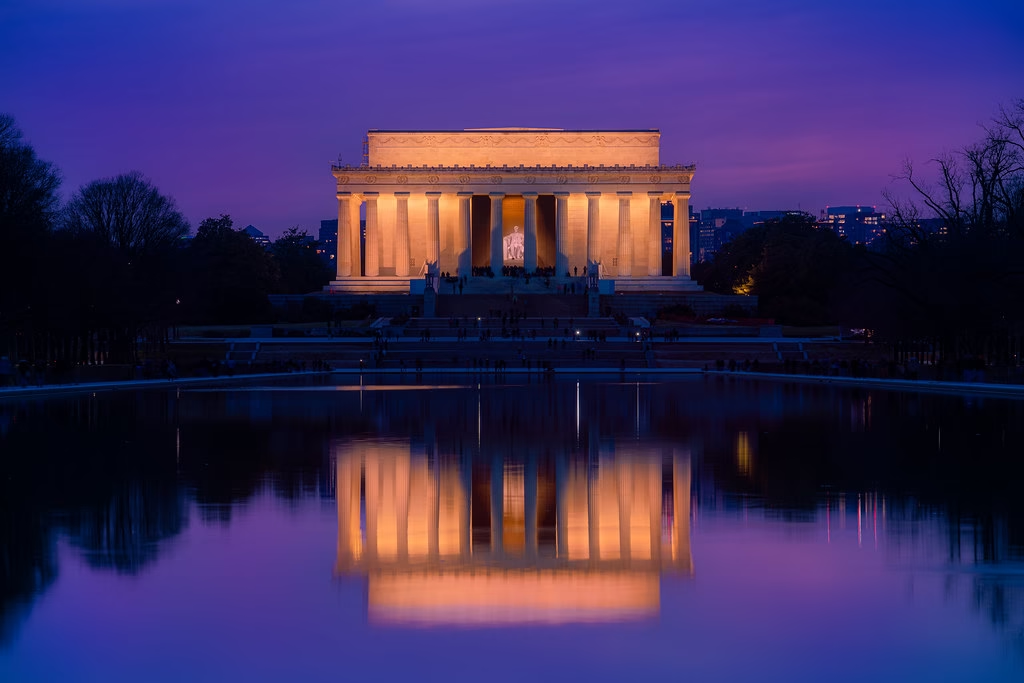
President Donald Trump announced this week that the extensive renovation project for the Lincoln Memorial Reflecting Pool in Washington, D.C., has reached completion. The National Park Service, which oversaw the infrastructure overhaul, confirmed that the historic site is now prepared to be refilled with water, marking the end of a multi-year effort to modernize the basin’s circulation and drainage systems.
The Reflecting Pool, a centerpiece of the National Mall, has long served as an iconic destination for tourists and a symbolic site for national demonstrations. The recent work was deemed necessary by federal authorities to address structural deterioration and water quality issues that had plagued the site for decades.
Context and Historical Significance
Constructed in 1923, the Reflecting Pool spans approximately 2,000 feet in length and was designed to mirror the grandeur of the Lincoln Memorial and the Washington Monument. Over the last century, the pool has undergone several major interventions, most notably in 2010 when a significant project replaced the original, leaky floor with a more durable concrete structure.
The current renovation focused on upgrading the mechanical systems that keep the water clean and circulating. According to the Department of the Interior, the aging infrastructure required a complete overhaul to prevent algae blooms and ensure the longevity of the site as it prepares for large-scale public commemorations and daily visitor traffic.
Engineering and Environmental Upgrades
Engineers involved in the project utilized modern filtration technology to reduce the reliance on chemical treatments that were previously required to maintain water clarity. The upgraded system uses a closed-loop design, which significantly lowers the amount of water wasted during the cleaning process.
National Park Service officials noted that the project was completed within the projected timeline despite logistical challenges. The goal was to ensure that the water quality meets federal safety standards, given that the pool is a high-traffic area where environmental sustainability is a priority for the agency’s maintenance division.
Implications for the National Mall
For visitors and residents of the District of Columbia, the reopening of the Reflecting Pool restores a critical visual element of the capital’s landscape. The pool’s return to service will likely increase foot traffic to the western end of the National Mall, providing a revitalized backdrop for the upcoming season of national events.
The broader impact of this infrastructure investment extends to the long-term preservation of the National Mall’s architectural legacy. By addressing systemic failures early, the government aims to avoid the more costly, emergency repairs that often disrupt public access to federal landmarks.
Future Outlook
As the site prepares to welcome the public back to the water’s edge, observers are now looking toward how the National Park Service will manage long-term maintenance costs and water usage. The success of this project may serve as a blueprint for future renovations of other major water features within the capital’s federal park network.
Stakeholders in historic preservation are closely monitoring whether the new filtration systems will effectively mitigate the persistent issue of sediment accumulation. The coming months will be pivotal in determining if the current design can withstand the environmental pressures of the Potomac basin’s climate, ensuring the Reflecting Pool remains a pristine landmark for future generations.



















Leave a Reply